
Review · PRIENE, MILETUS & DIDYMA TOURS
Priene, Miletus, and Didyma Day Tour from Kusadasi
Three ancient cities in one long, satisfying day. From the pickup ramp to the last viewpoint, this tour is built for a small-group pace and serious site time, with an art historian guiding you through Priene, Miletus, and Didyma. I especially like that you get entrance fees and a buffet lunch folded into the price, so the day runs like a plan instead of a scavenger hunt. The tradeoff is simple: it’s an all-day outing, so you’ll want comfortable shoes and a realistic expectation that you’ll walk more than you’d do on a quick bus loop.
You’ll start with hotel pickup around Selçuk or Kusadasi, then settle into a minibus for a day that mixes big-name ruins with sites that feel less crowded and more personal. It’s capped at 14 people, and the best reviews mention guides like Gul, Mehmet, and Melike, with lots of clear, human explanations (and even some lunch help). One possible drawback to consider: with a full day packed into an 8-hour window, the schedule can feel tight if you’re the type who likes long, slow wandering.
In This Review
- Key things to know before you go
- Why this Priene–Miletus–Didyma day beats a rushed ancient-town checklist
- Getting there from Kusadasi: minibus comfort and a real start time
- Stop-by-stop: Priene’s theater, Athena hilltop, and surprisingly advanced homes
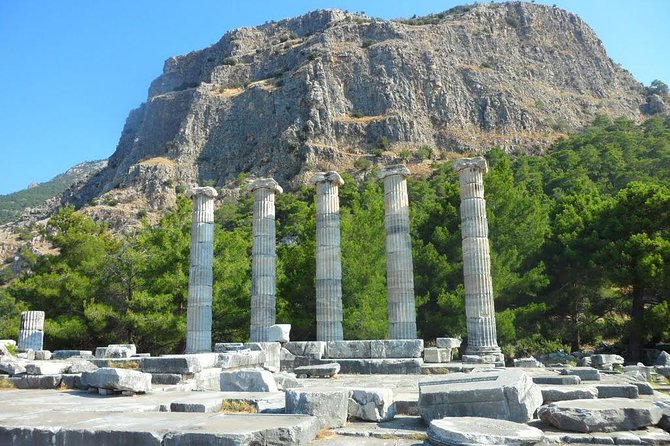
- Priene’s hilltop temple and the feeling of height
- The theater: 6,500 seats and a small-group advantage
- A city built for life near the sea
- Miletus on the rise: Ionian power, coin origins, and a site with layers
- The Ionian Confederation story
- Early Greek coins: minted in the real money place
- What you’ll actually see at Miletus
- Didyma’s Apollo Temple: oracle legend, medusa stone, and dramatic columns
- Why Didyma mattered: worship, not just a town
- The Apollo story you’ll hear while walking
- What you’ll see in the ruins
- The art historian guide: how the day turns from viewing into understanding
- Lunch and on-the-ground comfort: included buffet, extra drinks
- Price and value: is $216.74 a fair deal?
- Who this tour is best for (and who might want a different pace)
- Small risks to keep in mind
- Should you book this Priene, Miletus, and Didyma day tour?
- FAQ
- How long is the Priene, Miletus, and Didyma day tour?
- What time does pickup start?
- Where do you get picked up?
- Is this a small-group tour?
- Is the tour offered in English?
- Is lunch included?
- Are entrance fees included?
- Are drinks included with lunch?
- Does the tour include drop-off after the sites?
- What’s the cancellation policy if plans change?
Key things to know before you go
- 14-person max small group means you’re more likely to ask questions and actually hear the guide.
- Art historian-led explanations connect the sites to the bigger Ionian Greek story, not just dates and stones.
- Three ancient cities in one day: Priene, Miletus, and Didyma (oracle country) with hotel pickup and drop-off.
- All entrance fees + buffet lunch included, so you can budget without surprise add-ons.
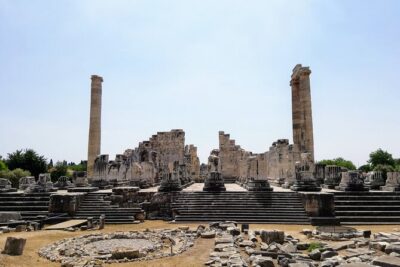
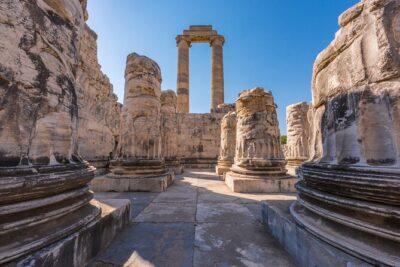
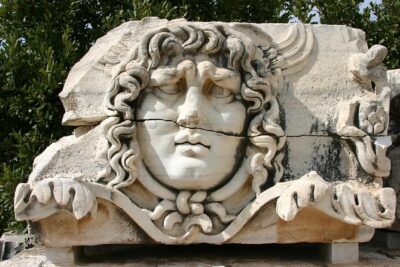
- Didyma’s Temple of Apollo ruins include standout details like a stone medusa head and dramatic column lines.
- Vegetarian option available if you mention it when booking (drinks are not included).
Why this Priene–Miletus–Didyma day beats a rushed ancient-town checklist
If you’ve already visited Ephesus (or you’re planning to), this is a smart follow-up. Ephesus draws the biggest crowds, but Priene, Miletus, and Didyma show you what the wider Ionian world looked like—less postcard, more “how did people actually live and worship here?”
What makes the mix work is how the sites talk to each other. Priene and Miletus were connected to the Ionian Greek sphere—cities with theaters, public spaces, and coastal power—while Didyma is the famous oracle setting tied to Miletus by a Sacred Way used by pilgrims. You end the day thinking less like a tourist and more like a curious student of the Mediterranean.
Three quieter ruins south of town, more of the trio
- Priene Miletos Didyma Tour From Kusadasi / Selcuk Hotels
★ 5.0 · 15 reviews - NO HIDDEN FEES : Private Ephesus – Miletus – Didyma
★ 5.0 · 13 reviews - Priene, Miletus, and Didyma Day Tour from Kusadasi
★ 4.5 · 11 reviews - Private Full-Day Ephesus Tour with Miletus and Didyma for Cruise Guests
★ 5.0 · 11 reviews
Getting there from Kusadasi: minibus comfort and a real start time
This runs as a full-day tour with a start time of 9:00 am. Pickup covers hotels in the Selçuk or Kusadasi area, plus the port in Kusadasi. That matters because you don’t want to waste your morning dragging luggage between taxis and meeting points.
You travel by minibus with a small group (maximum 14). The point isn’t luxury—it’s focus. A minibus also helps you keep the day’s rhythm instead of waiting around for a big coach to assemble.
A practical note: the tour is offered in English, and it uses a mobile ticket. So you can keep things simple—just make sure your phone battery is healthy before pickup.
Stop-by-stop: Priene’s theater, Athena hilltop, and surprisingly advanced homes
Priene is where you start to feel the day’s tone shift. Instead of a single famous monument, you get an ancient city laid out like a living machine: hillside views, civic buildings, and the kind of design that makes you understand why Romans and Greeks were obsessed with building in the right place.
Priene’s hilltop temple and the feeling of height
The biggest structure to aim for is the Temple of Athena, located up on the hill. Even if you don’t memorize the architecture, you’ll notice how the terrain shapes everything—buildings sit where they’re meant to be seen.
The theater: 6,500 seats and a small-group advantage
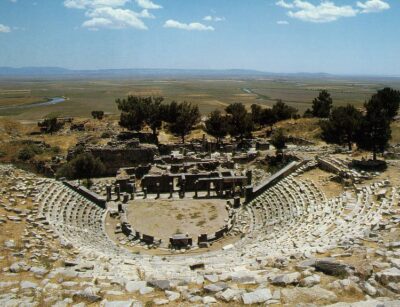
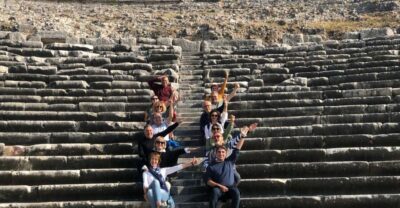
Priene’s theater is a highlight for anyone who cares about the craft of ancient performance spaces. It could hold about 6,500 people, built in the Hellenistic era. One neat detail you can look for: the front row has five king seats, and the theater is described as having especially great acoustics.
Also, Priene’s theater stands out because it’s the only one that isn’t described as being renewed by the Romans—so you’re seeing a more continuous Hellenistic-era feel. In a small group, you’re more likely to get the guide’s explanations without competing with a crowd.


A city built for life near the sea
Priene had a harbor and was connected to the Ionian city network (the tour framing notes it as one of the 12 bonded cities in the Ionic era). And here’s the part I find most human: Priene is described as wealthy, with indications that around 33% of citizens had their own bathroom with toilet—a surprisingly high level for that era. Even if you keep only one takeaway from Priene, let it be this: these weren’t just ruins; they were real neighborhoods with real comforts.
What to watch: Priene’s best viewpoints involve uphill walking. Plan on it. Bring shoes that handle uneven stone and gravel.
Miletus on the rise: Ionian power, coin origins, and a site with layers
Miletus was once a heavy hitter in the Ionian world. The tour sets it up as a hillside city that controlled a major port on the Maeander River, and that power mattered because it connected ships to the Mediterranean, the Black Sea, and the Sea of Marmara.
The Ionian Confederation story
Instead of treating Miletus like an isolated archaeological park, this tour connects it to the Ionian Confederation’s role in the ancient world. You’ll also learn how the city challenged the power of Ephesus—so the region feels like a network, not a list.
Early Greek coins: minted in the real money place
One of the more interesting points: the tour highlights early Greek coins minted in Miletus. That detail helps you picture Miletus as a practical city, not just a philosophical one. Coins mean trade, administration, and the kind of civic structure that keeps empires running.
What you’ll actually see at Miletus
You’re guided through major sections like:
- the theater
- a Byzantine fortress
- Harbour monuments
- the Delphinium
- the South Agora
- Baths of Faustina
- a Mosque of Ilyas Bey
- a Caravansaray
That range of eras is the quiet magic of Miletus. One minute you’re in a Greek civic zone, then you’re looking at later layers that show how people kept returning to the same strategic ground.
What to watch: the site can be wide. With a small group, it’s easier to keep moving without losing context. If you’re prone to drifting, ask your guide for a specific “must-see” sequence before you start walking.
Didyma’s Apollo Temple: oracle legend, medusa stone, and dramatic columns
Didyma is the reason many people love this tour. The guide frames it as a seaside village whose oracle became a major influence across the ancient Mediterranean. In other words: this wasn’t only about buildings. It was about answers—people came seeking guidance on big, life-changing decisions.
Why Didyma mattered: worship, not just a town
Didyma wasn’t a city at its peak in the way we think of cities today. It was a major worship center connected to Miletus by the Sacred Way. Pilgrims used that route to reach the oracle, so when you’re standing there, the place has a built-in narrative: people arrived, asked, waited, believed, and left.
The Apollo story you’ll hear while walking
You’ll hear the myth-and-religion framework: Didyma is associated with Zeus and Leto and their twins Apollo and Artemis. That myth context helps the architecture feel less random. It also sets up the reason the Temple of Apollo became colossal in its heyday.
What you’ll see in the ruins
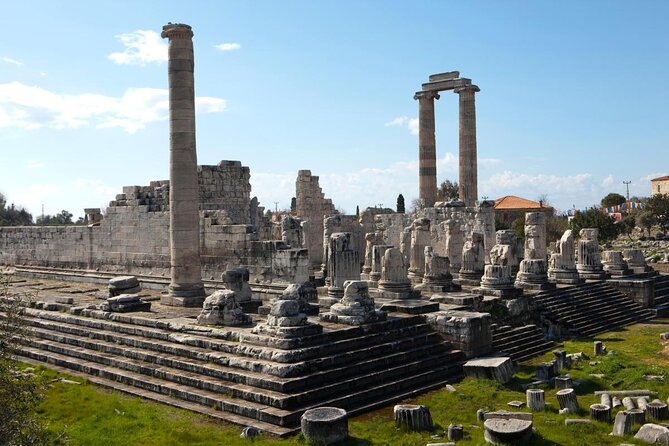
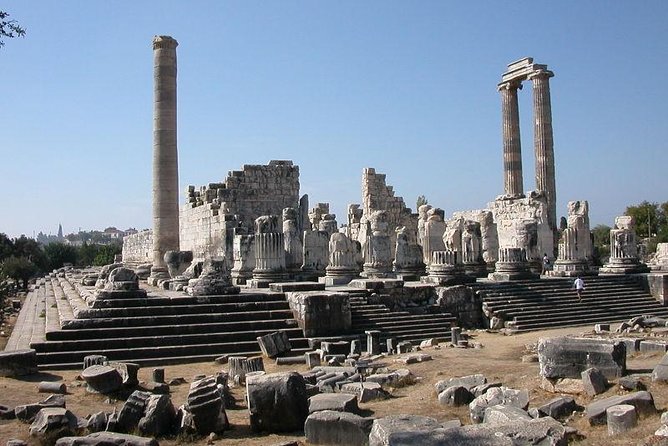
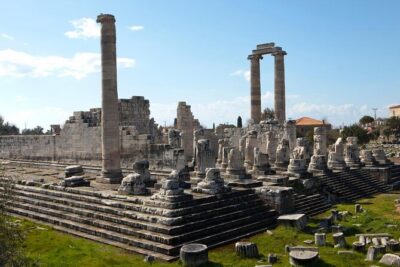
The current remains include elements from construction periods that overlap eras. The tour points out that the first temple was built by ancient Greeks in the late 8th century BCE, with today’s remains located under Hellenistic construction.
And visually, the site delivers. The ruins include:
- a stone medusa’s head
- rows of white columns
- a great stepped base
- and views that stretch out across the area
If you like “read the stone” travel, this is where your guide’s art-historian brain really matters. You’re not just taking photos; you’re learning how and why the place was designed the way it was.
What to watch: Didyma is often the stop where the day’s walking feels most noticeable. Keep water handy (drinks aren’t included, so plan for that), and pace yourself.
The art historian guide: how the day turns from viewing into understanding
This tour is explicitly led by a professional art historian. That’s a big deal, because ancient sites can turn into visual noise if nobody explains what you’re looking at.
In the best experiences, guides like Gul and Mehmet are praised for being personable and for adding lots of new information. The most useful part of that kind of guidance is not trivia—it’s context. You’ll start noticing patterns: how theaters echo civic life, how sacred sites connect to political or economic cities, and how later empires repurpose earlier spaces.
I also like that the tour doesn’t just tell you what something is; it connects it to the wider Ionian story—Ionian Confederation, early coin minting, and the pilgrim route between Miletus and Didyma.
Lunch and on-the-ground comfort: included buffet, extra drinks
A buffet lunch is included, and there’s a vegetarian option if you mention it at booking. That’s a simple quality-of-life win on a day with three major sites and a set pickup time.
One detail to plan around: drinks are not included. So if you tend to get thirsty fast, budget for water and drinks on your own.
Also, one review note points out that a guide (Gul) took the group to a local restaurant for lunch. You should expect a real meal, not just a random box lunch, but the exact setup can vary depending on timing and venue.
Price and value: is $216.74 a fair deal?
At $216.74 per person, this is not the cheapest way to see three sites. But it’s priced like a day tour that handles the big costs for you: hotel pickup and drop-off, a small-group minibus, an art historian guide, a buffet lunch, and entrance fees included.
For me, the real value is the reduction of friction. When entrance fees and transport are handled, you stop thinking about logistics and start paying attention to the guide. That matters at places like Didyma, where the difference between seeing ruins and understanding ruins is usually one good explanation.
If you’d rather pay only for what you personally choose, then independent travel might feel cheaper. But for many people in the Kusadasi area, the math works: you’re buying organization, context, and time.
Who this tour is best for (and who might want a different pace)
This tour fits best if you:
- already visited Ephesus or want to avoid repeating the same exact Roman-Ephesus storyline
- enjoy learning at a steady pace with an expert guide
- like small groups and want time to ask questions
- want a full ancient day without juggling tickets, transport, and timing
It may feel less ideal if you:
- hate guided pacing and want total freedom to roam for hours
- prefer very slow site reading and lots of rest breaks
- get cranky with a day that starts at 9:00 am and runs close to 8 hours
Small risks to keep in mind
Everything here sounds well run, but one low rating mentioned a date change without warning. The practical takeaway is basic: check your confirmation details close to departure, and keep an eye on any messages from the provider as your tour date approaches.
Also, this type of full-day ancient route involves walking on uneven ground. Even if you’re in decent shape, bring footwear you trust.
Should you book this Priene, Miletus, and Didyma day tour?
If you want one day that feels like more than a highlight reel, I’d book it. The combination of three linked ancient cities, an art historian guide, and the fact that lunch and entrance fees are included makes it a strong value for the time you’re spending in the area.
This is especially worth it when you’re already Ephesus’d out and you want the Ionian world in a way that’s still manageable from Kusadasi. Pick it when you want understanding, not just snapshots.
FAQ
How long is the Priene, Miletus, and Didyma day tour?
It runs for about 8 hours (approx.), covering three ancient sites with time to explore each.
What time does pickup start?
The tour starts at 9:00 am.
Where do you get picked up?
Pickup is available from all hotels and from the port in Kusadasi, plus hotels in the Selçuk area.
Is this a small-group tour?
Yes. It’s limited to a maximum of 14 travelers.
Is the tour offered in English?
Yes. English is offered.
Is lunch included?
Yes. A buffet lunch is included, and you can request a vegetarian option when booking.
Are entrance fees included?
Yes. Entrance fees are included.
Are drinks included with lunch?
No. Drinks are not included.
Does the tour include drop-off after the sites?
Yes. The tour includes hotel drop-off at the end of the day.
What’s the cancellation policy if plans change?
You can cancel for a full refund up to 24 hours in advance of the experience’s start time.
The Rest of the Shortlist
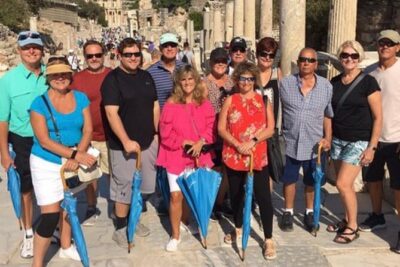
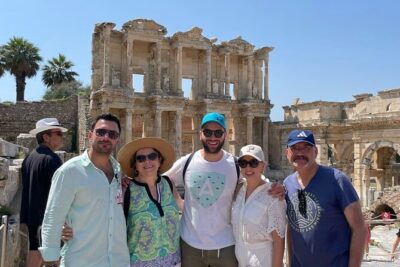
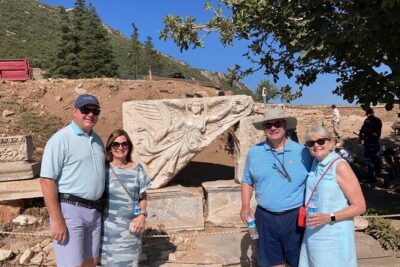
Priene, Miletus and Didyma
Just Added Around Kusadasi
- Ephesus and House of Mary from Kusadasi Cruise Port★ 4.0 · 3 reviews
- Ephesus: 4-Hour Guided Tour with Transfer from Kusadasi★ 5.0 · 3 reviews
- Sirince Village & Selcuk Bazaar Tour From Kusadasi★ 4.5 · 3 reviews
- FOR CRUISERS: Best of Ephesus Tour with GUARANTEED ON-TIME RETURN★ 5.0 · 3 reviews
- Shore Excursion: Private Pamukkale Tour From Kusadasi Port★ 5.0 · 3 reviews
- For Cruisers: Ancient Ephesus Private Tour From Kusadasi Port★ 5.0 · 3 reviews
Priene, Miletus & Didyma Tours, compared.
 ★ 4.9Ephesus, Priene, Miletos and Didyma TourFrom $21021 reviews
 ★ 5.0Priene Miletos Didyma Tour From Kusadasi / Selcuk HotelsFrom $18915 reviews
 ★ 5.0NO HIDDEN FEES : Private Ephesus – Miletus – DidymaFrom $14913 reviews
 ★ 4.5Kusadasi Shore Excursion: Private Full-Day Tour to Ephesus, Didyma and MiletusFrom $23612 reviews
 ★ 5.0Private Full-Day Ephesus Tour with Miletus and Didyma for Cruise GuestsFrom $14911 reviews
 ★ 5.0Priene Miletos Didyma (PMD) Tour From Kusadasi Port / HotelsFrom $29910 reviews
 ★ 5.0Priene, Miletos, and Didyma Private Day TripFrom $1904 reviews
 ★ 5.0Private Ephesus Miletus Dydima Tour from Port KusadasiFrom $2003 reviews
Browse the lists this tour appears in