
Review · EPHESUS HALF-DAY & EXPRESS TOURS
Ephesus: 4-Hour Guided Tour with Transfer from Kusadasi
Ancient streets feel close when you have context. This 4-hour guided Ephesus tour is a smart shore-day plan: you get led through major Greco-Roman highlights and then see the Temple of Artemis without spending your whole day figuring it out.
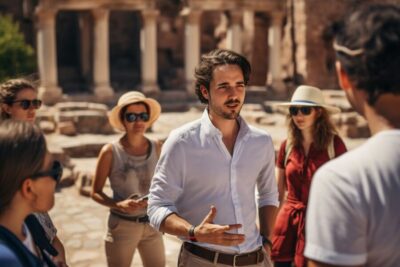
I like how it’s time-boxed so you still leave with your bearings: about 105 minutes in the archaeological area, plus a focused stop at Artemision. The private setup and live guide make a big difference here because so many buildings are ruined, and a good explanation helps you read the site.
One thing to watch is entry tickets aren’t included, and the amount can be higher than you might expect based on notes you see during booking. Bring comfortable shoes and plan for walking on uneven ground, even though the day is short.
In This Review
- Key Things That Make This Tour Work in a Short Day
- Quick Shuttle from Kusadasi Saves Your Shore-Day Energy
- Entering Ephesus: What the Guide Helps You See Right Away
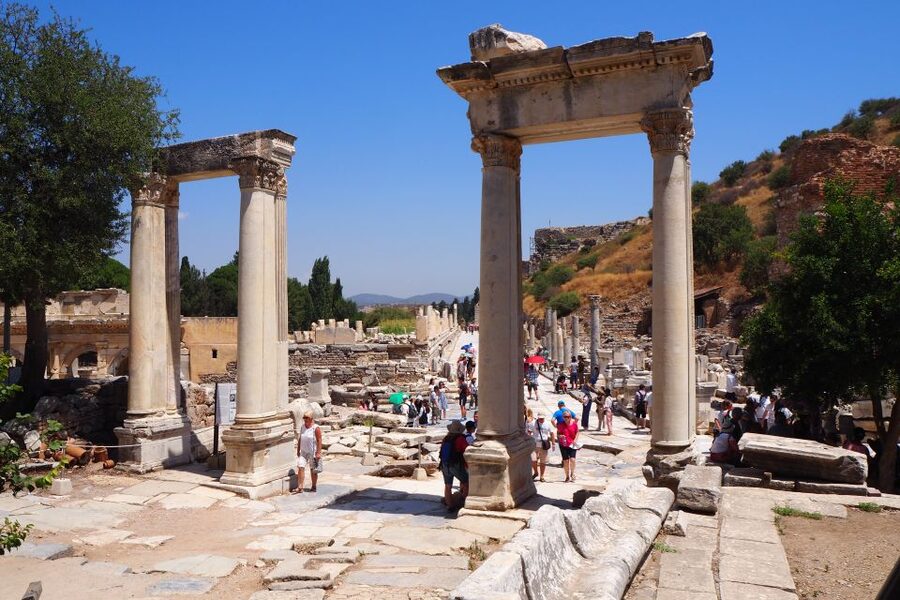
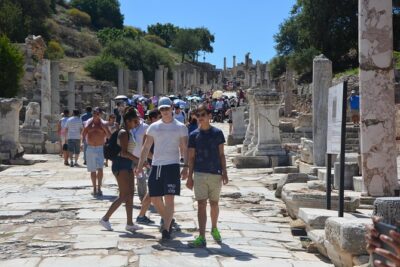
- The Marble Streets and Key Buildings You’ll Walk Past
- State Agora and Public Power
- Odeon and the City’s Performance Side
- Monument, Fountain, and the Art of Standing Still
- Curetes Street, Temple Area Connections, and Street-Scale Thinking
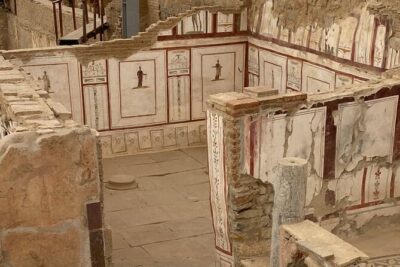
- Baths of Scholastica, Hadrian Temple, and the Roman Comfort Layer
- The Library and the Big “Reading Culture” Moment
- Gate of Mithridates and the Feeling of City Boundaries
- Commercial Agora and the Grand Theater (Yes, It’s Spectator Scale)
- Temple of Artemis (Artemision): The Famous Site, Explained Simply
- Walking Time, Uneven Ground, and How to Dress for Comfort
- Price and Value: What $89 Per Person Really Buys
- Language Choices and the Practical Reality on Site
- A Short Shop Stop You Should Expect
- Who This Tour Is Best For
- Should You Book This Ephesus Guided Tour with Transfer?
- FAQ
- Is the entry ticket to the archaeological site included?
- How long do we spend in Ephesus?
- Do I also visit the Temple of Artemis?
- What is included in the price?
- Where do pickups happen?
- What languages are the guides?
- Is the tour private?
- What should I wear for this tour?
- Is cancellation allowed and how far in advance?
Key Things That Make This Tour Work in a Short Day
- Private live guide: You’ll get spoken context for what you’re standing in front of, not just photos and dates.
- 105 minutes in Ephesus: Enough time to hit the headline ruins without feeling rushed.
- Temple of Artemis stop (about 25 minutes): A concise visit to Artemision after the city walk.
- Roundtrip shuttle from Kusadasi: Easy pickup from the port or your hotel reception, with an A/C late-model van.
- Uneven walking surfaces: You’ll be moving on irregular ground, so shoes matter more than you think.
Quick Shuttle from Kusadasi Saves Your Shore-Day Energy
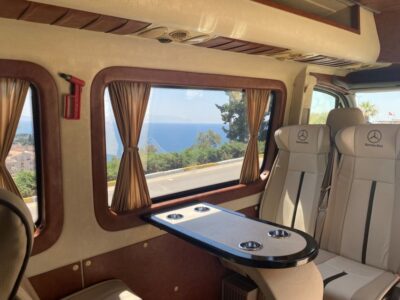
If you’re in Kusadasi on a cruise day, the biggest value is not the sightseeing itself. It’s the logistics. This tour is built around a short, smooth transfer in a late model A/C van, with pickup at your cruise arrival terminal or your hotel reception in Kusadasi.
That matters because Ephesus is a real excursion, not a “step outside and stroll” situation. When you’re trying to do it in only a few hours, every minute of confusion hurts. Having a guide coordinate pickup means you spend your energy on the site, not on timing.
You’ll also want to be ready for a classic ancient-site rhythm: get to the entrance area, walk in blocks, then pause for the big landmarks. This tour’s pace is designed to do exactly that, without turning your day into a marathon.
Short on port hours? More quick Ephesus runs
- Ephesus Temple of Artemis and House of Mary Private Half Day Tour
★ 5.0 · 1,573 reviews - 3-Hour Private Ephesus, Terrace Houses, Cruiser Only
★ 5.0 · 274 reviews - NO SHOPPING STOPS , NO HIDDEN FEES Ephesus 3/4 hour Tours
★ 4.9 · 128 reviews - Ephesus: Private Tour with Skip-The-Line & Less Walking
★ 5.0 · 125 reviews
Entering Ephesus: What the Guide Helps You See Right Away
Ephesus can be overwhelming at first. There are columns, stair steps, arches, and long marble lanes, and it’s easy to feel like you’re looking at scattered pieces instead of a city.
A live guide solves that. You start with an overview of how Ephesus functioned as part of the Ionian League, on the western coast of Asia Minor near Izmir. It was also a major departure point for trade routes into the region. That kind of background changes how you experience the buildings: you stop thinking only about ruins and start thinking about how people lived, shopped, argued, and worshipped here.
The tour then moves through the marble streets lined with big civic and ceremonial buildings. Even when structures are incomplete, the layout still tells a story—especially if someone narrates what each area was for.
The Marble Streets and Key Buildings You’ll Walk Past
During your time in the archaeological area, you’ll pass a collection of standout Greco-Roman and earlier Greek-era landmarks. Here’s what they mean for you on the ground, and what to look for as you move through:
State Agora and Public Power
You’ll walk by the State Agora, which was one of the city’s major public spaces. Agoras were where civic life played out—announcements, gatherings, and general “this is what the city does” energy.
Even as ruins, the scale of an agora area helps you understand why Ephesus was considered one of the richest Greco-Roman cities in its day.
Odeon and the City’s Performance Side
The Odeon is your reminder that entertainment and public gatherings were built into the city fabric. When you’re standing near it, pay attention to how the site was arranged for crowds. You’re not just viewing a building; you’re seeing how communities were organized around shared events.
Your own guide and car, more private Ephesus days

Monument, Fountain, and the Art of Standing Still
Several landmarks act like “anchors” on the walk: the Memnius Monument, Polio Fountain, and the Trajan Fountain. These aren’t just decorative. They mark wealth and official presence—places where money and power were made visible.
If you’ve ever wondered why ancient cities seemed obsessed with fountains and monumental entrances, this is the answer: they communicated status while serving daily life.
Curetes Street, Temple Area Connections, and Street-Scale Thinking
As you move along Curetes Street, keep thinking about street scale. Streets weren’t simply routes between buildings. They were stages. In a city like Ephesus, a walk down a main street was its own social event.
You’ll also pass the Temple of Domitian and related sacred/official spaces. Seeing them in sequence helps you understand the way religion and government mixed in public life.
Baths of Scholastica, Hadrian Temple, and the Roman Comfort Layer
Roman influence shows up strongly through places like the Baths of Scholastica and the Hadrian Temple. Baths are especially interesting because they remind you that comfort and routine mattered, not only ceremonies and politics.
This is one of those stops where you might not fully recognize everything from street level, but your guide can help you spot the logic of the layout—how people would have moved through the bathing spaces.
The Library and the Big “Reading Culture” Moment
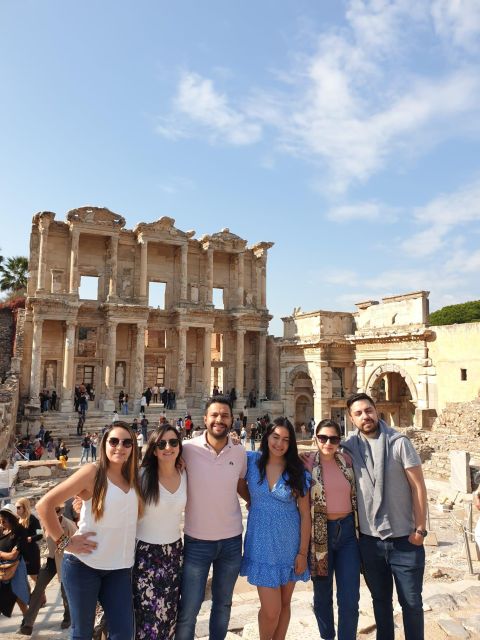
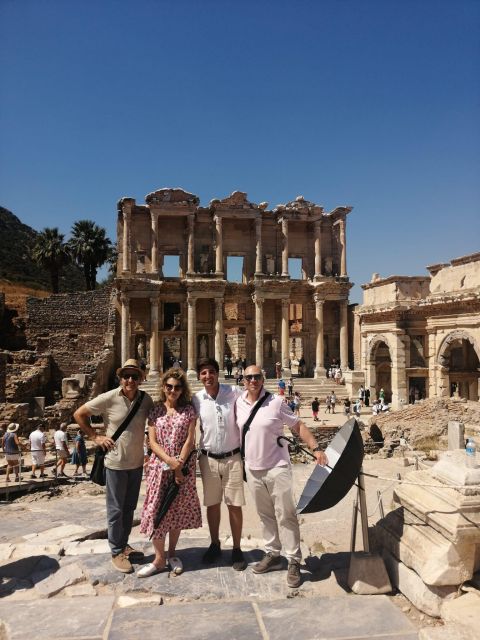
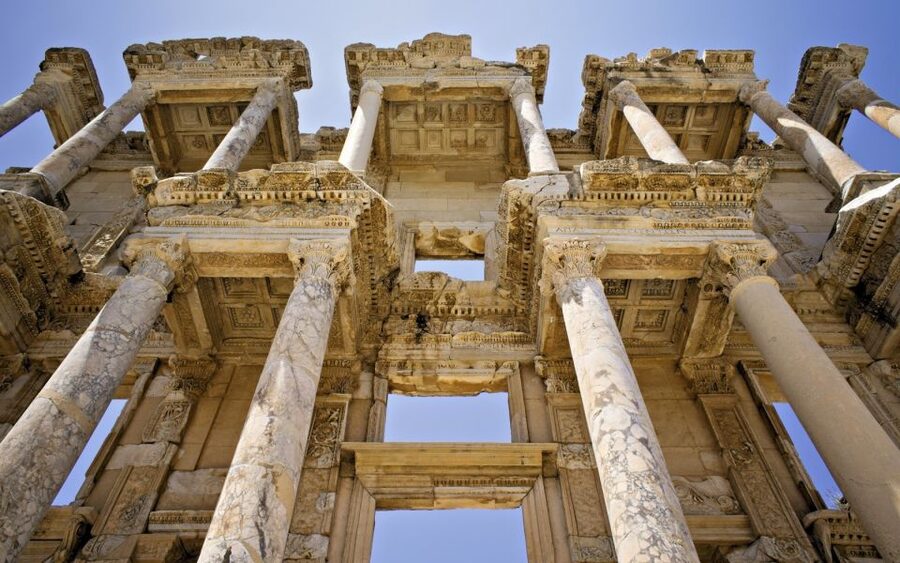
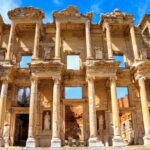
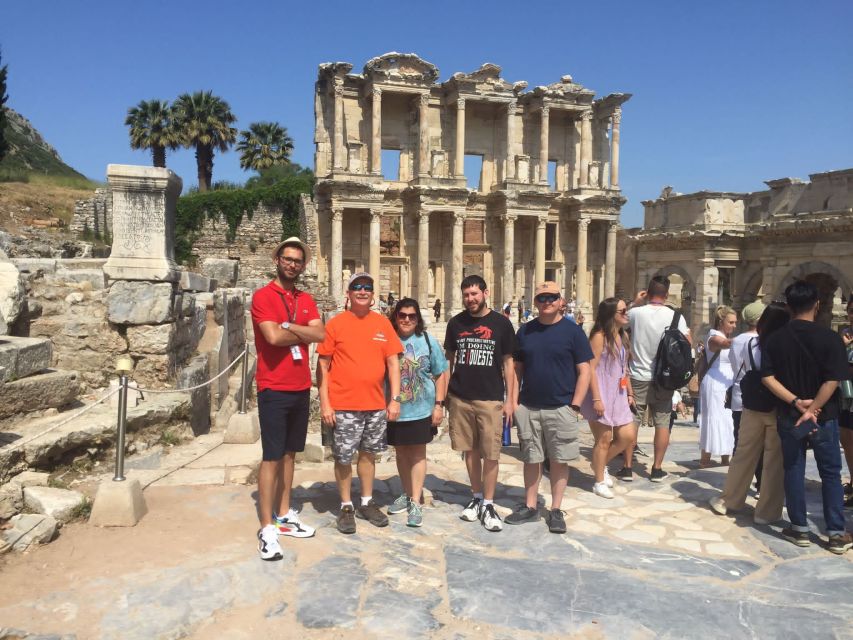
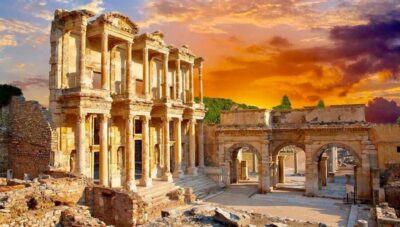
The Celsus Library is often the emotional high point for visitors because it reads like a statement: knowledge, patronage, and long-term ambition all in one building.
If you only have a few hours, it’s worth slowing down here—let the guide explain why it mattered and what kind of audience it served. Even in partial ruin, the scale still communicates importance.
Gate of Mithridates and the Feeling of City Boundaries
You’ll see the Gate of Mithridates and Mazes, another good reminder that cities had clear edges. City gates weren’t just entry points; they were identity in stone.
As you walk through, try to picture the flow of people coming in from trade routes, then moving toward civic and entertainment spaces.
Commercial Agora and the Grand Theater (Yes, It’s Spectator Scale)
Two buildings really define the “wow” factor: the Commercial Agora and the Grand Theater.
The Grand Theater was built in the 3rd century B.C. and later expanded by the Romans to hold 24,000 spectators in the 1st century A.D. That’s the kind of fact that makes your legs stop walking for a second, because you suddenly imagine the roar—how voices would travel, how crowds would fill seats in waves.
Temple of Artemis (Artemision): The Famous Site, Explained Simply
After your main Ephesus walk, you head to the Temple of Artemis, also known as the Artemision (and sometimes referred to more broadly as the Temple of Diana).
This stop is shorter—about 25 minutes with the guide—so treat it like a focused museum label moment outdoors. The goal isn’t to “complete” the temple experience. It’s to understand what you’re looking at and why it became so famous.
Your guide frames the temple as dedicated to an ancient local form of the goddess Artemis. In other words, this isn’t only Greek mythology imported from elsewhere. It’s tied to the area’s own beliefs and identity.
One practical tip: since the city walk and the temple stop are separate, keep your pacing steady in the morning (or your first half of the tour). If you spend extra time lingering on carvings early, the temple visit can start to feel like a quick glance. This tour is built to keep both halves balanced.
Walking Time, Uneven Ground, and How to Dress for Comfort
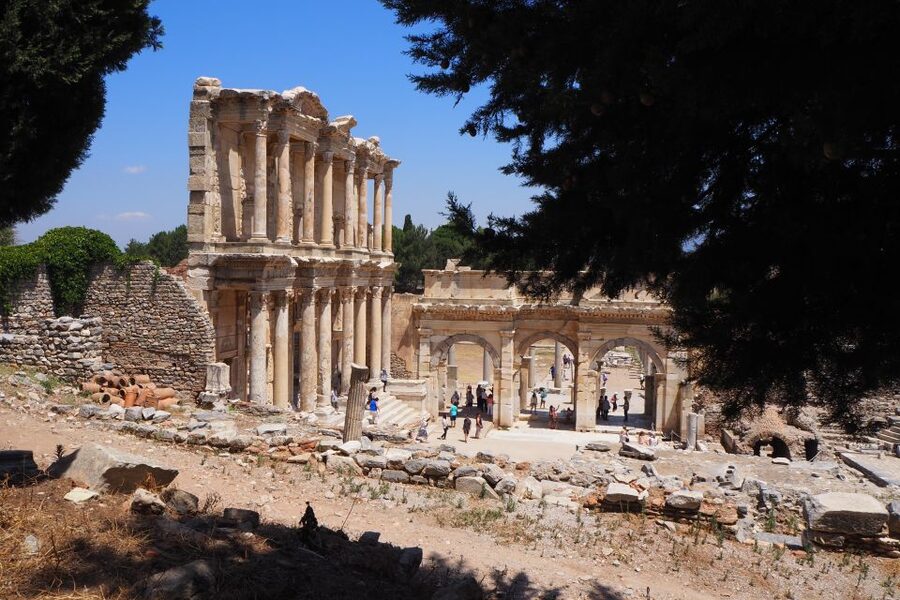
This tour is only four hours, but it still includes walking on uneven surfaces. That’s a big deal at archaeological sites, where ground can be cracked, raised, or irregular.
Bring comfortable shoes with real grip. If your footwear is more fashion than function, you’ll spend the day thinking about your feet instead of reading the city.
Also plan for sun and heat if you’re going in warmer months. You don’t need a full survival kit, but a hat and water can save your energy—especially since lunch isn’t included, so you might want a snack before or after.
Price and Value: What $89 Per Person Really Buys
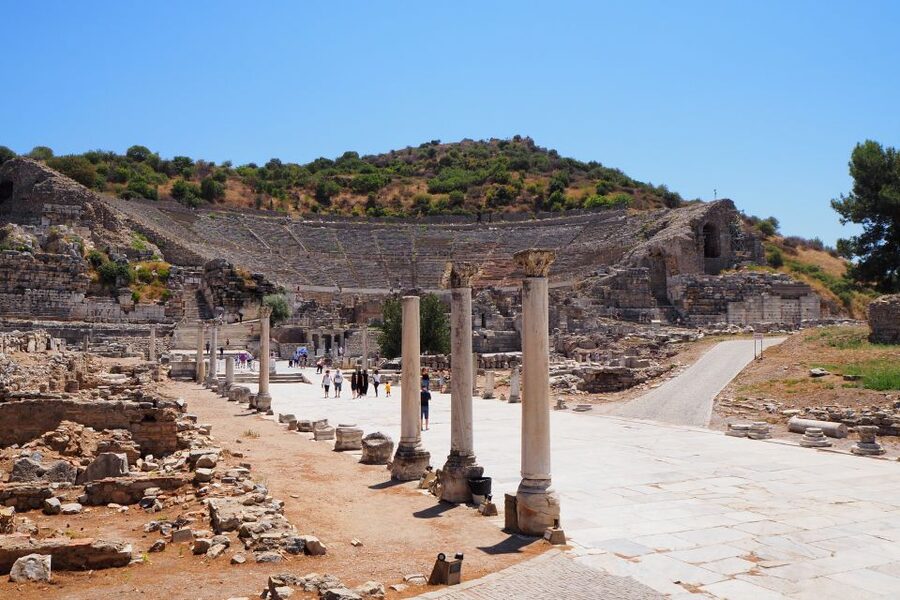
At $89 per person for a 4-hour private-group experience, you’re paying for three main things:
- A live professional guide who can interpret what you’re seeing.
- Private roundtrip transportation in an A/C van, including parking fees.
- A structured visit that prevents wasted time.
You’re not just booking a bus ticket and an entrance sweep. The guide component is the differentiator, especially at Ephesus, where so much is fragmentary. With the right explanation, ruined architecture becomes understandable.
The main downside in the value equation is entry: entry tickets are not included. One guest specifically noted that an entry estimate shown during booking was lower than what they paid on arrival—around 10€ versus about 40€ at the site. So budget accordingly, even if your booking page shows a different figure.
If you want the best value, consider this booking style: you’re in Kusadasi for a limited time, and you’d rather spend money on guidance than on transportation headaches.
Language Choices and the Practical Reality on Site
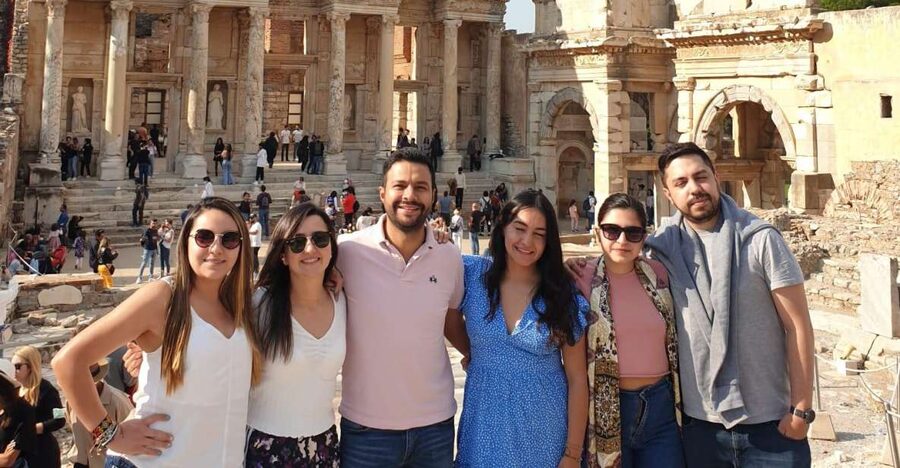
The tour operates with Spanish and English live guides.
One review mentioned a francophone guide experience, which suggests the operator may be flexible depending on staffing. Still, if French is your main language, I’d message the provider before booking so you aren’t left hoping.
For most visitors, English or Spanish narration is enough to connect the dots quickly—especially for the big landmarks like the Grand Theater and the Celsus Library.
A Short Shop Stop You Should Expect
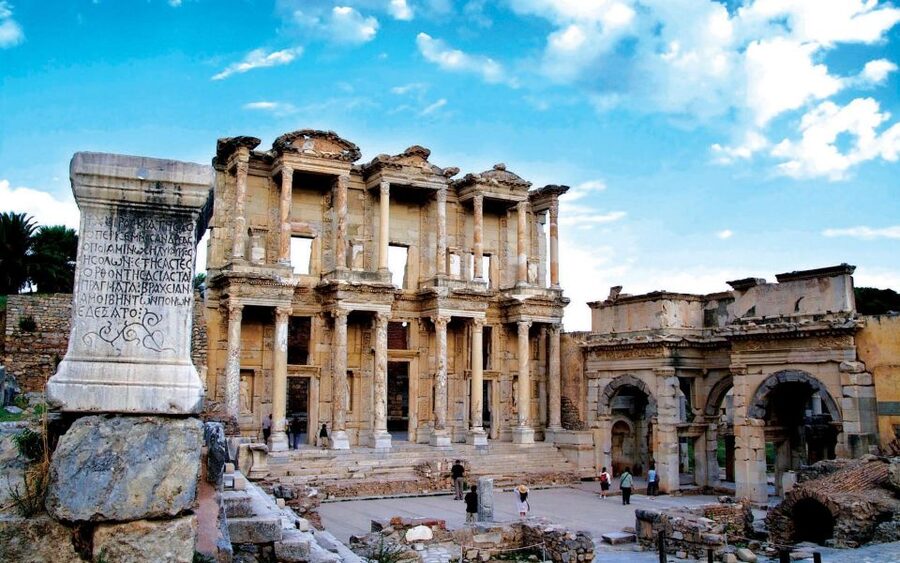
The tour may include a short stop at a traditional Turkish shop. This is common in the region, and it can be pleasant if you’re there with the right expectations.
If you’d rather keep your time focused on ruins, treat it as a brief break, not part of the core sightseeing. Don’t plan any “must-see” shopping into the day.
Who This Tour Is Best For
This is a strong fit if:
- You’re doing Ephesus as a short port call and want structure.
- You enjoy historical sites but don’t want to play archaeologist alone.
- You’d rather pay for interpretation than lose time reading and guessing.
- You prefer a private group experience with a dedicated guide.
It’s less ideal if:
- You want total freedom to wander slowly for hours without a set rhythm.
- You’re sensitive to walking on uneven ground (the tour does include it).
- You’re aiming for a “no planning” day and you don’t want to handle entry tickets yourself.
Should You Book This Ephesus Guided Tour with Transfer?
Yes, if you want a clean, efficient Ephesus visit with the kind of guidance that helps ruins make sense fast. The combination of shuttle transfer from Kusadasi, private-group format, and a guided walk through the main highlights is exactly what you want when your time window is tight.
Before you book, do two smart checks:
- Budget for entry tickets separately, even if you see one number during planning. Costs can be different once you’re at the gate.
- Wear solid shoes and plan to walk. Four hours sounds short until you’re on ancient stone paths.
If you like your sightseeing organized and you want the Temple of Artemis explained in context (not just pointed at), this tour is a dependable way to get value out of a limited day.
FAQ
Is the entry ticket to the archaeological site included?
No. Entry tickets are not included, and you must pay when you arrive at the Ephesus archaeological site.
How long do we spend in Ephesus?
You’ll have about 105 minutes for a guided visit in the Ephesus ancient city.
Do I also visit the Temple of Artemis?
Yes. The tour includes a guided visit to the Temple of Artemis for about 25 minutes.
What is included in the price?
The price includes a professional tour guide, private transportation with A/C late model van, and parking fees.
Where do pickups happen?
Pickup is included from the cruise ship arrival terminal or from your hotel reception in Kuşadasi.
What languages are the guides?
The live tour guide is available in Spanish and English.
Is the tour private?
Yes. It’s listed as a private group.
What should I wear for this tour?
Wear comfortable walking shoes since the tour includes walking on uneven surfaces.
Is cancellation allowed and how far in advance?
Free cancellation is available up to 24 hours in advance for a full refund.
The Rest of the Shortlist
Ephesus, Just Your Party

Ephesus in a Few Port Hours
Just Added Around Kusadasi
- Ephesus and House of Mary from Kusadasi Cruise Port★ 4.0 · 3 reviews
- Ephesus: 4-Hour Guided Tour with Transfer from Kusadasi★ 5.0 · 3 reviews
- Sirince Village & Selcuk Bazaar Tour From Kusadasi★ 4.5 · 3 reviews
- FOR CRUISERS: Best of Ephesus Tour with GUARANTEED ON-TIME RETURN★ 5.0 · 3 reviews
- Shore Excursion: Private Pamukkale Tour From Kusadasi Port★ 5.0 · 3 reviews
- For Cruisers: Ancient Ephesus Private Tour From Kusadasi Port★ 5.0 · 3 reviews
Ephesus Half-Day & Express Tours, compared.
 ★ 5.0Ephesus Temple of Artemis and House of Mary Private Half Day TourFrom $151,573 reviews
 ★ 5.03-Hour Private Ephesus, Terrace Houses, Cruiser OnlyFrom $30274 reviews
 ★ 4.5Shore Excursions: 3 Hours Easy Ephesus TourFrom $26136 reviews
 ★ 4.9NO SHOPPING STOPS , NO HIDDEN FEES Ephesus 3/4 hour ToursFrom $56128 reviews
 ★ 5.0Ephesus: Private Tour with Skip-The-Line & Less WalkingFrom $44125 reviews
 ★ 4.9From Kusadasi/Izmir: Ephesus Private Tour with Less WalkingFrom $81121 reviews
 ★ 5.0NO HIDDEN FEES : Ephesus 3 to 4 Hours Private & Mini Group ToursFrom $99118 reviews
 ★ 4.7Easy Ephesus Shore Excursion – 4 Hours with Licensed GuideFrom $2175 reviews
Browse the lists this tour appears in