
Review · PRIENE, MILETUS & DIDYMA TOURS
Ephesus, Priene, Miletos and Didyma Tour
A day that hits four major ruins is rare. This Ephesus, Priene, Miletos & Didyma tour takes you from Roman marble streets to an Apollo oracle site, with skip-the-line access and entrance fees handled. It’s a smart way to see more than just the big Ephesus highlights without losing the thread of what you’re looking at.
What I like most is the all-inclusive approach: licensed guide, air-conditioned vehicle, and entry fees for all four sites are included. I also like the focus on context—why these places mattered for trade, philosophy, and prophecy, not just what the buildings look like.
One possible drawback: it’s a full 8-hour day with lots of walking on uneven ancient surfaces, so it’s not suitable for wheelchair users.
In This Review
- Key things that make this tour worth your time
- Aegean four-city route from Kusadasi in 8 hours
- Getting to Ephesus, Priene, Miletos and Didyma without stress
- Ephesus: Marble Street, the Great Theatre, and the brothel footprint
- Optional Terrace Houses: when you want the elite view
- Priene: Athena’s temple, the grid city plan, and theatre views
- Miletos: philosophers, a massive theatre, and Faustina’s baths
- Didyma: the Apollo temple, three surviving columns, and the Sacred Way
- Price and value: is $210 a fair deal?
- Who this tour suits best (and who might not love it)
- Practical tips to enjoy the day you’re going to have
- Final thoughts: should you book this Ephesus–Priene–Miletos–Didyma tour?
- FAQ
- How long is the Ephesus, Priene, Miletos and Didyma tour?
- What is the price per person?
- Which four sites are included in the tour?
- Are entrance fees included?
- Do I need to arrange transport between the sites?
- Where does pick-up happen?
- What languages are the guides available in?
- Is the tour wheelchair accessible?
- What should I bring?
- Can I cancel for a full refund?
- Is reserve now, pay later available?
Key things that make this tour worth your time
- Four-city circuit in one day: Ephesus, Priene, Miletos & Didyma on the Aegean coast
- Entrance fees included for all four sites, so you aren’t doing last-minute budgeting
- Licensed guide + air-conditioned vehicle, which matters when you’re moving between towns
- Ephesus beyond the postcard: Great Theatre, Terrace Houses (optional), and the carved-footprint brothel story
- Priene’s grid-plan and big views from the theatre over the Meander River delta
- Didyma’s Apollo temple and oracle legends, plus the Sacred Way route to prophecy
Aegean four-city route from Kusadasi in 8 hours
If your time is short, this is the kind of day plan you actually want. You’re covering Ephesus first, then Priene, Miletos, and finally Didyma—four different settings that shaped ancient Ionian and Roman life. It’s long, but it’s focused, and you’re not bouncing around at random.
Because this is a guided circuit, you get the “why” behind the “what.” Ephesus isn’t just a pile of columns; it’s a Roman metropolis with public life, entertainment, and religion built into one urban layout. Then Priene gives you the clean, planned geometry of a hillside city. Miletos adds the thinkers and the harbor-city rhythm. And Didyma ends with prophecy on a monumental scale.
The tour runs about 8 hours, so it’s best for people who can handle a steady pace. If you want a slow museum stroll with long breaks and zero stepping stones, you’ll feel the schedule.
Three quieter ruins south of town, more of the trio
- Priene Miletos Didyma Tour From Kusadasi / Selcuk Hotels
★ 5.0 · 15 reviews - NO HIDDEN FEES : Private Ephesus – Miletus – Didyma
★ 5.0 · 13 reviews - Priene, Miletus, and Didyma Day Tour from Kusadasi
★ 4.5 · 11 reviews - Private Full-Day Ephesus Tour with Miletus and Didyma for Cruise Guests
★ 5.0 · 11 reviews
Getting to Ephesus, Priene, Miletos and Didyma without stress
A big part of value here is the logistics. You get pick-up and drop-off, and the trip is done in an air-conditioned vehicle with a professional driver. That’s not just comfort—it’s also time saved versus trying to piece together transport between sites on your own.
Pick-up is either from the Kusadasi port or from hotels in Aydin and Izmir (depending on where you’re staying and how the operator arranges your start point). And because the tour is described as using skip-the-line access, you spend more of your day inside the sites instead of waiting outside them.
This is also a private-group setup. That usually helps the flow if your guide needs to adjust pace for the group, and it makes Q&A easier during the stops. If you’re traveling solo, this kind of structure can feel calmer than a big open-access group.
Ephesus: Marble Street, the Great Theatre, and the brothel footprint
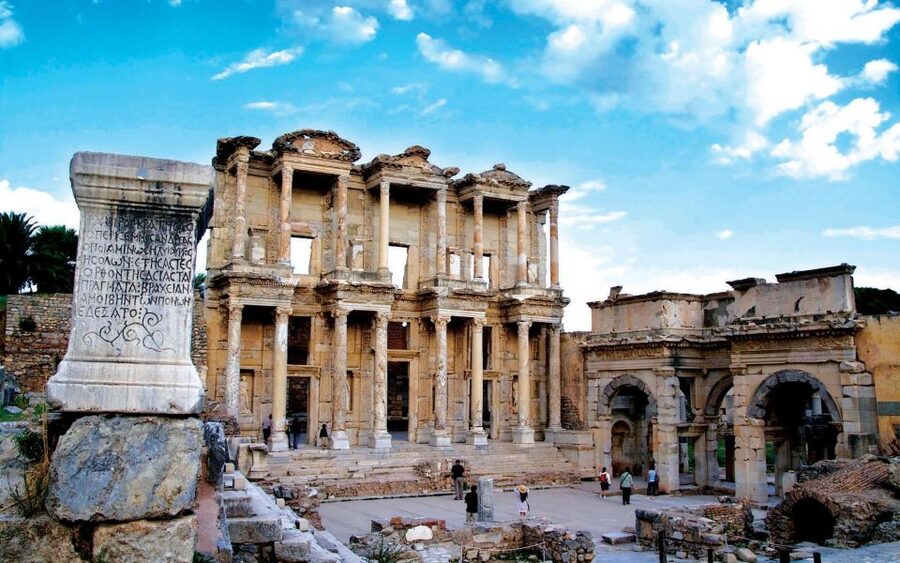
Ephesus is where most people start, and for good reason. You’ll walk the Marble Street, the kind of long, straight promenade that once carried daily life and ceremonies through the city. The tour theme connects it to major names linked to the area, including Cleopatra and St. Paul, which helps you understand why stories attached to Ephesus are everywhere.
The stop that makes Ephesus feel real fast is the Great Theatre. The scale is dramatic—about 24,000 citizens could gather there. And it wasn’t only for plays: the theatre hosted political assemblies and gladiatorial games, so it was entertainment plus civic power in one place.
Then come the little details you remember later. A highlight is the “world’s oldest advertisement” idea: a carved footprint and heart leading to the ancient brothel. It’s the kind of clue you could walk right past without a guide, but once you know what you’re looking at, Ephesus becomes less abstract.
Optional Terrace Houses: when you want the elite view
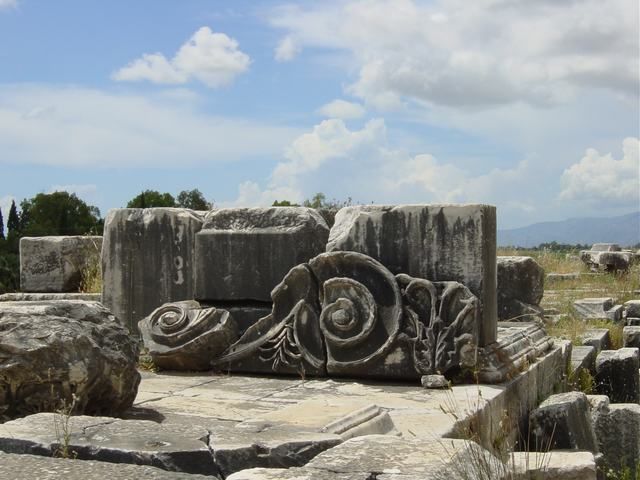
If you choose the Terrace Houses upgrade, you’ll shift from public life to elite domestic luxury. The tour frames them as lavish “penthouses” of the Ephesian elite, with mosaics and frescoes that show off wealth and taste. Even if you’re not an art person, this is often the moment where ruins start to feel personal.
Because this is an optional premium add-on, you’ll want to decide based on your interests and energy. If you’re already tired from the main walking circuits, skip it and enjoy the rest with less pressure. If you’re the type who loves seeing how ordinary people lived versus elite living, this upgrade can be a big payoff.
Priene: Athena’s temple, the grid city plan, and theatre views
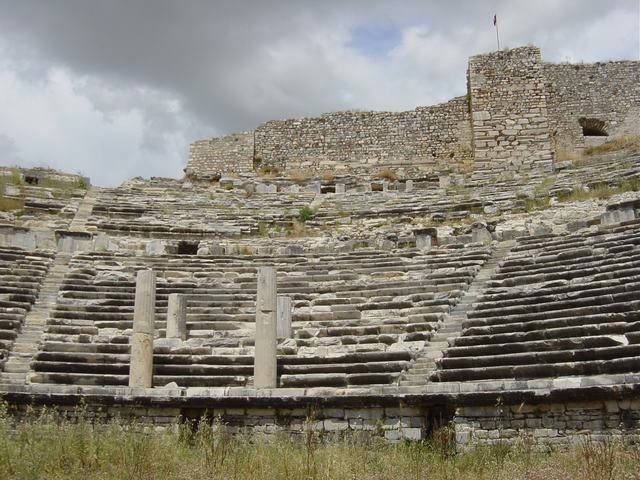
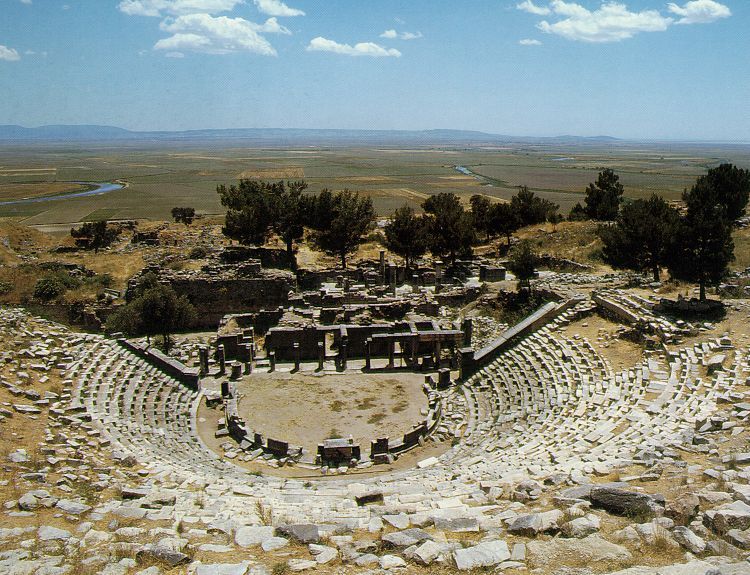
After the noise and scale of Ephesus, Priene feels like a different kind of lesson. It’s a hillside city, and the big idea is its design: Priene was built on a grid plan so well known that it influenced later approaches to urban planning. That makes the ruins feel more like a blueprint than a random archaeological site.
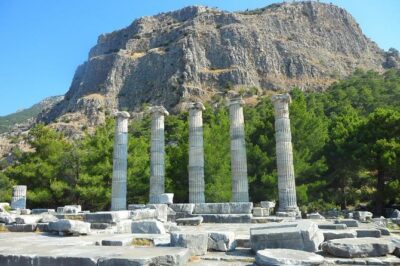
You’ll climb up to the Temple of Athena Polias, presented as a strong example of Ionian architecture. When you have a guide pointing out the architectural logic, those columns stop being just pretty objects and start acting like evidence of how people worshiped, organized, and built their identity.
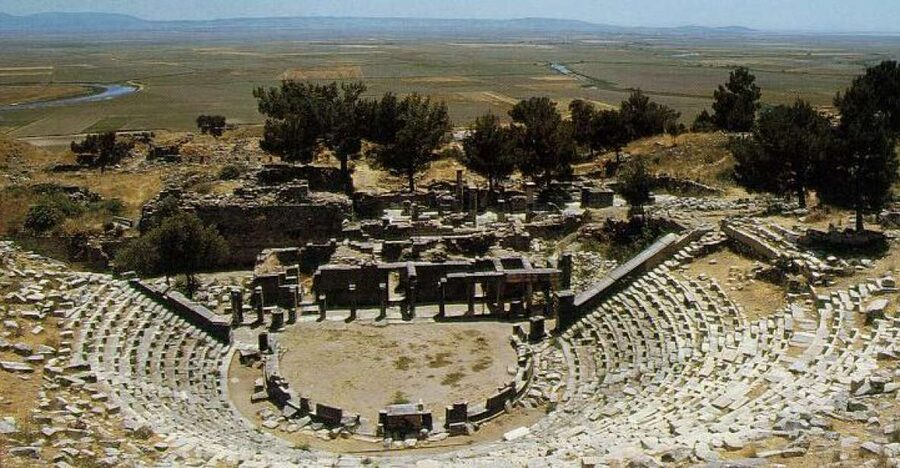
One of the best payoffs here is the theatre. The view from the theatre over the Meander River delta is part of the point. From that height, you start to understand why cities like this were placed where they were—visibility, defense, and connection to the wider region.
Priene is also a good counterbalance if you’ve been overwhelmed by the sheer size of Ephesus. It’s smaller, but the design is clearer, and the stories feel more focused.


Miletos: philosophers, a massive theatre, and Faustina’s baths
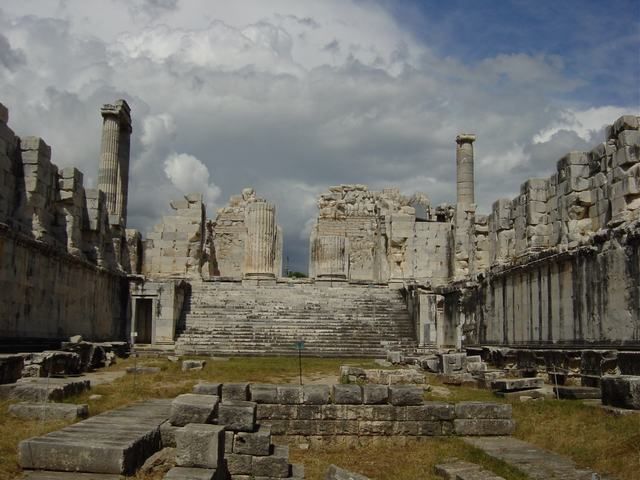
Next is Miletos, and it brings the Aegean back into focus as a place of movement and ideas. The tour presents Miletos as a maritime hub and the birthplace of pre-Socratic philosophy, with names like Thales and Anaximander tied to the area. Even if you don’t remember every detail from school, it changes how you look at the city: you stop seeing ruins and start seeing a place where thinking and trading met.
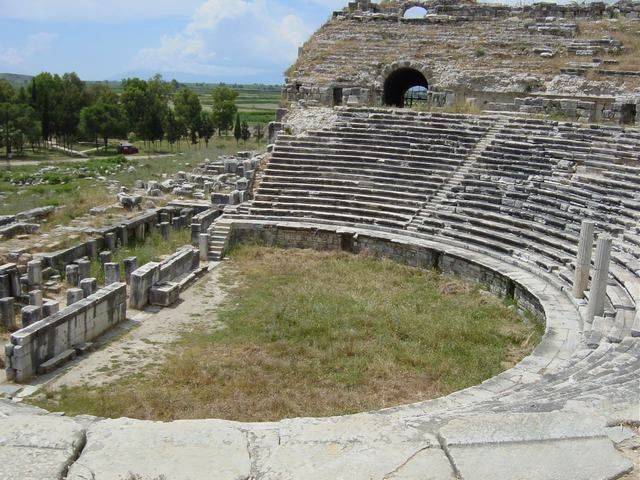
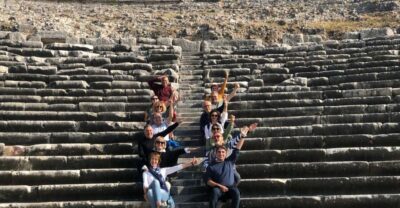
The theatre here is another scale check. The theatre holds around 15,000 people, which tells you Miletos had real wealth and a strong public culture. Standing in a space like that makes it easier to picture not just performances, but civic gatherings.
Then there’s a standout that feels almost surprising: the Baths of Faustina. The tour notes that they were built by the wife of Emperor Marcus Aurelius. That detail matters because it ties the ruins to specific imperial influence, not just general Roman style.
You’ll also walk through the Agora, described as one of the largest marketplaces of the ancient world. What I like about this part is the contrast: it’s silent now, but the tour explains that ships once docked and fed commerce through the city. It’s one of those moments where a guide helps you “turn on” your imagination without turning it into fantasy.
Didyma: the Apollo temple, three surviving columns, and the Sacred Way
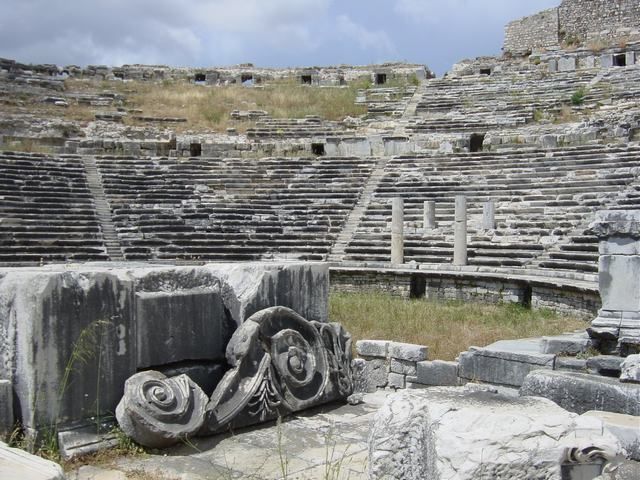
The final stop is Didyma, and it has a different emotional tone than the cities you visited earlier. This isn’t just a town square or a theatre—it’s a sanctuary of prophetic power. The tour frames it as a rival to Delphi in terms of oracle reputation, and that sets up the right mindset: you’re visiting a place built to generate answers for the people who sought them.
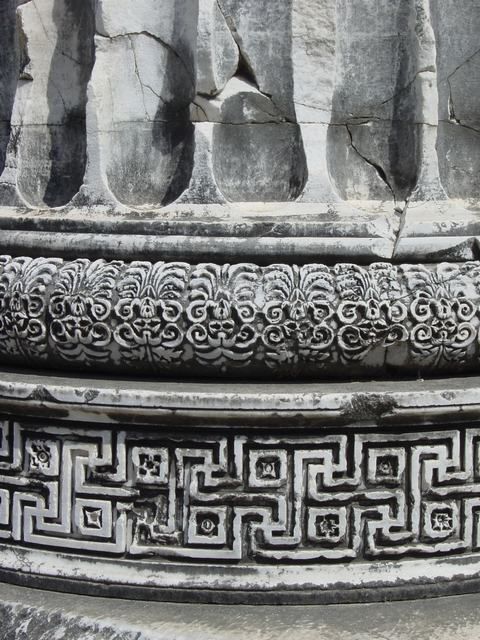
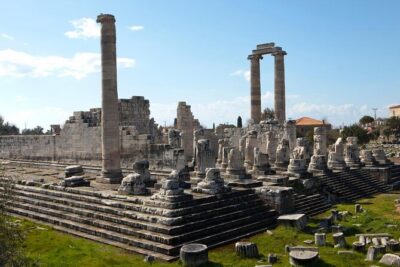
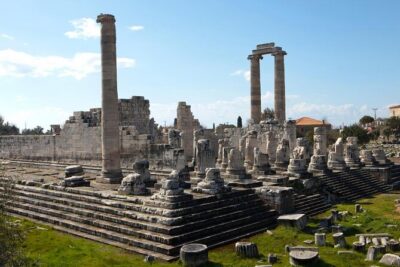
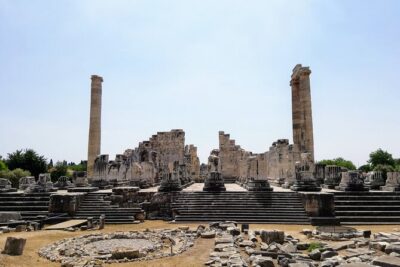
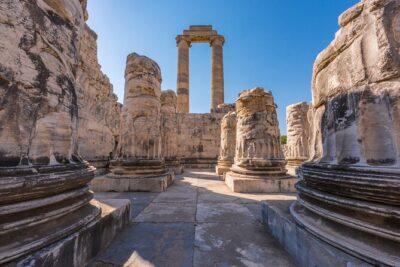
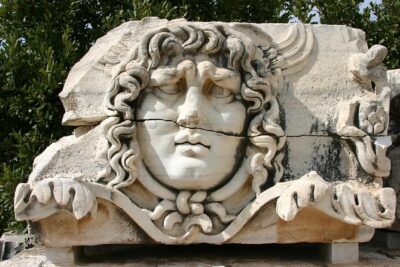
The main event is the Temple of Apollo. The tour calls it one of the largest and most enigmatic temples from the Hellenic world, and it’s hard to argue with the “cosmic scale” idea once you’re there. The most striking physical clue mentioned is that three towering, intricately fluted columns still stand. They’re the sort of remains that make you pause, even if you’re in a hurry.
You’ll also walk the Sacred Way, described as the route pilgrims used when they came for prophecies. This part matters because it turns the site into a story with direction. Instead of treating Didyma like an object, you experience it like a journey—one built for people who traveled with heavy questions.
If you like mythology that has a physical setting behind it, Didyma is the closer that makes the full circuit feel complete.
Price and value: is $210 a fair deal?
At $210 per person for an 8-hour guided day, the value depends on what you’re comparing it to. Since the tour includes licensed guide services and entrance fees for all four sites, you’re not paying those separately while trying to keep your schedule tight. That’s the big deal for me: the cost is doing work in your favor.
It’s also priced as a time-saver. Four major sites in one day means fewer hours lost to independent planning and transport. And because you’re using an air-conditioned vehicle with a professional driver, you’re trading some flexibility for a smoother day.
Where you might spend extra is mainly around optional upgrades like the Terrace Houses premium add-on. The tour is also clear that personal items aren’t included, so think of typical day-travel basics: snacks, water, and any souvenirs are on you. The tour handles the core costs tied to the main sites.
Overall, if you want maximum ancient-site value per day, this price is in the right neighborhood. If you only care about Ephesus and nothing else, you may feel the extra stops are less satisfying.
Who this tour suits best (and who might not love it)
This tour is a good match for you if you:
- want four famous archaeological stops in one structured day
- like learning the bigger story—Roman urban life, Ionian design, philosophical origins, and oracle culture
- appreciate skip-the-line access and not managing ticket logistics yourself
- can handle steady walking and time on uneven ground
It’s not the best match if you:
- need wheelchair-friendly access (the tour is stated as not suitable for wheelchair users)
- want lots of free time at each ruin for photos and wandering without timing pressure
- get cranky when a day includes travel between multiple sites
If you’re visiting in a group of mixed interests, this tour also works well because it offers variety: Ephesus has spectacle and theater; Priene is about urban design and views; Miletos adds philosophy and imperial connections; Didyma ends with prophecy and temple scale.
Practical tips to enjoy the day you’re going to have
This is an ancient-site circuit, so prep like you’re going to walk a lot. Bring comfortable shoes, a sun hat, and sunglasses. You’ll also want your camera—there’s plenty here that’s worth a photo, especially the surviving columns at Didyma and the theatre vantage points.
I’d also mentally plan for the pace. With four stops and an 8-hour day, you’ll enjoy it more if you treat it like a guided route rather than a long leisure day. Let the guide’s explanations set your viewing rhythm, and save deep photo sessions for the moments that truly grab you.
If you’re sensitive to sun, plan your hydration and shade breaks accordingly. The tour info doesn’t list a meal plan, so don’t assume you’ll be fed; treat this as a day where you manage your own comfort between sites.
Final thoughts: should you book this Ephesus–Priene–Miletos–Didyma tour?
I’d book this tour if you want a high-coverage, well-organized ancient day that goes beyond Ephesus alone. The mix of Roman metropolis (Ephesus), planned hillside design (Priene), philosophy-and-harbor context (Miletos), and oracle sanctuary scale (Didyma) gives you a rounded picture of the ancient Aegean world.
The main reason not to book is simple: if you can’t do lots of walking or you want a slower, more flexible day, this schedule will feel tight. But if you’re happy with a guided circuit and you like the idea of seeing four major sites while the entrance process is handled, this is a strong value pick.
FAQ
How long is the Ephesus, Priene, Miletos and Didyma tour?
The tour duration is 8 hours.
What is the price per person?
The price is $210 per person.
Which four sites are included in the tour?
The tour includes Ephesus, Priene, Miletos, and Didyma.
Are entrance fees included?
Yes. Entrance fees for the museums and sites according to the itinerary are included, and the tour is also described as including all entrance fees.
Do I need to arrange transport between the sites?
No. You travel by an air-conditioned vehicle with a professional driver.
Where does pick-up happen?
You can be picked up at Kusadasi port or from hotels in Aydin and Izmir (based on where you’re staying).
What languages are the guides available in?
The licensed guide is listed for English, German, French, and Dutch, and the activity also indicates live guiding in Spanish, English, Italian, Dutch, Greek, German, French, Russian.
Is the tour wheelchair accessible?
No. It is not suitable for wheelchair users.
What should I bring?
Bring a passport or ID card, comfortable shoes, sunglasses, and a sun hat (and it’s also suggested you wear comfortable walking shoes and bring a camera).
Can I cancel for a full refund?
Yes. You can cancel up to 24 hours in advance for a full refund.
Is reserve now, pay later available?
Yes. You can reserve now & pay later, keeping travel plans flexible.
The Rest of the Shortlist
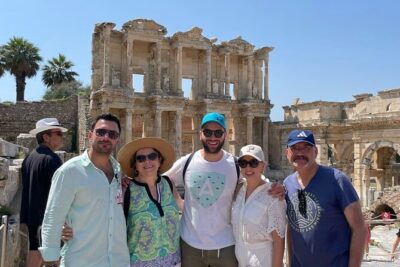
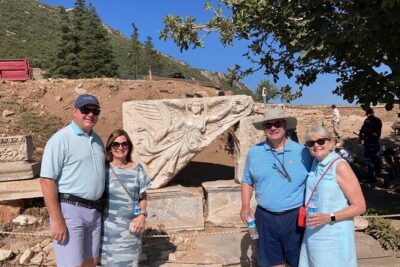
Priene, Miletus and Didyma
Just Added Around Kusadasi
- Ephesus and House of Mary from Kusadasi Cruise Port★ 4.0 · 3 reviews
- Ephesus: 4-Hour Guided Tour with Transfer from Kusadasi★ 5.0 · 3 reviews
- Sirince Village & Selcuk Bazaar Tour From Kusadasi★ 4.5 · 3 reviews
- FOR CRUISERS: Best of Ephesus Tour with GUARANTEED ON-TIME RETURN★ 5.0 · 3 reviews
- Shore Excursion: Private Pamukkale Tour From Kusadasi Port★ 5.0 · 3 reviews
- For Cruisers: Ancient Ephesus Private Tour From Kusadasi Port★ 5.0 · 3 reviews
Priene, Miletus & Didyma Tours, compared.
 ★ 5.0Priene Miletos Didyma Tour From Kusadasi / Selcuk HotelsFrom $18915 reviews
 ★ 5.0NO HIDDEN FEES : Private Ephesus – Miletus – DidymaFrom $14913 reviews
 ★ 4.5Kusadasi Shore Excursion: Private Full-Day Tour to Ephesus, Didyma and MiletusFrom $23612 reviews
 ★ 4.5Priene, Miletus, and Didyma Day Tour from KusadasiFrom $21611 reviews
 ★ 5.0Private Full-Day Ephesus Tour with Miletus and Didyma for Cruise GuestsFrom $14911 reviews
 ★ 5.0Priene Miletos Didyma (PMD) Tour From Kusadasi Port / HotelsFrom $29910 reviews
 ★ 5.0Priene, Miletos, and Didyma Private Day TripFrom $1904 reviews
 ★ 5.0Private Ephesus Miletus Dydima Tour from Port KusadasiFrom $2003 reviews
Browse the lists this tour appears in