
Review · EPHESUS ANCIENT CITY TOURS
From Kusadasi Port: Best of Ephesus Tour (Skip-the-line)
Your cruise day gets a real payoff. In about seven hours, you’ll see Ephesus at full scale, plus the House of the Virgin Mary and the Temple of Artemis—with a guide doing the heavy lifting.
What I like most is how much you cover without feeling rushed, and how the stops connect: pilgrimage first, then the city, then the museum where the artifacts explain what you just walked past. One thing to consider: entrance fees and lunch aren’t included, so you’ll want a little cash/card plan for those.
In This Review
- Key Things You’ll Notice on This Tour
- Kusadasi Day Trip Logic: Big Sights, Cruise-Friendly Timing
- House of Virgin Mary: Pilgrimage First, Then the Roman City
- Getting into Ephesus: Start Upper Gate for the Downhill Layout
- Ephesus Walking Route: What Each Stop Is Really Teaching You
- Terrace Houses: Why People Get Excited About This Part
- Temple of Artemis: Short Visit, Big Context
- Ephesus Museum: The Artemis Statues Explain the Ruins
- Selcuk Break and Lunch Hour: Use It Smart
- Transportation and Comfort: Private Means You Relax More
- Price and Value: Is $43 a Fair Deal?
- Who This Tour Is Best For
- Should You Book This Kusadasi Ephesus Tour?
- FAQ
- How long is the Best of Ephesus Tour from Kusadasi Port?
- Where does the tour start?
- Is there an English-speaking guide?
- Is private transportation included?
- Does the tour include skip-the-line entry?
- Are entrance fees included?
- Is lunch included?
- What are the main sights visited?
- How much time is spent at Ephesus?
- What should I wear or bring?
Key Things You’ll Notice on This Tour
- Skip-the-line access helps you spend more time inside the big sites
- Private luxury transportation makes the day feel calmer from start to finish
- House of Virgin Mary is treated like a pilgrimage stop, not just a photo stop
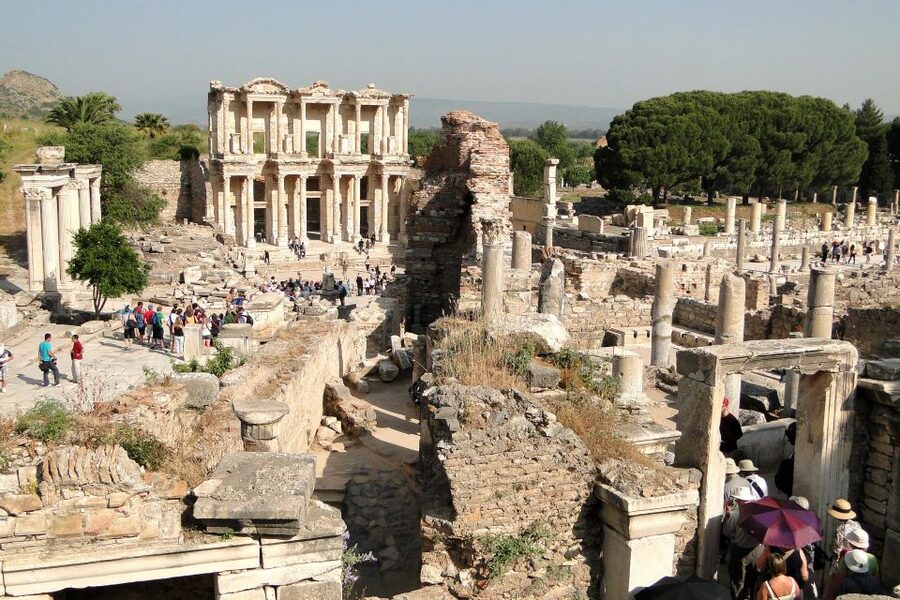
- Ephesus walking route includes the Library of Celsus, Great Theater, and Terrace Houses area
- Temple of Artemis is included, giving context to what made this region famous
- Ephesus Archaeological Museum ties ruins to real objects, including Artemis statues
Kusadasi Day Trip Logic: Big Sights, Cruise-Friendly Timing
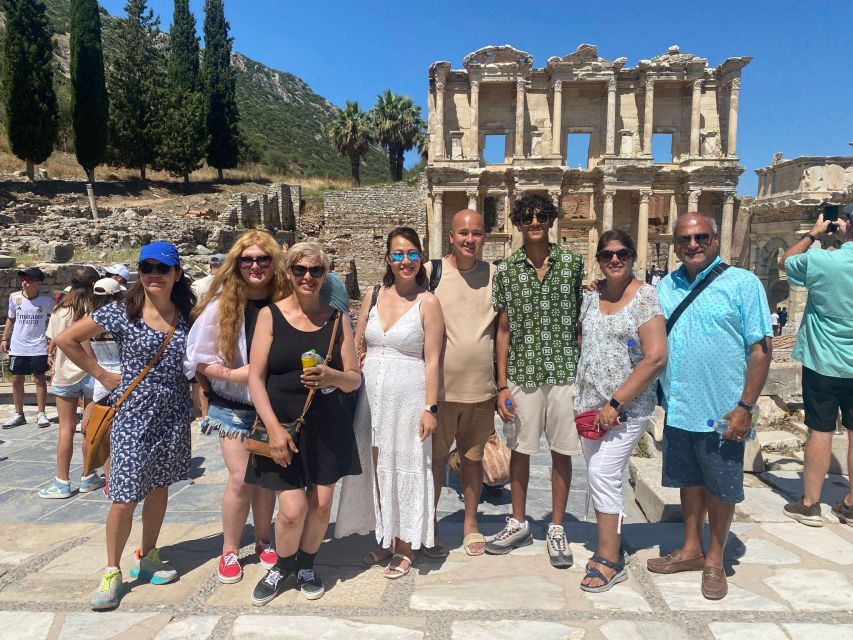
This is a classic “hit the highlights” Ephesus plan, but it’s built for cruise reality: you start at the Kusadasi Cruise Pier, you’re back in time, and the day moves in a sensible order. You’re not just collecting ruins—you’re guided through a story, starting with the sacred site and then moving into one of the most important archaeological areas in the eastern Mediterranean.
The pacing also makes sense for first-timers. You get a long enough walk in Ephesus to understand the layout, then you add the Temple of Artemis and finish with the museum, which helps you make sense of what you saw.
The main trade-off is that the day is full. If you’re the type who wants long hangs at each viewpoint, you may feel the clock. If you like structured, efficient sightseeing, this fits nicely.
Skip the guide, keep the ruins, more Ephesus tickets
- EPHESUS TOUR From Cruise Port: Private Tour & Skip The Line
★ 5.0 · 65 reviews - Private Tour FOR CRUISE GUESTS: Best of Ephesus Private Tour / SKIP THE LINE
★ 5.0 · 43 reviews - FOR CRUISERS: Best of Ephesus Private Tour (SKIP-THE-LINE & ON-TIME RETURN)
★ 5.0 · 40 reviews - Aqua Fantasy Waterpark Skip-the-Line Tickets
★ 4.5 · 26 reviews
House of Virgin Mary: Pilgrimage First, Then the Roman City
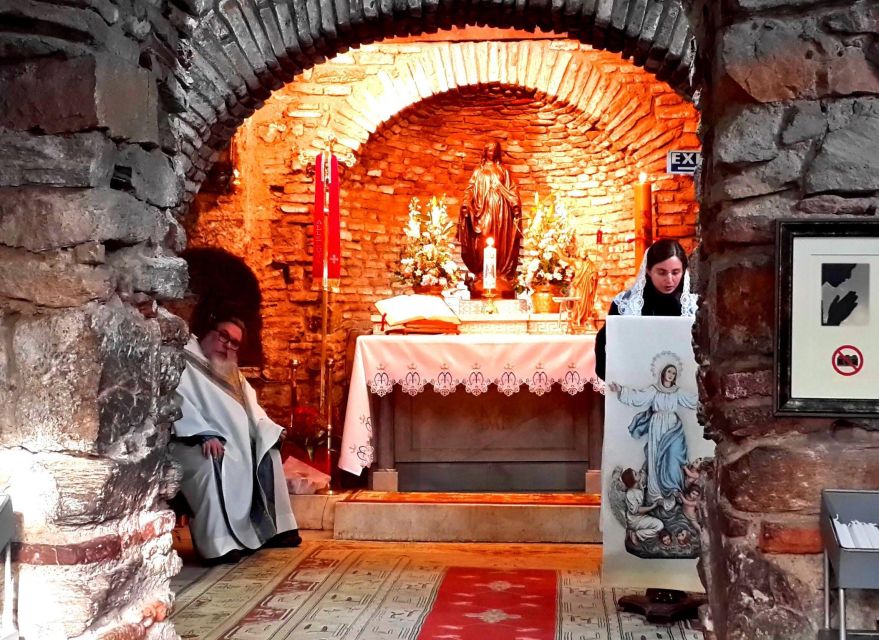
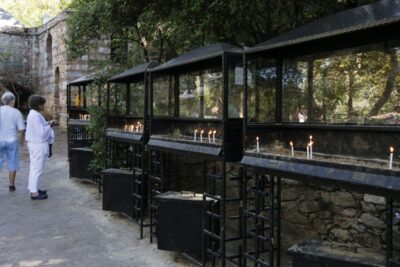
The day begins the moment your ship docks—your guide is waiting with your name. You’ll drive for about 30 minutes to the House of Virgin Mary, where the tradition says Mary may have spent her last days, possibly with Saint John. The site has been officially recognized by the Roman Catholic Church as a shrine since 1986, and it’s been a pilgrimage destination since.
This stop is about atmosphere as much as architecture. Even without getting too technical, you can feel why people keep coming back: it’s quiet, focused, and meaningful in a way that contrasts with the city ruins you’ll see later. You’ll get around 45 minutes here, plus a bit of time to settle into the space with your guide’s explanations.
One practical note: this isn’t a long stop, so if you want extra time for photos or reflection, plan to do that quickly and stay with the group when the tour moves on. After the House, you drive only about five minutes to reach Ephesus itself.
Getting into Ephesus: Start Upper Gate for the Downhill Layout
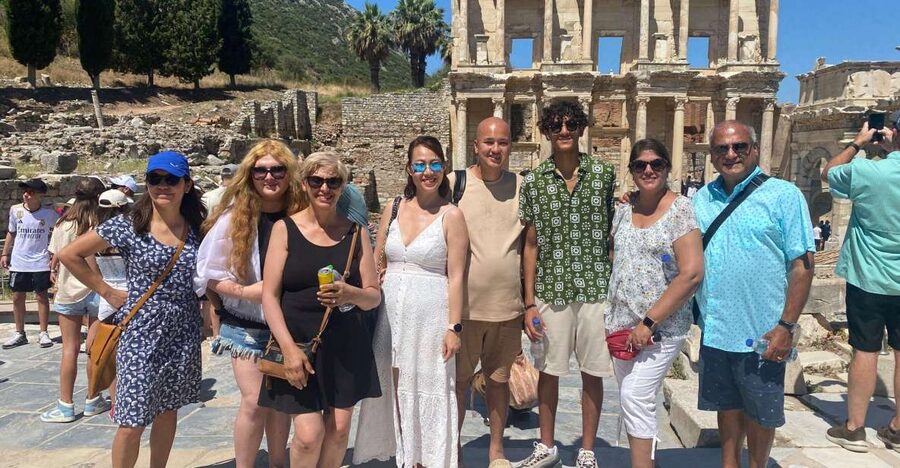
Once you’re at Ephesus, the experience becomes all about flow—how you move through the site, and how the major landmarks line up. Your tour guide will be English speaking, and you’ll walk a route designed to hit the major points without doubling back.
Here’s a tip that genuinely matters: Ephesus has two entrances, and because the site slopes downhill, it’s usually smarter to begin from the upper gate. Starting higher helps you avoid that awkward feeling of always fighting gravity, and it keeps the walk easier to manage as the day heats up.
For timing, you’re looking at about 2 to 2.5 hours in the ancient city on foot. That’s enough time to see the key structures and still understand how they relate—marble streets, civic buildings, religious spaces, and the theater zone.
And yes, wear comfortable shoes. The tour is built for walking on uneven historic surfaces, and sneakers are your friend.
Ephesus Walking Route: What Each Stop Is Really Teaching You
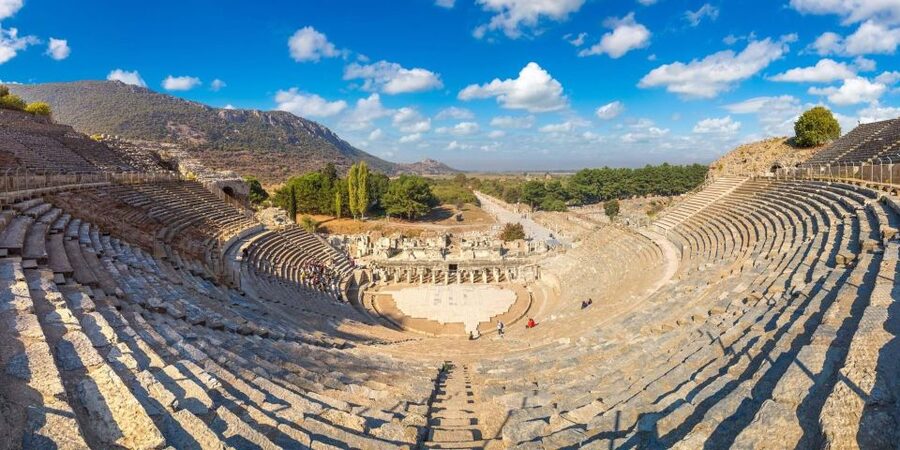
Your guided walk covers a lot of named places, but they aren’t random. Each one reinforces the city’s identity—Greek roots, Roman power, and early Christian significance.
You’ll move past spots like the Odeon and State Agora, then through the civic maze that shows how Ephesus functioned daily. You’ll also see architectural reminders of rulers and benefactors, including monuments and temples that mark the city’s status in the Roman world.
As you keep going, you’ll hit the places that most visitors photograph and remember:
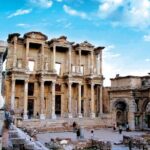
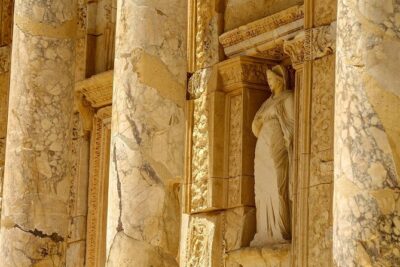
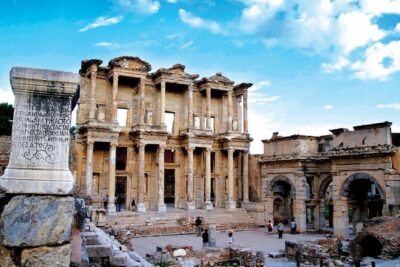
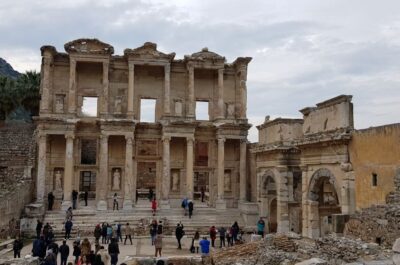
- The Library of Celsus: This is the iconic facade that makes Ephesus look like a movie set. It’s a reminder that education and public life were major priorities here.
- The Curetes Street and grand temple zones: these help you picture the city as a processional space, not just scattered ruins.
- The Marble Road and Commercial Agora: these ground you in everyday movement and trade.
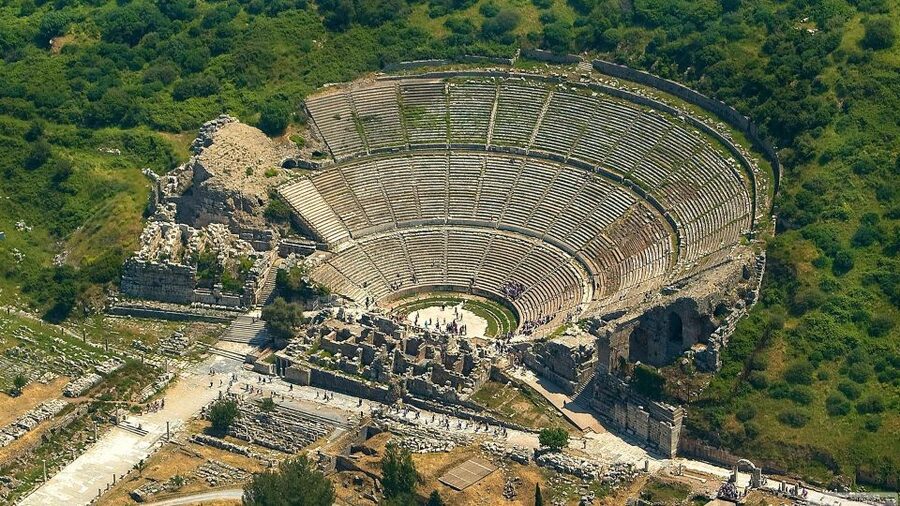
Then comes the dramatic shift into entertainment and religion. The Great Theater gives you a sense of scale—how many people could gather, and how architecture turned sound and visibility into engineering.
You’ll also see the Arcadian (Harbor Road) area, which matters because Ephesus wasn’t only about temples and theaters. It was also a thriving port-adjacent city, shaped by movement of goods and people.
Terrace Houses: Why People Get Excited About This Part
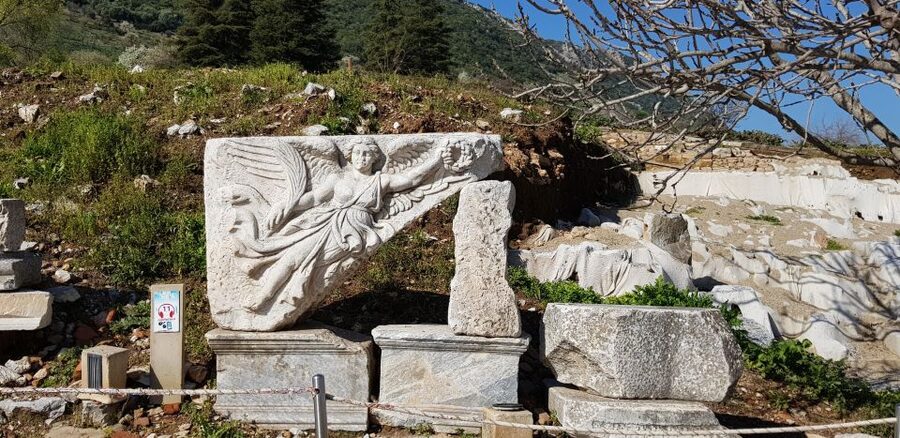
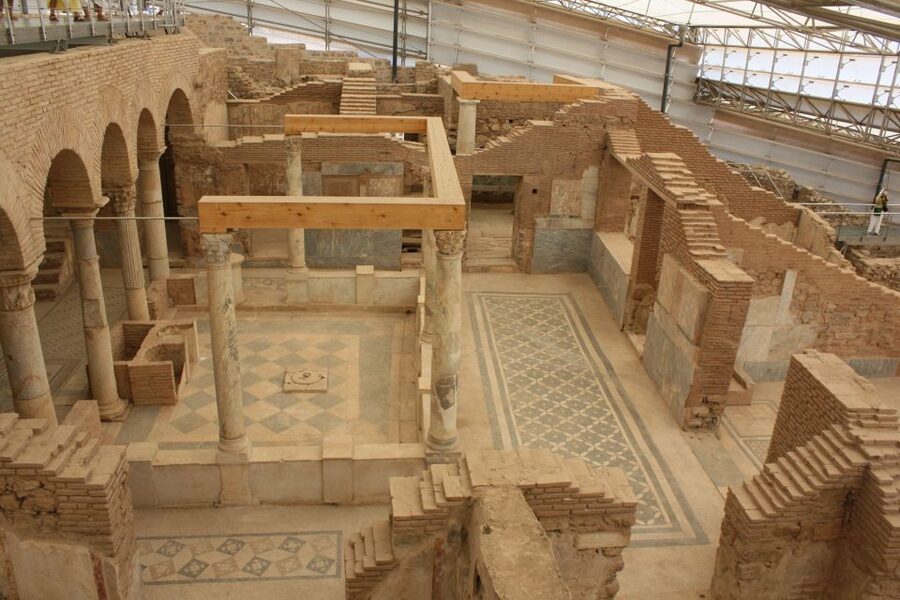
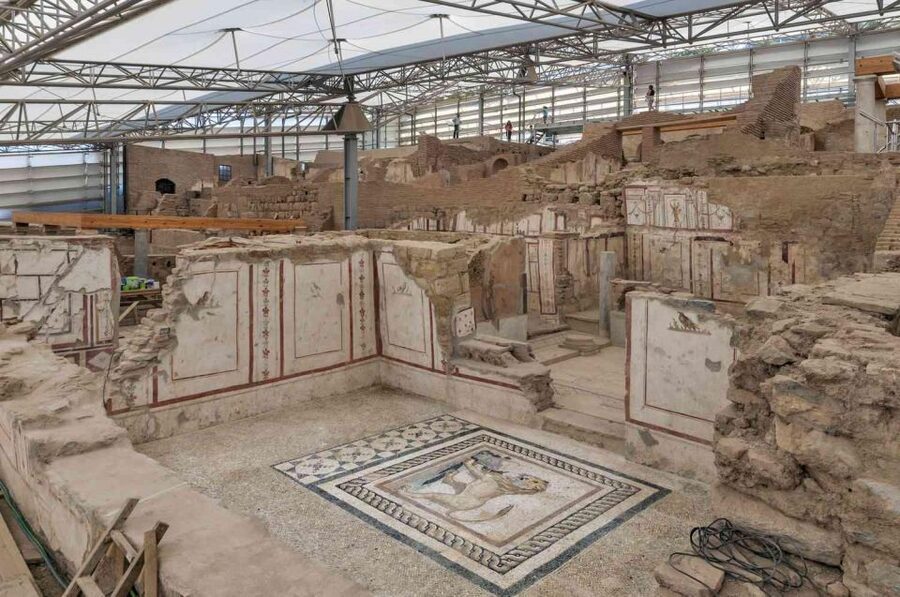
One of the most talked-about areas in Ephesus is the Terrace Houses, often described as a private residence area. Your tour includes the Private House section (sometimes referred to with an older label you may hear in explanations, but the focus here is the domestic life and luxury of the inhabitants).
Even if you’ve never studied Roman-era homes, this stop changes how you picture the city. You’re not only seeing public buildings. You’re looking at how wealth and taste played out in daily spaces—especially with the protected structures and layout that preserve a clearer sense of room scale and design.
This is also one of the “look longer than you think you should” areas. The more time you spend here, the more you’ll notice the details that your brain usually skips over in big outdoor sites.
The ruins the whole coast turns up for, more ways through

Temple of Artemis: Short Visit, Big Context
After Ephesus, the tour shifts to Selcuk for a break and lunch time (about one hour). Then you’ll head to the Temple of Artemis, one of the Seven Wonders of the Ancient World.
This stop is shorter—around 30 minutes—so treat it as context-building rather than a long architectural study. The value here is linking what you saw in the city to what made this region legendary in the first place: Artemis wasn’t just a local goddess; she was a symbol tied to power, identity, and wealth.
You also get a nice photography perk from the broader area around religious landmarks. Your guide points out good angles for photos of the Church of St. John and the Mosque of Isa Bey. Even if you’re not a dedicated photographer, those viewpoints help you orient yourself beyond the ruins.
Ephesus Museum: The Artemis Statues Explain the Ruins
The final major piece of the puzzle is the Ephesus Archaeological Museum. This is where the tour stops being just walking and starts turning into understanding.
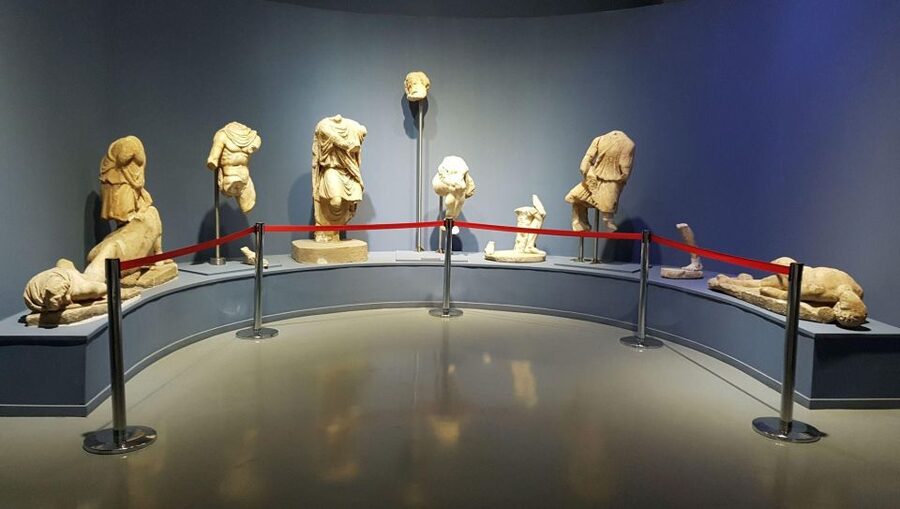
You’ll spend about one hour here across six chambers displaying collections from the ruins. The museum experience is built to give you the “why” behind what you saw outdoors, including artifacts connected to the temple areas and civic life.
Two things to pay attention to: the marble statues of Goddess Artemis, including examples dated to the 1st century AD and 2nd century AD. Seeing these in person helps you connect the city’s sacred architecture and reputation to physical objects—so when you look back at the Temple area, it feels less like a brief stop and more like the logical next chapter.
If you’ve ever walked through ruins and thought, I see the shape, but what did it mean, the museum is your fix.
Selcuk Break and Lunch Hour: Use It Smart
Your itinerary includes about one hour in Selcuk, labeled as a break time with lunch. Since lunch and drinks aren’t included, this is your time to choose food that matches your pace—quick bite, sit-down meal, or just grab something light if you’re heading back to the ship afterward.
Practical advice: keep an eye on timing even during lunch. The day is designed to bring you back to Kusadasi Port on schedule, so wandering too far from your meeting point can create stress in the final stretch.
Also, if you’re sensitive to heat, treat this as a hydration window. Ephesus walking can feel long in warm months, and you don’t want to finish museum time running on empty.
Transportation and Comfort: Private Means You Relax More
One underrated quality here is that you’re not dealing with the usual crowded shuttle chaos. This tour uses private transportation in an air-conditioned vehicle, with parking fees included.
From a cruise traveler’s standpoint, that matters. You’re starting at a fixed place, and you’re moving between sites that are not in one tight cluster. Having a direct vehicle plan reduces friction, especially when everyone’s on a ship schedule.
It also helps you keep your energy for the walking portion. The better the ride, the less you feel like sightseeing is a penalty.
Price and Value: Is $43 a Fair Deal?
At $43 per person for a 7-hour guided tour, the value mainly comes from what’s included, not just what’s listed. You’re paying for:
- a professional English-speaking tour guide
- private transportation with air-conditioning
- coverage of the major Ephesus ruins, the museum, and the Temple of Artemis
- parking fees
- a skip-the-line advantage at key points
The big items not included are entrance fees and lunch and drinks, which is common for this style of tour. Still, the structure is solid: you don’t have to coordinate multiple tickets and entry times while also managing cruise timing.
If you’re doing Ephesus on your own, you’d need to figure out guides, routes, entry logistics, and the order of sights. Here, you get a planned path plus the narrative thread that helps you actually understand the site while you’re still standing in it.
For many visitors, that guide-led organization is the difference between a day that feels like photo time and a day that feels like learning.
Who This Tour Is Best For
This tour fits you best if:
- you want major Ephesus sites without spending hours planning
- you’re new to Ephesus and want help connecting buildings to bigger stories
- you prefer structured timing with cruise port return built in
- you like mixing sacred history (House of Virgin Mary) with archaeology (Ephesus ruins + museum)
It’s also a strong choice if you don’t want the hassle of figuring out how to sequence the Library of Celsus, Great Theater, and the Terrace Houses while also surviving a cruise-day clock.
If you’re deeply into archaeology and want to linger on every inscription or architectural detail for longer than a guided pace allows, you might want a more slow-and-steady option. But for a first Ephesus day, this is efficient and effective.
Should You Book This Kusadasi Ephesus Tour?
If you’re visiting Kusadasi and you want one day that hits the essential Ephesus landmarks, I’d say this tour is worth your time. The big reasons are simple: you get guided context, you cover the pilgrimage stop at the House of Virgin Mary, and you finish with the museum so the ruins make more sense.
Book it if you like a clear plan and you’re okay with a packed day that’s designed to return you to the port on schedule. Pass if you crave long, unstructured wandering or you’re hoping for entrance fees and lunch to be fully wrapped into the price.
FAQ
How long is the Best of Ephesus Tour from Kusadasi Port?
The tour lasts about 7 hours.
Where does the tour start?
It starts at the Kusadasi Cruise Pier.
Is there an English-speaking guide?
Yes, the tour includes a live English-speaking tour guide.
Is private transportation included?
Yes. You’ll have private transportation in an air-conditioned vehicle.
Does the tour include skip-the-line entry?
Yes, it’s listed as skip-the-line.
Are entrance fees included?
No. Entrance fees are not included.
Is lunch included?
No. Lunch and drinks are not included, though there is a break time in Selcuk.
What are the main sights visited?
You’ll see the House of Virgin Mary, Ephesus ancient city (including major landmarks like the Library of Celsus and Great Theater), Temple of Artemis, and the Ephesus Archaeological Museum.
How much time is spent at Ephesus?
You’ll spend about 2 to 2.5 hours exploring the ancient city on foot.
What should I wear or bring?
Bring comfortable shoes (like sneakers) and sunglasses.
The Rest of the Shortlist
Walking the Marble Streets of Ephesus
Ephesus on Your Own Ticket
Just Added Around Kusadasi
- Drive by Ephesus&Ancient wonders(NO walking&NO hidden costs)★ 5.0 · 3 reviews
- Private Ephesus Tour for Cruise Guests★ 3.5 · 3 reviews
- Private Pamukkale and Ephesus Tours★ 4.5 · 3 reviews
- Ephesus and House of Virgin Mary From Kusadasi or Selcuk★ 4.0 · 3 reviews
- Ephesus Entry Ticket: Discover a Wonder of the Ancient World★ 4.6 · 3 reviews
- House of Virgin Mary and Shopping Tour Cruiser Only★ 5.0 · 3 reviews
Ephesus Ancient City Tours, compared.
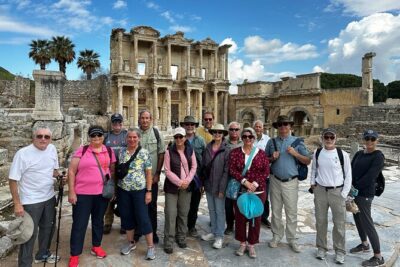 ★ 5.0ALL INCLUDED: Ephesus Ruins, Mary’s House Tour incl ENTRY TICKETSFrom $591,670 reviews
 ★ 5.0ONLY FOR CRUISE GUESTS: Best Seller Highlights of Ephesus Private TourFrom $39297 reviews
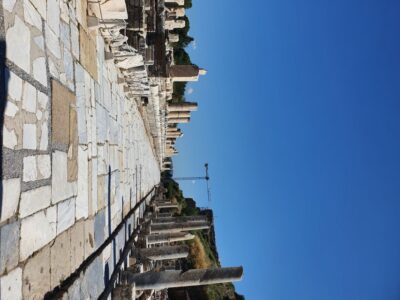 ★ 4.7Guided Tour of the Ancient City of EphesusFrom $117205 reviews
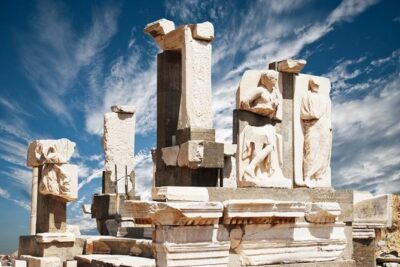 ★ 4.5Kusadasi Shore Excursion: Ephesus Sightseeing Tour with LunchFrom $90145 reviews
 ★ 5.0CRUISERS ONLY: Best of Ephesus Tours from Kusadasi Cruise PortFrom $39132 reviews
 ★ 4.8Ephesus Highlights Tour for Cruise CustomersFrom $2590 reviews
 ★ 5.0FOR CRUISERS: Best of Ephesus Private Tour (GUARANTEED ON-TIME RETURN)From $2977 reviews
 ★ 4.8From Kusadasi/Selcuk: Highlights of Ephesus Small Group TourFrom $10064 reviews
Browse the lists this tour appears in