
Review · HOUSE OF THE VIRGIN MARY TOURS
Ephesus and House of Virgin Mary From Kusadasi or Selcuk
Ephesus is history you can walk through. This small-group day from Selçuk (or Kuşadası) pairs jaw-dropping Roman ruins with a deeply meaningful stop at Meryemana, the House of the Virgin Mary. I like that the guide keeps the big sights readable, especially the Library of Celsus and the scale of the Great Theatre.
You’ll also get a mix of time periods in one smooth loop. In about an hour at the House, the focus is spiritual and personal, and you’ll see why people describe it as an uplifting experience. When you’re lucky with a guide, like Feyzullah (mentioned by name), the stories land better and the day feels more human.
One thing to keep in mind: the schedule can feel fast, and lines at the House can slow you down. If you prefer a slow, commentary-heavy visit with no detours, the pace and possible shopping stops may feel a bit like filler.
In This Review
- Key things I’d zero in on
- Ephesus and Meryemana: how the day runs from Selçuk/Kuşadası
- The Ephesus Museum area and the big Roman sights you’ll remember
- Meryemana (House of the Virgin Mary): the spiritual stop that defines the tour
- Temple of Artemis: seven-wonders scale, with only one column left
- Isa Bey Mosque: delicate Seljuk architecture in a surprising location
- The tempo: terrace houses, then the rest of the schedule
- Price and value: what $81.45 really covers
- Who should book this tour, and who should choose another style
- Should you book this Ephesus and Meryemana tour?
- FAQ
- FAQ
- What time does the tour start?
- How long is the tour?
- Where does the tour run from?
- What is the group size?
- What’s included in the price?
- Are drinks included?
- Do I need to bring tickets?
- Is the tour physically demanding?
- What happens if weather is bad?
Key things I’d zero in on
- Small-group size that keeps the day from feeling like a conveyor belt: maximum 15 people helps you hear the guide.
- Library of Celsus and the Great Theatre: the two-photo stops that still feel impressive in person.
- Meryemana visit time that can feel personal: plan for possible waiting, especially around entry.
- Temple of Artemis, even with just one column left: you still get the scale and why it mattered.
- Isa Bey Mosque under Saint John’s Basilica area: a nice shift from Roman stone to Seljuk elegance.
- Lunch included: you’re less likely to spend the day hunting for food between sites.
Ephesus and Meryemana: how the day runs from Selçuk/Kuşadası
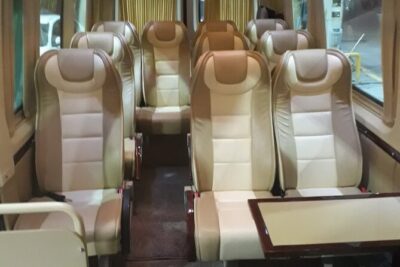
This tour is built around an 8-hour block starting at 8:30 am, with pickup from your hotel or the cruise terminal area. You ride in an air-conditioned vehicle, which matters when the sun is doing its best work. With a maximum of 15 participants, you usually get enough breathing room to look closely without constantly being squeezed along.
The route makes sense for first-timers: you start with the largest concentration of ancient ruins in the area, then head to Meryemana, and later finish with Artemis and a Seljuk-era stop. All entrance fees and transportation are included, so you can focus on the sites instead of playing math with tickets.
The one practical note: you’ll be on your feet for a full morning and early afternoon. You don’t need athlete fitness, but you should be comfortable walking uneven surfaces and standing in lines.
Up the hill to Meryemana, more tours that call there
- Daily Ephesus and Virgin Mary House Tour with Lunch Included
★ 5.0 · 334 reviews - House of Mary and Ephesus Tour with Lunch FROM KUSADASI
★ 5.0 · 25 reviews - FROM IZMIR Cruise Port: Ephesus and Mary’s House Private Tour
★ 5.0 · 21 reviews - Ephesus TempleofArtemis&House of Mary Private Half Day Tour
★ 4.6 · 19 reviews
The Ephesus Museum area and the big Roman sights you’ll remember
The day begins near the Ephesus ruins complex, with a guided orientation that turns a pile of stones into a real city. Ephesus is described as the largest open-air museum in Turkey, and it earns that label. You’re looking at a site linked by streets where you can still spot marks connected to ancient chariot wheels.
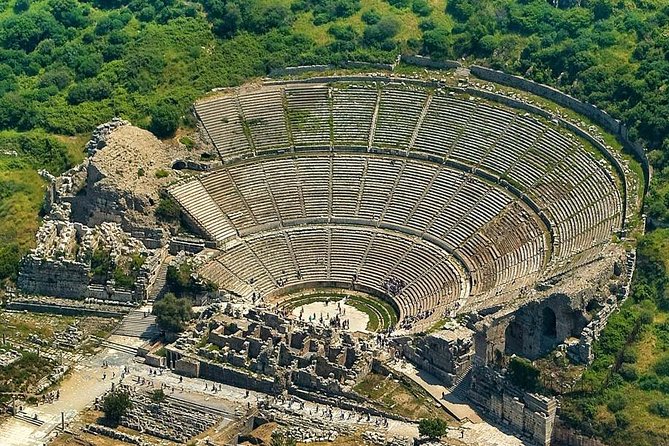
The “main characters” here are the Great Theatre and the Library of Celsus. The theatre’s size is the kind of detail that makes everything click: it was originally built in the Hellenistic period, held about 25,000 people, and later renovations by Roman emperors shaped how it worked. You’ll also hear about the shift from theatrical use to later alterations that allowed gladiatorial contests.
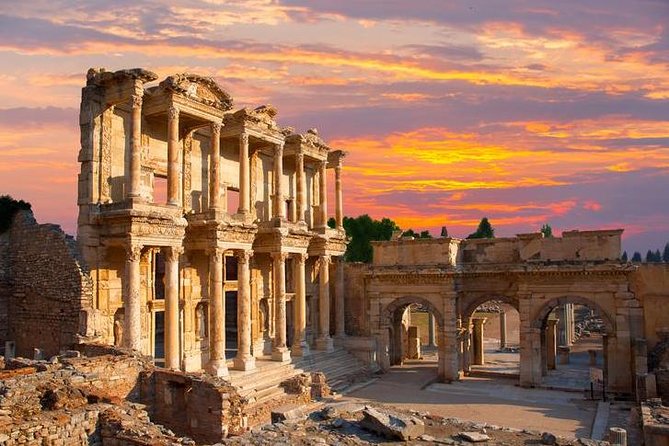
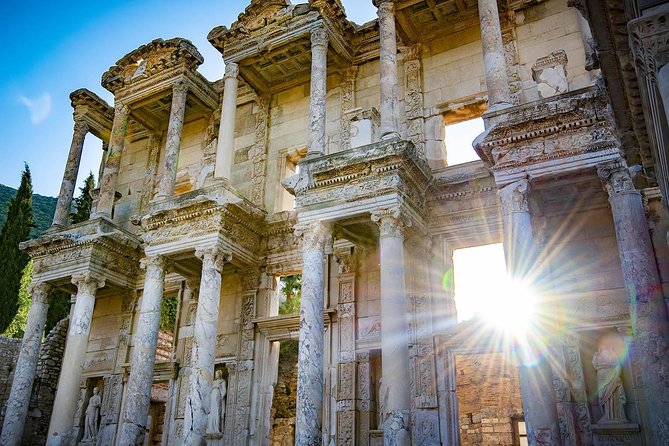
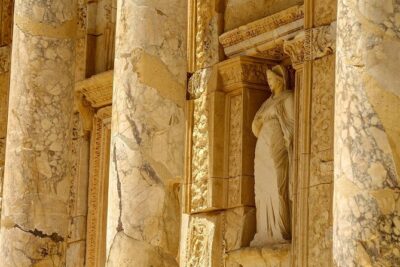
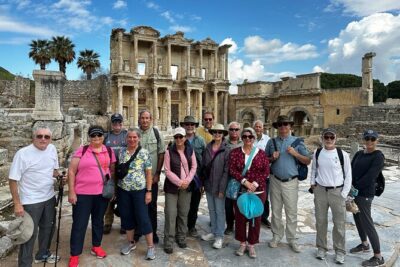
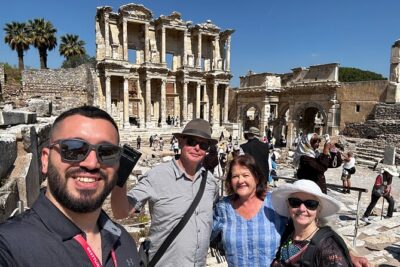
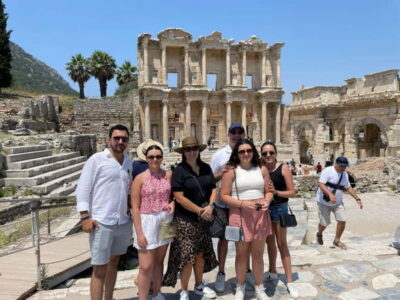
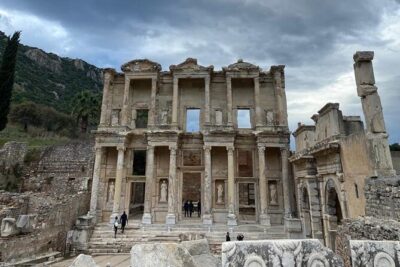
Then comes the Library of Celsus, whose restored façade is one of the most photographed structures in Ephesus. It dates to the early second century (built roughly between 115 and 125), and seeing it up close helps you understand why it was so central to the city’s identity.
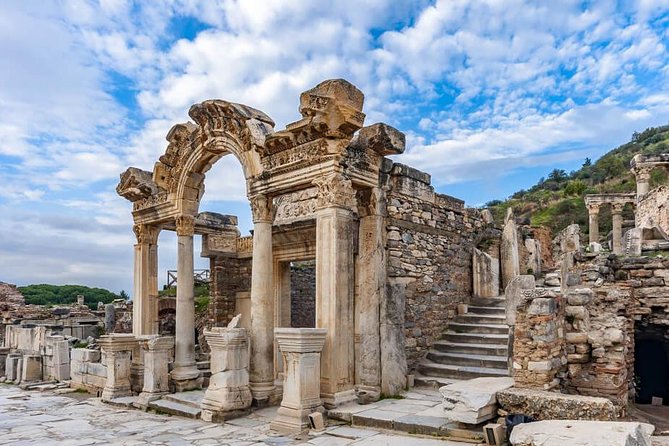
If you have time to look beyond the headline sights, you might also catch glimpses of other major landmarks such as the Odeon Temple, Fountain of Trajan, Temple of Hadrian, marble road, Agora, and the Temple of Domition. That’s a good way to get a sense of how many layers are stacked in one place.
Meryemana (House of the Virgin Mary): the spiritual stop that defines the tour
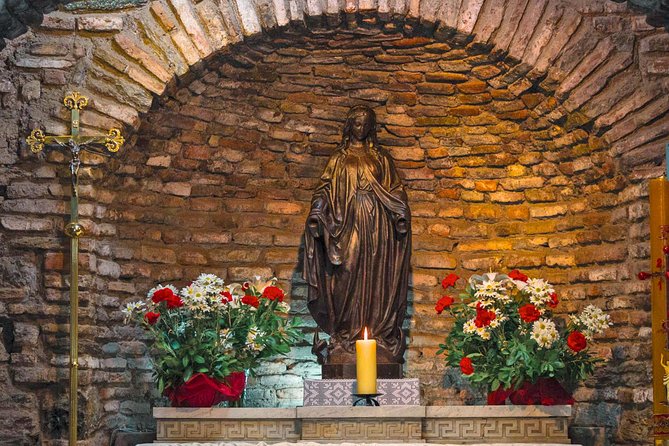
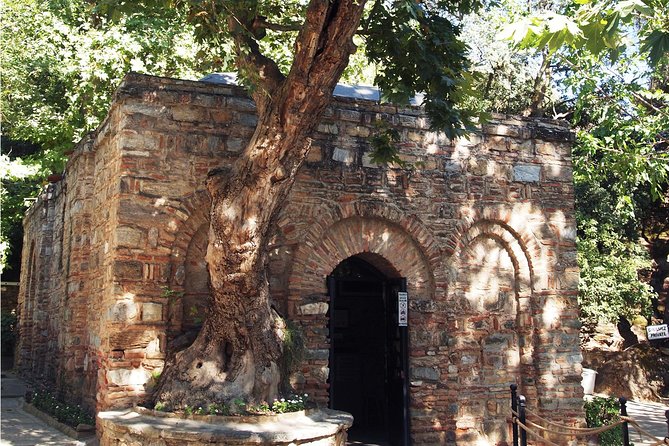
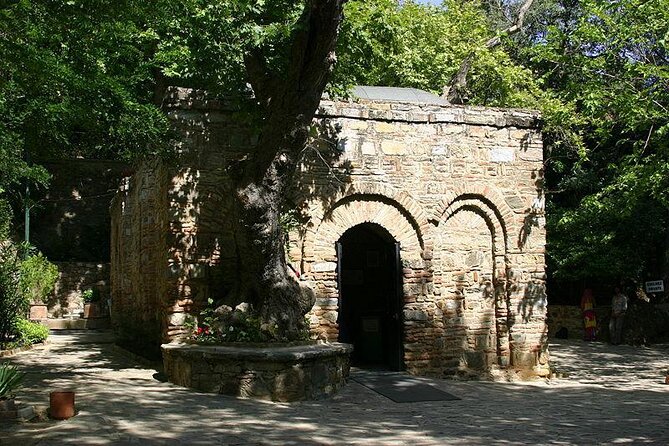
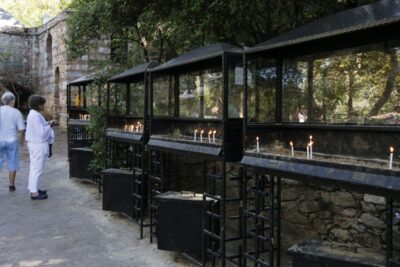
After Ephesus, you switch gears at Meryemana, known as the House of the Virgin Mary. The tour frames the story clearly: Mary is said to have come to Ephesus after the resurrection and lived her final days there. The house itself is set up as a church on foundations associated with that story.
What makes this stop compelling is how the experience tends to feel for people. The supplied info notes visitors describe it as uplifting or spiritual, and the way the site is presented supports that mood. Plan for a calm, respectful pace even if the day feels structured—this is not the type of place where rushing helps.
Authenticity is a big part of the presentation. The tour information states the house’s authenticity has been confirmed by Pope IV and Pope John Paul II. Whether you approach this from faith, curiosity, or both, that context helps explain why it draws visitors from everywhere.
The one caution I’d give you: queues can build. If you hate waiting and you like long, detailed stops, you may feel the pinch here. Try to bring patience and a mindset of short moments well spent.
Temple of Artemis: seven-wonders scale, with only one column left
Next you head to the Temple of Artemis, one of the ancient world’s famous “seven wonders.” Even though you’re not looking at a full, towering reconstruction, it still hits. Only the foundation and one column remain, yet you can grasp the original scale: it was about 425 feet long and 220 feet wide.
The guide’s context matters here. Artemis is presented as the goddess of the hunt, and the tour connects the site to Paul’s ministry in Ephesus. In the story you’ll hear, Paul’s message threatened the temple’s influence—so this isn’t just a monument, it’s part of a cultural and religious power shift.
There’s also a note about Ephesus reaching a “Golden Age” and becoming a model for art and culture in the ancient world. When you’re standing on the remains, that claim feels more grounded than you might expect, because you can still sense how important this place was to civic life.
If you’re the type who likes to take photos, you’ll get your chance. If you prefer less photography and more understanding, ask your guide to walk you through what you’re seeing on the foundation level. That’s where the temple’s size becomes real.
Isa Bey Mosque: delicate Seljuk architecture in a surprising location
The last major stop is Isa Bey Mosque, a standout because it’s different from what most people picture when they hear the word Ephesus. This mosque is described as one of the most delicate examples of Seljukian architecture, and it sits below the basilica area associated with Saint John.
Construction details help you place it in time: it was built between 1374 and 1375 by Ali son of Mushimis al-Damishki, described as a master Syrian architect. That kind of naming isn’t just trivia. It gives the building a maker, a workshop tradition, and a specific historical moment rather than treating it like generic old stone.
Even if you’re not an architecture person, you’ll likely appreciate the contrast. The Roman ruins are about scale and public life—this is about more intimate design choices and craftsmanship. For a lot of visitors, finishing with Isa Bey Mosque makes the whole day feel less repetitive.

The tempo: terrace houses, then the rest of the schedule
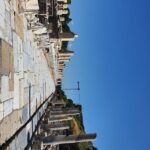
The tour also mentions time around the Terrace Houses, which are part of the Ephesus area. Even without a long deep-study session, it’s a useful way to see that Ephesus wasn’t only temples and theatres. It was also everyday life, lived by people with enough means to build and decorate homes on terraces.
The pace is the real make-or-break factor. The duration is set for roughly 8 hours, but the day can still feel long or short depending on your tolerance for waiting and how much time you want to spend at each site. One guide-led “look and move” style can be great when you’re new to Ephesus. It can also feel rushed if you’re hoping for slower commentary and unhurried photo time.
There’s another thing to watch: some parts of the day may include short stops connected to shopping, like a sweet shop, a carpet showroom, and a leather shop (including a fashion-show type presentation). If you’re sensitive to sales pressure, go in with eyes open. You can still enjoy the cultural side, but keep your expectations focused on the archaeology and the House of the Virgin Mary.
Price and value: what $81.45 really covers
At $81.45 per person, the headline value is that key costs are already packaged. You get hotel or cruise pickup and drop-off, an air-conditioned vehicle, a professional English-speaking guide, lunch, and entrance fees at the stops listed.
That matters because Ephesus can get expensive fast once you start adding separate tickets and transfers. A guided route also usually saves time. You’re not spending your day figuring out logistics or trying to guess which ruins need more attention.
Is it the cheapest option? Maybe not. But value isn’t just price. It’s whether you feel you got enough time at the places that matter. Ephesus itself is the “big spend” site, and the tour gives you guided time at the major Roman landmarks, plus Meryemana and Artemis. For many people, that combination is the sweet spot.
Where value can drop is when the schedule feels tight or when you get more time in shops than you expected. If that sounds like your personal preference mismatch, compare other tour styles that focus only on the ruins.
Who should book this tour, and who should choose another style
This works best if you want a focused one-day overview with a guide explaining what you’re looking at. It’s a strong fit for first-timers to Ephesus who want structure: theatre scale, Library of Celsus details, the Temple of Artemis story, and a meaningful Meryemana visit.
I’d also say it’s a good choice if you like variety. You move from Roman architecture to a Christian sacred site to Artemis to Seljuk-era design in Isa Bey Mosque. That mix keeps the day from turning into one long set of ruins.
You might look for a different format if you prefer unhurried museum-style pacing, because lines and route timing can compress the day. If you dislike sales-oriented detours, you’ll want to be cautious about how you spend your time between sites.
Should you book this Ephesus and Meryemana tour?
If you want a single, efficient day that hits Ephesus’s top highlights and still leaves space for a spiritual stop at the House of the Virgin Mary, this is a solid bet. The combination of included transport, entrance fees, lunch, and small-group size makes it feel more organized than DIY.
I’d say book it if your priority is seeing the major sights without the stress of planning. Pass or compare alternatives if you strongly dislike waiting in queues or if you prefer tours that skip any shopping-style stops and slow down at each monument.
FAQ
FAQ
What time does the tour start?
It starts at 8:30 am.
How long is the tour?
The duration is about 8 hours.
Where does the tour run from?
It operates from Selçuk (and is commonly offered from the Kuşadası area with pickup, depending on your location).
What is the group size?
The tour is limited to a maximum of 15 travelers.
What’s included in the price?
Entrance fees, lunch, air-conditioned vehicle transport, and hotel or cruise terminal pickup and drop-off are included, along with a professional English-speaking guide.
Are drinks included?
Drinks are not included.
Do I need to bring tickets?
You’ll use a mobile ticket.
Is the tour physically demanding?
The tour recommends a moderate physical fitness level.
What happens if weather is bad?
This experience requires good weather. If it’s canceled due to poor weather, you’ll be offered a different date or a full refund. You can also cancel for a full refund up to 24 hours before the experience starts.
The Rest of the Shortlist
Up to the House of the Virgin Mary
Just Added Around Kusadasi
- Drive by Ephesus&Ancient wonders(NO walking&NO hidden costs)★ 5.0 · 3 reviews
- Private Ephesus Tour for Cruise Guests★ 3.5 · 3 reviews
- Private Pamukkale and Ephesus Tours★ 4.5 · 3 reviews
- Ephesus and House of Virgin Mary From Kusadasi or Selcuk★ 4.0 · 3 reviews
- Ephesus Entry Ticket: Discover a Wonder of the Ancient World★ 4.6 · 3 reviews
- House of Virgin Mary and Shopping Tour Cruiser Only★ 5.0 · 3 reviews
House of the Virgin Mary Tours, compared.
 ★ 5.0Top Choice For Cruisers: Ephesus, Mary’s House WITH TICKETS+LUNCHFrom $297,233 reviews
 ★ 5.0PRIVATE NO HIDDEN FEES Ephesus, Mary’s House Guided Tour /GRP OPTFrom $992,455 reviews
 ★ 5.0ALL INCLUDED: Ephesus Ruins, Mary’s House Tour incl ENTRY TICKETSFrom $591,670 reviews
 ★ 5.0Ephesus Temple of Artemis and House of Mary Private Half Day TourFrom $151,573 reviews
 ★ 5.0PRIVATE TOUR FOR CRUISERS: Mary’s House (Meryemana) and EphesusFrom $291,349 reviews
 ★ 4.8Ephesus: Mary’s House and Artemis Tour with Entry TicketsFrom $35945 reviews
 ★ 5.0ALL INCLUSIVE Private Ephesus, House of Virgin Mary with lunchFrom $169819 reviews
 ★ 5.0ALL INCLUSIVE Private Ephesus, House of Mary, LUNCH, EntrancesFrom $134735 reviews
Browse the lists this tour appears in