
Review · EPHESUS PRIVATE GUIDED TOURS
Ephesus: Local Tour Guide
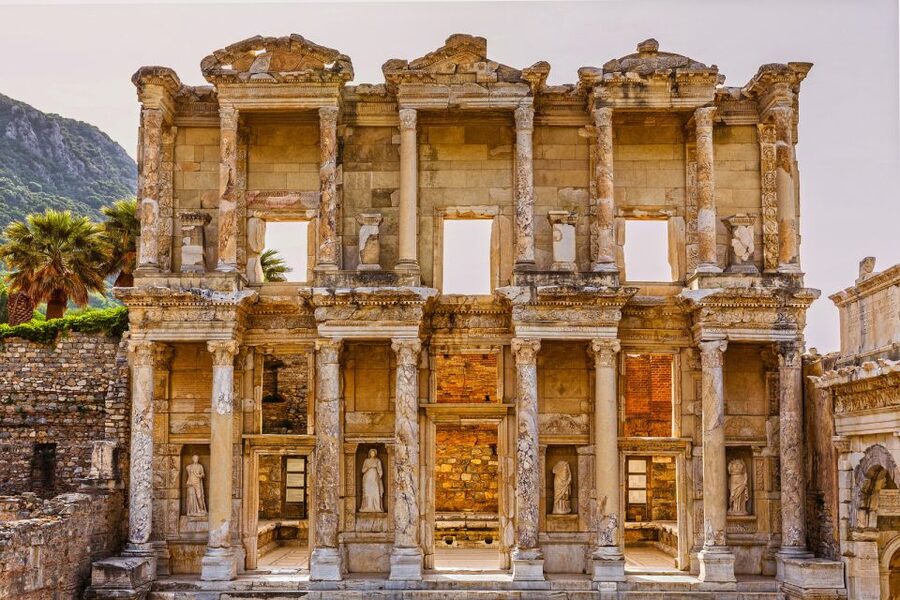
Ephesus has a way of making time feel physical. This 3-hour local-guided walk through the marble streets shows you the big monuments, then goes one step further with an exclusive look at the Terrace Houses. You’ll also get the Christian history context that makes the ruins feel less like stone and more like a lived place.
I especially like two things: the slow, human pace that helps you actually spot details (not just pose in front of them), and the guide’s ability to connect what you’re seeing to how people lived. Names that show up in the guide feedback include Nizam and Yildmaz, both praised for clear, calm explanations and not rushing through crowded sections.
One thing to consider: entrance fees aren’t included, and the visit is mostly walking. If you’re tight on time or don’t want to pay extra for site entry, plan ahead so the day stays smooth.
In This Review
- Key highlights you’ll care about
- Entering Ephesus from the Upper Gate, not the chaos
- The story Ephesus tells: Hellenistic, Roman, and early Christianity
- Odéon to Agora: the city’s public rhythm
- Gates and streets: Hercules Gate and Curetes Street
- The Terrace Houses: mosaics, fountains, and central heating
- Back to the classics: Celsus Library and Marble Road
- Commercial Agora and Hadrian Temple: power meets everyday life
- Great Theater and Arcadine: where public life scaled up
- Practical stuff that makes or breaks the experience
- How good guides change what you see
- Price and value: $165 per group for up to 15
- Who should book this tour
- Should you book Ephesus with a local guide?
- FAQ
- Where does the tour start?
- How long is the tour?
- Is the tour in English?
- What’s included in the price?
- What’s not included?
- Does the tour include the Terrace Houses?
Key highlights you’ll care about
- Upper Gate start: starting slightly downhill is easier, and you’ll avoid the clumsy “why are we zig-zagging” feeling.
- English-speaking local guide: you get context as you walk, not after the fact from a headset.
- Exclusive Terrace Houses visit: these weren’t generic homes. They were luxury private residences with mosaics, fountains, and central heating.
- A focused 3-hour route: you’ll hit major landmarks like the Odeon, Celsus Library, the Great Theater, and the Harbour Road.
- Skip the ticket line: the guide helps streamline entry so you spend more time looking and less time waiting.
Entering Ephesus from the Upper Gate, not the chaos
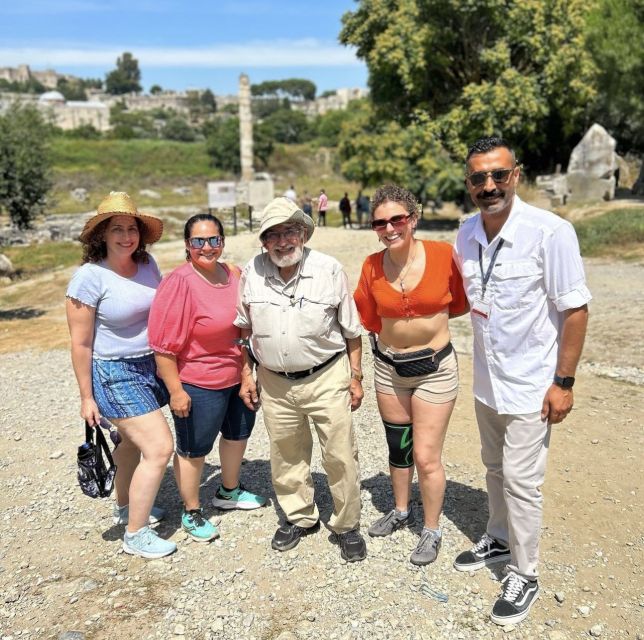
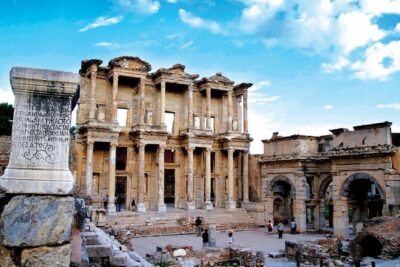
The route starts at the Ephesus Archaeological Site, meeting your English local guide at the upper gate. That detail matters more than it sounds. Ephesus has two entrances, and because the site runs slightly downhill, beginning at the top usually makes the walking feel more natural. You’re not fighting the slope while trying to get your bearings.
Once you’re inside with your guide, you’ll walk the ancient city on marble streets—the kind that make the place feel instantly “Roman.” Even if you’ve seen photos, nothing prepares you for how the monuments line up with the streets. Your guide helps you read the space: what stood where, what was connected to what, and why certain buildings were important.
Expect a guide-led walk of about 2 hours of touring, within a total 3-hour experience. You’re not just dropping names onto ruins. You’re moving through the city in a logical order, so the site clicks into place.
Skip the guide, keep the ruins, more Ephesus tickets
- EPHESUS TOUR From Cruise Port: Private Tour & Skip The Line
★ 5.0 · 65 reviews - Private Tour FOR CRUISE GUESTS: Best of Ephesus Private Tour / SKIP THE LINE
★ 5.0 · 43 reviews - FOR CRUISERS: Best of Ephesus Private Tour (SKIP-THE-LINE & ON-TIME RETURN)
★ 5.0 · 40 reviews - Aqua Fantasy Waterpark Skip-the-Line Tickets
★ 4.5 · 26 reviews
The story Ephesus tells: Hellenistic, Roman, and early Christianity
Ephesus isn’t stuck in one era. It’s a layered site showing the Hellenistic, Roman Imperial, and early Christian periods. That blend is a big reason this tour works well for first-timers. You’ll see Roman grandeur, then shift to the kind of spiritual importance that made Ephesus one of the seven churches mentioned in Revelation.
There’s also the Apostle Paul thread. He probably spent around two and a half years in Ephesus during his third missionary journey. Your guide’s job here is to keep those historical facts grounded in what you’re actually walking past—so you understand why a city could matter both politically and religiously.
If you’ve ever felt like archaeology tours can become either too academic or too shallow, this one aims for the sweet spot. The guide’s commentary is meant to make the site readable as a whole.
Odéon to Agora: the city’s public rhythm
Your walk moves through a classic Ephesus circuit of civic and cultural power. You’ll pass key stops such as the Odeon, the State Agora, and the Prytaneion. Here’s what those names mean for you when you’re standing there:
- The Odeon shows how performance and public gatherings fit into everyday city life.
- The State Agora is where the city’s official side comes into view—administration, commerce, and the public square feeling.
- The Prytaneion is tied to the civic center of power.
These are the “city machine” stops. They help you understand that Ephesus wasn’t only temples and big theaters. It was also meetings, announcements, everyday business, and public identity.
Then you’ll see the Memmius Monument and Domitian Temple. These add extra texture because they connect architecture to patronage—how leaders and prominent figures stamped their presence onto the city.
Gates and streets: Hercules Gate and Curetes Street
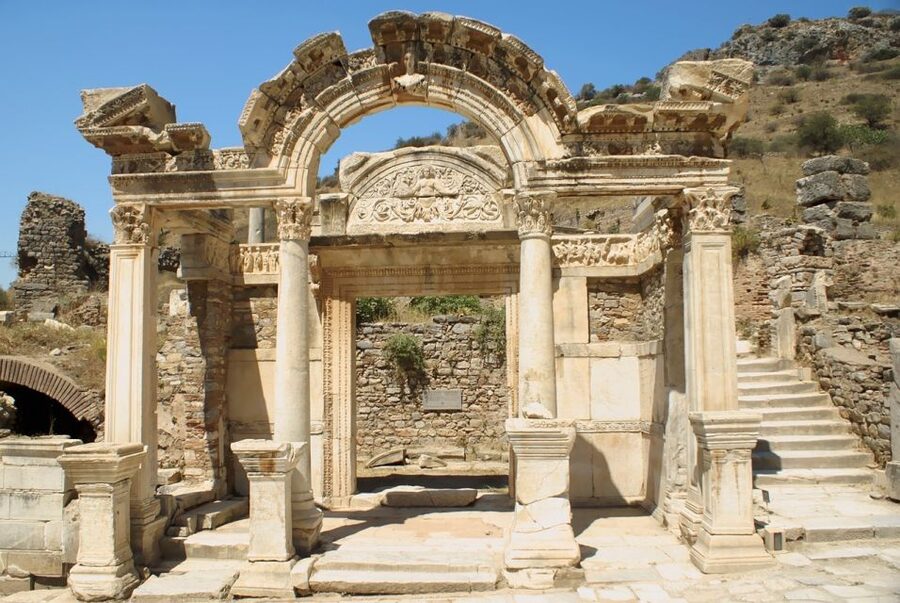
When you hit Hercules Gate, it’s one of those points where you can feel the city’s gate-and-procession layout. It’s not just a leftover arch. It’s part of how people entered, moved, and announced themselves in public.
Next comes Curetes Street, which is one of the most important roads on your route because it links directly to the Terrace Houses. Your guide will point out how this street sits in the story of Ephesus’ elite neighborhoods.
Curetes Street private houses belonged to prominent people. They date back to the 1st century AD, and some were lived in into the 7th century AD. That long span is a powerful detail: it tells you these weren’t “one-generation monuments.” This was a place people adapted over time.
And yes, you’ll actually get to see the terrace house world, not just hear the name.
The Terrace Houses: mosaics, fountains, and central heating
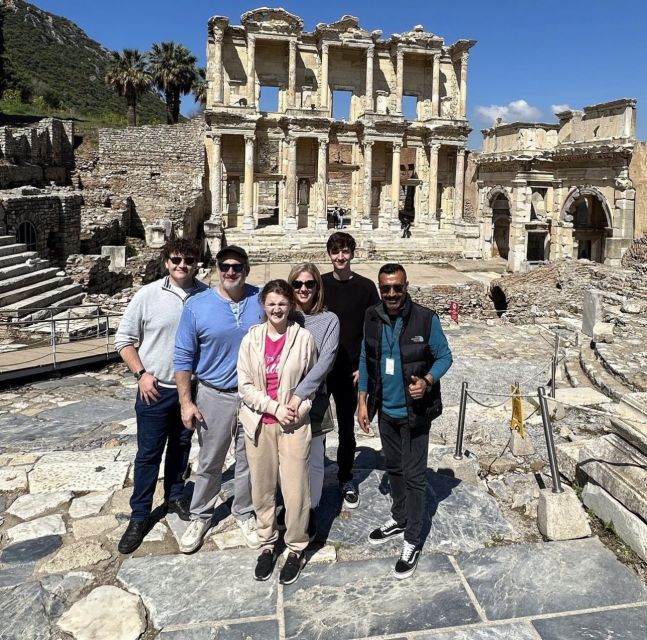
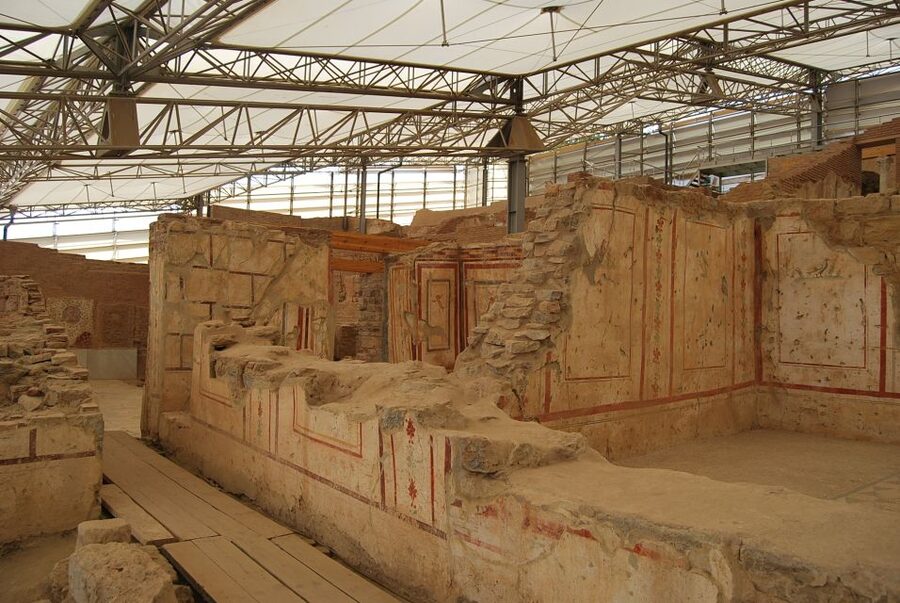
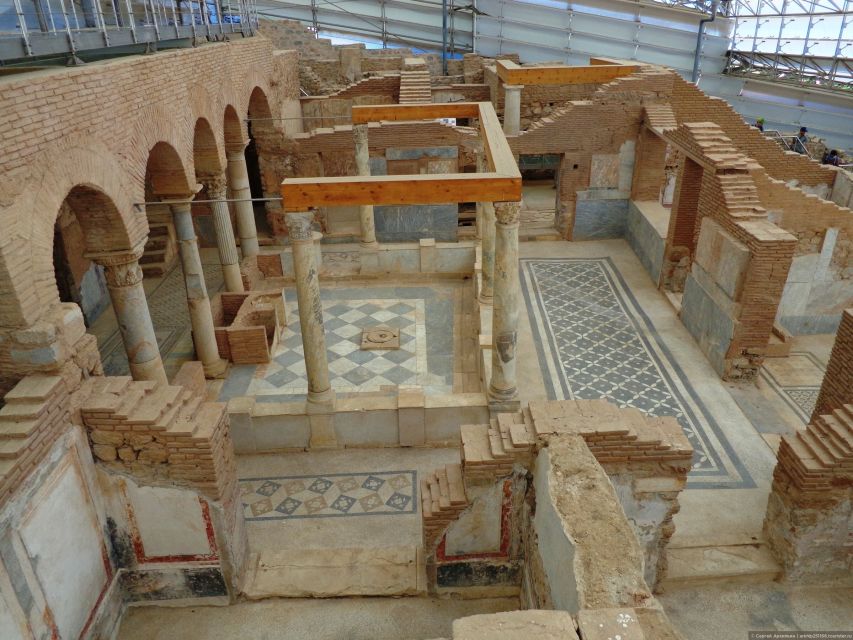
This is the highlight built into the tour: an exclusive visit to the Terrace Houses. You’ll hear them described as private residences, sometimes called Terrace Houses, and they’re known for being luxurious homes with advanced features for their time.
Here’s what makes them worth your attention, even if you’re not a hardcore mosaics person:
- Mosaic floors that show the design taste and wealth of the owners.
- Fountains that add a sensory element to the household space.
- Central heating, which immediately separates these houses from basic “ancient home” expectations.
Your tour focuses on why these homes mattered socially and architecturally. Located along Curetes Street, they belonged to people at the higher end of Ephesus life, not just casual residents.
Also, the fact that the terrace houses were inhabited from the 1st century into the 7th is the kind of detail that changes how you see a “ruin.” It becomes a long, evolving home landscape rather than a snapshot.
If you’ve ever thought ancient cities only show temples and theaters, this stop is a reminder that daily life had luxury too.
Your own guide and car, more private Ephesus days


Back to the classics: Celsus Library and Marble Road
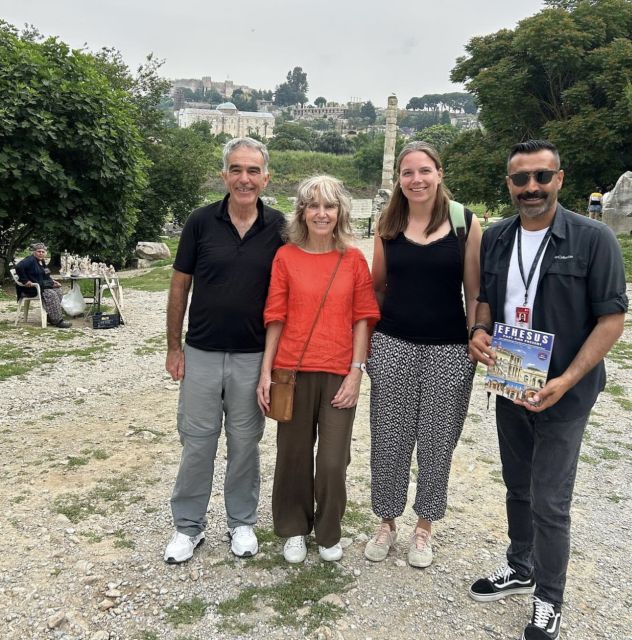
After the Terrace Houses portion, you’ll return to some of Ephesus’ most recognizable monuments. The route brings you to the Celsus Library, plus the Marble Road.
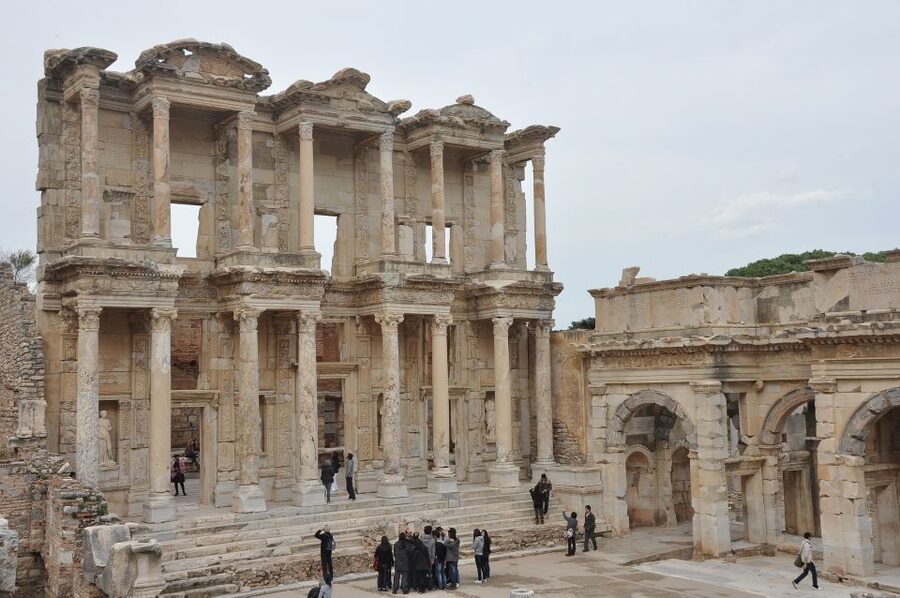
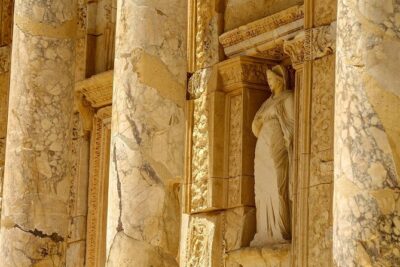
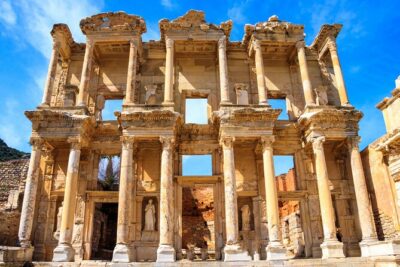
The Celsus Library is a big one for most visitors, but the guide makes the difference between “I saw a famous façade” and “I understand what it represented.” A library in a Roman city wasn’t just a storage room for books. It was a statement about culture and status.
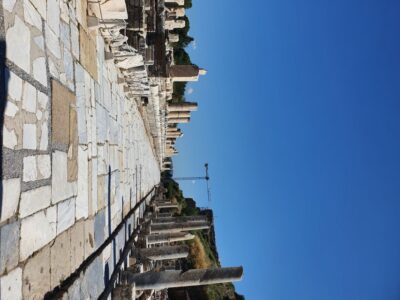
Then comes the Marble Road, which helps you connect the grand monuments to the movement of people. It’s one of those walkable pieces of the city where you start understanding scale—how far you’d travel on foot, how the street shaped daily routes, and why the city’s planners cared about the visitor experience even in ancient times.
Commercial Agora and Hadrian Temple: power meets everyday life
Next you’ll pass the Commercial Agora. This is where the city’s economic pulse shows up. If you want a mental image of what Ephesus sounded like, this is the spot to picture it—shopping, trade talk, and the steady flow of people moving through a public marketplace.
After that, you’ll see the Hadrian Temple. This kind of stop helps you connect the broader Roman imperial layer with local civic identity. You’re seeing how religion, politics, and architecture blended in one shared space.
And as you keep walking, your guide’s job is to keep you oriented: what’s nearby, what connects down the street, and what you’re likely looking at in terms of function rather than just style.
Great Theater and Arcadine: where public life scaled up
The Great Theater is next on your route, and it’s a must-stop if you like the idea of cities as social machines. A theater isn’t only for entertainment. It’s also for announcements, large gatherings, and city-level moments where lots of people had to face the same stage.
Then you’ll reach Arcadine (Harbour Road). This is the shift from internal city life to the edge of connection. The Harbour Road angle matters because it helps you remember Ephesus wasn’t isolated. Movement of goods and people shaped the city’s wealth and influence.
The tour’s structure—public buildings, private luxury, civic streets, major cultural landmarks—helps you understand Ephesus as a connected system. Not a pile of monuments.
Practical stuff that makes or breaks the experience
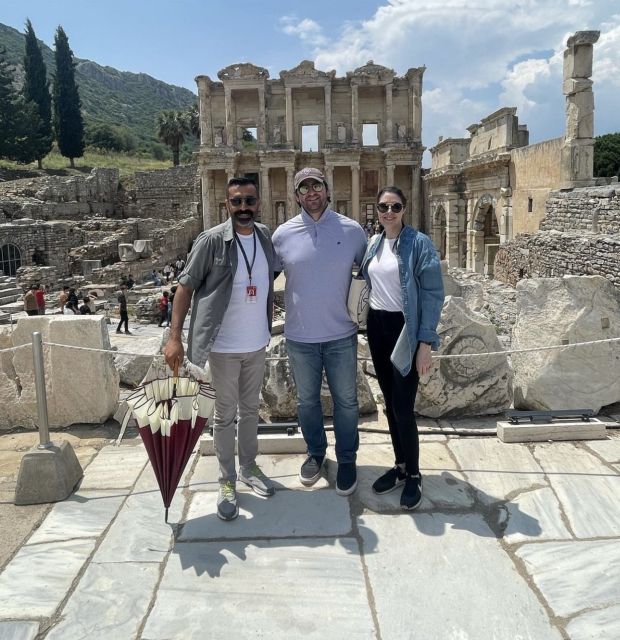
Because this is a guided walk through a large archaeological site, the logistics you prepare for become part of your enjoyment.
- Entrance fees are not included. You’ll want to budget separately for site entry so you aren’t surprised mid-day.
- No lunch or drinks are included. If you’re the type who gets cranky when hungry, plan food timing before or after your 3-hour window.
- Transportation isn’t included. You’ll need to handle getting to the Ephesus Archaeological Site on your own.
- Expect lots of walking. You’ll cover a long route that includes marble streets and multiple stops.
On the plus side, the guide includes English local guiding and helps you skip the ticket line. That means more time looking at the actual ruins, not staring at a queue.
Finally, the tour is described as a private group, with a group size of up to 15. That matters if you want your guide to actually answer questions and keep your pace comfortable instead of getting lost in a crowd.
How good guides change what you see
One of the strongest signals from the experience feedback is guide quality. Nizam is praised as knowledgeable and pleasant, with perfect command of the place. Yildmaz is also highlighted for being extremely knowledgeable and helpful, with a pace that stays unhurried even when crowds are around.
Why does that matter for you? Because Ephesus can feel overwhelming fast. Without guidance, you might spot big landmarks and miss the relationships between them: how the streets guide movement, how the civic buildings link to public life, and how the Terrace Houses connect to elite residence patterns.
A calm guide approach also helps you actually slow down enough to notice things like mosaic details, the household logic of terraces, and the overall layout from gate to harbor road.
In short: the value here is not only what you visit. It’s how you interpret it in real time.
Price and value: $165 per group for up to 15
The price is $165 per group (up to 15) for 3 hours. That structure can be good value if you’re traveling with friends, family, or a small set of people who want a shared guide rather than booking separately.
Here’s how to think about value without getting tricked by the headline number:
- If you can fill enough seats in your group, you effectively spread the guide cost across more people.
- If you’re traveling alone or with only one partner, you may find that per-person value depends on how the group is handled.
Either way, you’re getting an English-speaking guide, a route that covers major monuments plus the Terrace Houses, and help with ticket entry timing. If you’re the type who likes to ask questions and compare what you see with what you already know, the guide piece can be worth a lot on its own.
Who should book this tour
This experience is a great fit if you:
- want a guided walk that explains what you’re seeing, not just where to stand for photos
- care about the social side of ancient life, especially the Terrace Houses
- like Christianity-in-a-place context, including the connection to Paul and the seven churches idea
- prefer a smaller group format (up to 15) that can keep the pace more comfortable
It may be less ideal if you:
- want a super-flexible, roam-at-your-own-speed day
- are trying to avoid extra costs like entrance fees
Should you book Ephesus with a local guide?
If you’re visiting Ephesus for the first time, I’d book it. The route is built for understanding: you get major civic monuments, then a strong contrast with private elite housing at the Terrace Houses. That pairing makes the site feel complete.
Make your decision if you can handle walking and you’re okay budgeting entrance fees separately. If you want a guide to help you read the streets and buildings as a story, this is one of those tours where the explanation is the real value, not just the sightseeing checklist.
FAQ
Where does the tour start?
The tour meets at the Ephesus Archaeological Site, specifically at Ephesus’ upper gate.
How long is the tour?
The duration is 3 hours, with about 2 hours spent discovering the ancient city on foot with the English-speaking guide.
Is the tour in English?
Yes. The tour includes an English local tour guide.
What’s included in the price?
The tour includes the English local tour guide and is described as a private group. It also notes skip the ticket line.
What’s not included?
Entrance fees, lunch and drinks, and transportation are not included.
Does the tour include the Terrace Houses?
Yes. The tour includes an exclusive visit to the Terrace Houses (private houses on Curetes Street).
The Rest of the Shortlist
Ephesus, Just Your Party
Ephesus on Your Own Ticket
Just Added Around Kusadasi
- Drive by Ephesus&Ancient wonders(NO walking&NO hidden costs)★ 5.0 · 3 reviews
- Private Ephesus Tour for Cruise Guests★ 3.5 · 3 reviews
- Private Pamukkale and Ephesus Tours★ 4.5 · 3 reviews
- Ephesus and House of Virgin Mary From Kusadasi or Selcuk★ 4.0 · 3 reviews
- Ephesus Entry Ticket: Discover a Wonder of the Ancient World★ 4.6 · 3 reviews
- House of Virgin Mary and Shopping Tour Cruiser Only★ 5.0 · 3 reviews
Ephesus Private Guided Tours, compared.
 ★ 5.0FOR CRUISERS: Skip The Lines PRIVATE EPHESUS TOUR &On Time ReturnFrom $398,527 reviews
 ★ 5.0PRIVATE EPHESUS TOUR FOR CRUISERS: On-time Return and Skip-LineFrom $295,807 reviews
 ★ 5.0PRIVATE NO HIDDEN FEES Ephesus, Mary’s House Guided Tour /GRP OPTFrom $992,455 reviews
 ★ 5.0For Ship Guests:BEST SELLER EPHESUS PRIVATE TOUR & On Time ReturnFrom $392,029 reviews
 ★ 5.0Ephesus Temple of Artemis and House of Mary Private Half Day TourFrom $151,573 reviews
 ★ 5.0PRIVATE TOUR FOR CRUISERS: Mary’s House (Meryemana) and EphesusFrom $291,349 reviews
 ★ 5.0SKIP-THE-LINE: Group & Private Ephesus Tour ENTRY FEE & LUNCHFrom $7935 reviews
 ★ 5.0All Inclusive Private Access Ephesus Tour (SKIP-THE-LINE)From $67843 reviews
Browse the lists this tour appears in