
Review · EPHESUS PRIVATE GUIDED TOURS
NEW: Private The Most Detailed Ephesus Shore Excursion / with Lunch
Ephesus, minus the hassle. This private Kusadasi shore excursion packs in the big sights and then keeps going, with a licensed English guide and a promised way to skip the long lines.
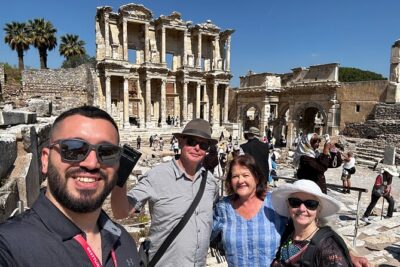
What I like most is the pacing: you get to spend real time at major stops like the Library of Celsus and the Great Theatre instead of just passing through.
The second win is the Turkish lunch included during your 5–7 hour day. One consideration: the headline price does not cover most site entries, so you should budget extra for things like Ephesus Ancient City, Mary’s House, Terrace Houses, and the St. John Basilica.
In This Review
- Key things that make this Ephesus tour worth your time
- Value and total cost: what the € and the $ really add up to
- Pickup, timing, and why this matters on cruise days
- Your guide and the private advantage (especially when Ephesus gets crowded)
- Meryemana (Virgin Mary’s House): a calm start with great payoff
- Ephesus Ancient City highlights: the spine of the Roman world
- State Agora and the Odeion: two stops that explain how people lived
- State Agora (about 15 minutes)
- The Odeion (about 15 minutes)
- Temples on Curetes Street: Domitian, Hadrian, and Hercules Gate
- Temple of Domitian (about 15 minutes)
- Hercules Gate (about 15 minutes)
- Temple of Hadrian (about 10 minutes)
- Ephesus Terrace Houses: the stairs are worth it
- Library of Celsus and the Great Theatre: the headline moments
- Library of Celsus (about 30 minutes)
- Ephesus Ancient Greek Theatre (about 25 minutes, admission included)
- Temple of Artemis and the St. John Basilica: wonder and faith side by side
- Temple of Artemis (about 40 minutes, admission not included)
- Basilica of St. John (about 40 minutes, admission not included)
- Lunch included: Turkish food, but save room for the extra drinks
- Shops and carpet-weaving stops: enjoy the craft, control the shopping pressure
- Who this tour is best for (and who might want a different plan)
- Should you book this private Ephesus shore excursion with lunch?
- FAQ
- How long is the Ephesus shore excursion?
- Is pickup and drop-off included?
- Is this tour private?
- Is lunch included?
- Are admission tickets included in the price?
- What language is the guide?
- What kind of vehicle is used?
- Is free cancellation available?
Key things that make this Ephesus tour worth your time
- Private, flexible feel so your guide can match the day to your interests and questions
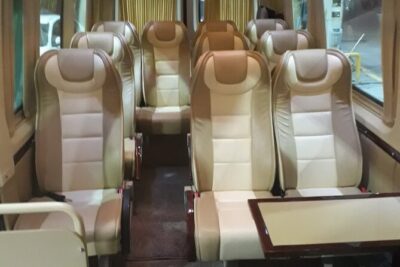
- AC Mercedes van for the ride between Kusadası and Selçuk-area ruins
- Line-skipping promise (and in real life, many guides handle ticketing so you lose less time)
- Stop choices most tours miss, like the State Agora details and the Odeion
- Lunch is truly included, with drinks not included, so plan on paying for beverages
- Multiple guides stand out in feedback, including Selin, Nesli, Mehmet, Ahmet, Tas, Asli, Devon, Mary, and Özgür
Value and total cost: what the € and the $ really add up to
The tour price is $79.20 per person for a private day that can run about 5 to 7 hours. That’s a solid baseline, especially because pickup and drop-off are included and you’re riding in a Mercedes air-conditioned vehicle.
But here’s the budgeting reality: most key entries are not included. You’ll likely pay:
- Ephesus Ancient City: €40 per person
- Virgin Mary’s House (Meryemana): €18 per person
- Terrace Houses: €15 per person
- St. John Basilica: €6 per person
There is one big exception in the schedule: admission for the Ancient Greek Theatre is included. Still, with the other site fees added in, the all-in cost can climb quickly. If you’re traveling as a couple or family, this is where a private guide can make the price feel more rational because you’re not waiting around for anyone else’s pace.
My practical take: if you’re even mildly interested in how daily life, politics, and worship worked in Roman and early Christian Ephesus, you’ll use that extra money well.
Your own guide and car, more private Ephesus days
- FOR CRUISERS: Skip The Lines PRIVATE EPHESUS TOUR &On Time Return
★ 5.0 · 8,527 reviews - PRIVATE EPHESUS TOUR FOR CRUISERS: On-time Return and Skip-Line
★ 5.0 · 5,807 reviews - PRIVATE NO HIDDEN FEES Ephesus, Mary’s House Guided Tour /GRP OPT
★ 5.0 · 2,455 reviews - For Ship Guests:BEST SELLER EPHESUS PRIVATE TOUR & On Time Return
★ 5.0 · 2,029 reviews
Pickup, timing, and why this matters on cruise days
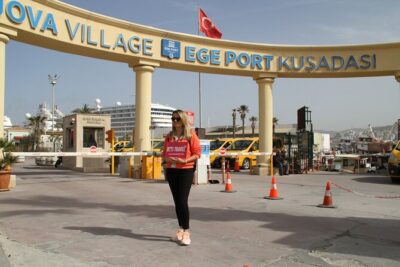
If you’re on a cruise, this tour meets you at the exit gate of the immigration terminal of the cruise port, with a sign that reads OTTI Travel. For hotel pickup, you meet the guide at the hotel reception. The goal is simple: reduce the chaos and get you on the road with less guessing.
You should also know the “schedule pressure” is real on a ship day. One past experience in the feedback included a late return situation, which ended okay because the cruise line delayed sailing. So if your reboarding time is strict, I’d treat this like a mission: confirm the return plan with your guide early and repeat your reboarding deadline so there’s no last-minute scramble.
In terms of comfort, you get a Mercedes van with air-conditioning, plus parking fees are handled. That’s not glamorous, but it keeps the day from turning into a sweat-fest and helps you stay sharp for the walking-heavy ruins.
Your guide and the private advantage (especially when Ephesus gets crowded)
You’ll have an English-speaking professional licensed guide. The private setup means you’re not stuck with a script. In the feedback, several guides got praise for going off-book when people had questions or wanted more focus at specific areas.
I also like that this day targets “meaning,” not just monuments. For example, the State Agora stop is quick by the clock, but it’s packed with context about how that space functioned for government discussions and how burial practices show up in the excavations. That’s the kind of detail that helps Ephesus stop being a pile of stones.
If you can request a guide, names that repeatedly show up positively include Selin and Nesli. Other frequently praised names are Mehmet, Ahmet, Tas, Asli, Devon, Mary, and Özgür. You can’t always guarantee a specific person, but it’s worth asking.
Meryemana (Virgin Mary’s House): a calm start with great payoff
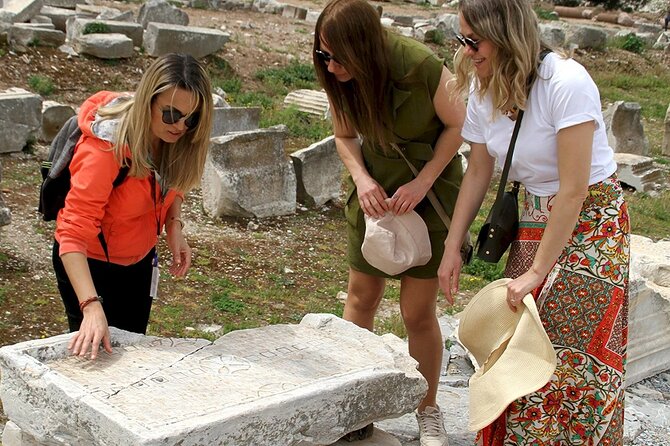
Most days you step into Ephesus feeling like you’ll be fighting crowds. Meryemana is different. It’s a more reflective stop, and the schedule gives it about 30 minutes.
You’ll visit the House of Virgin Mary. Admission is not included, so you’ll pay separately. The trade-off for that ticket cost is that this stop often feels like a breather before the Roman city roar. If you like religious history, architecture, or just a quieter start, it’s one of the best ways to set the tone for the day.
Practical tip: bring a light layer. Even in good weather, church sites can feel cooler and more shaded.
Ephesus Ancient City highlights: the spine of the Roman world
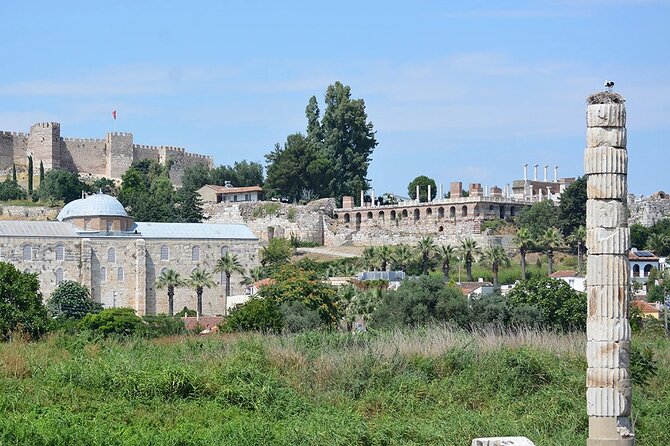
Once you’re in Ephesus, you’ll cover a lot—about 2 hours inside the main ancient city area. This is where the tour can feel like a “greatest hits” tour, but it also goes beyond the usual blur by naming specific places as you walk.
You’ll move past:
- Harbour Street and the theatre area
- The Marble Street
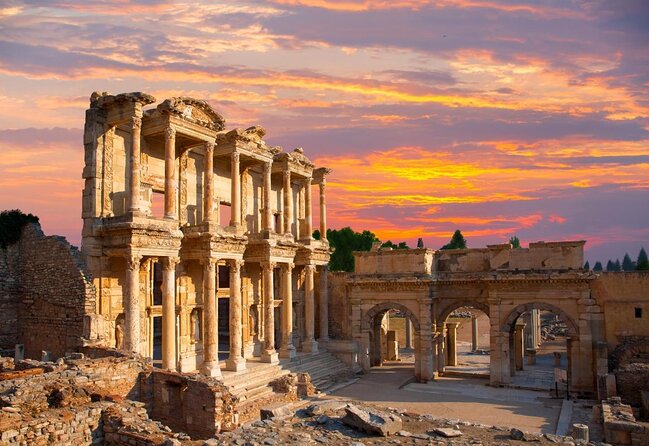
- The Celsus Library section (often the photo magnet)
- The gate of Mihridates and Mazues
- Commercial Agora
- The latrina (yes, Ephesus has public toilets, and it’s a reminder how practical the Romans were)
- Hadrian Temple area
- Scolastica Baths and Trajan Fountain
- Curetes Street, the Polio Fountain, the Memnius Monument
- The Temple of Domitian and nearby civic buildings like the Prytaneion, Odeon, and State Agora
Admission for the ancient city is €40, not included. On the plus side, the tour includes a line-skipping promise, and some guides handle entry logistics so you don’t lose time waiting.
What makes this stretch valuable is the way it reads as a city. Instead of only seeing temples, you also see civic infrastructure: meeting spaces, fountains, baths, and the “everyday” parts that most quick tours don’t bother to explain.
Off the ship for the day? More Ephesus port runs to weigh
State Agora and the Odeion: two stops that explain how people lived
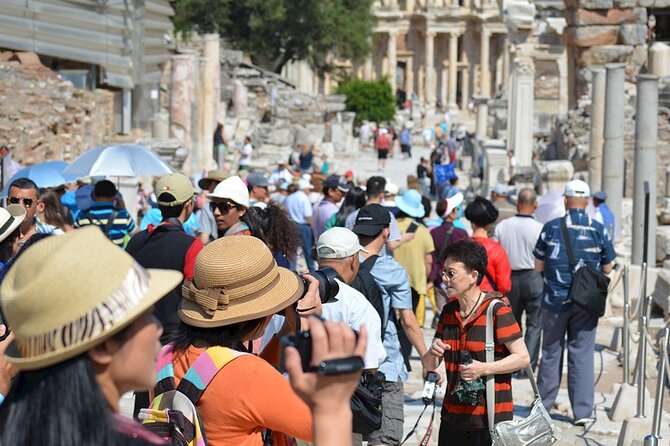
These two are smaller and easier to miss if your focus is only on the big theatre and Celsus Library. They’re also where the tour earns its “most detailed” reputation.
State Agora (about 15 minutes)
This was not a shopping agora. It was used for business and governmental discussion, especially meeting roles tied to city administration. Excavations found graves from the 7th–6th centuries B.C., plus a stone-paved road and even an archaic terra cotta sarcophagus.
A neat detail: there’s a water reservoir in the corner of the agora tied to the Pollio Aqueduct, with remains visible about 5 kilometers away along the Selçuk–Aydın highway. Even if you don’t walk out to the aqueduct remains today, knowing the connection makes the ruins feel less random.
The Odeion (about 15 minutes)
The Odeion is shaped like a small theatre with a stage building and seating for around 1,500. It served double duty: as a Bouleuterion for senate meetings and as an Odeum for performances. Constructed in the 2nd century A.D under Publius Vedius Antonius and his wife Flavia Paiana, it even had a wooden roof in earlier use.
If you care about how power and entertainment overlapped, this is the kind of stop that makes the day more than a photo run.
Temples on Curetes Street: Domitian, Hadrian, and Hercules Gate
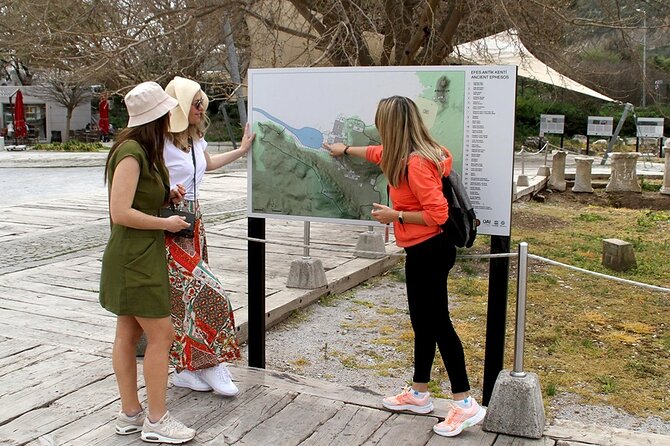
After the civic stops, you’ll hit a cluster along Domitian Street and Curetes Street. This section helps you connect architecture to politics—who built what, and why.
Temple of Domitian (about 15 minutes)
This is described as the first structure in Ephesus known dedicated to an emperor. It’s set on a wide terrace (about 50 by 100 meters) with vaulted foundations. The tour walk gives you the layout basics: pro-style plan, columns (8 on the short side, 13 on the long side), and an altar structure that’s now displayed at the Izmir Museum.
A key story point here is the honor of building an emperor temple tied to the city’s permission to act as neocoros. It’s a reminder that religion and politics were tightly linked.
Hercules Gate (about 15 minutes)
This gate is linked to a relief of Hercules. The structure as you see it today is partly reused—brought from another place in the 4th century A.D, with the Hercules relief dating to the 2nd century A.D.
Only the column sides remain today. The route matters too: the gate narrowed access to Curetes Street and helped keep it pedestrian. If you’ve walked through it, you can picture the street shifting over time.
Temple of Hadrian (about 10 minutes)
Hadrian’s temple is one of the best-preserved structures on Curetes Street. It was built before 138 A.D by P. Quintilius and dedicated to Emperor Hadrian, who visited from Athens in 128 A.D.
Look for the four Corinthian columns supporting the curved arch, plus the relief of Tyche (goddess of victory). The pedestal inscriptions are also a detail worth listening for: they served as bases for statues of emperors from 293–305 C.E. (Diocletian, Maximian, Constantius I, Galerius). The originals aren’t found, but the bases tell the story.
Ephesus Terrace Houses: the stairs are worth it
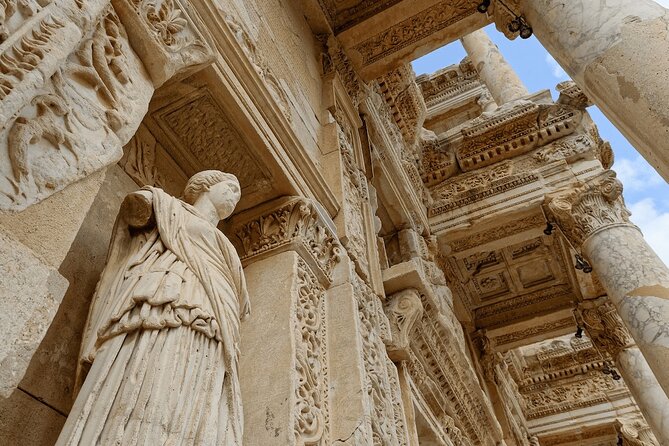
If you’re up for a physical challenge, Terrace Houses are one of the best parts of the day. The location is on the hill opposite Hadrian Temple, and the walk includes some stairs.
The houses belonged to wealthy Roman families, built in an urban layout linked to the Hippodamian plan. You’ll learn about family life patterns in Roman times. There are six residential units across three terraces, with the oldest building dating back to the 1st century B.C., and the residences continuing use until the 7th century A.D.
Protective roofing covers the site. Mosaics and frescos have been consolidated, and two houses are open like a museum.
Admission for Terrace Houses is €15, not included. This is another place where I’d consider the ticket cost part of the value: seeing how ordinary “luxury” worked in daily life is different from seeing public monuments.
Library of Celsus and the Great Theatre: the headline moments
Two stops are the main event for many people, and the tour treats them that way.
Library of Celsus (about 30 minutes)
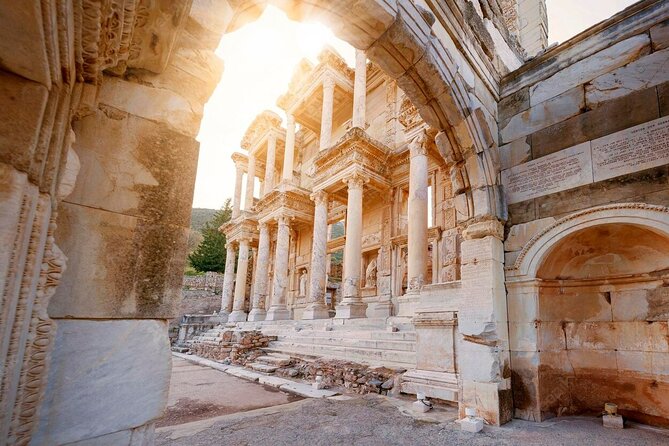
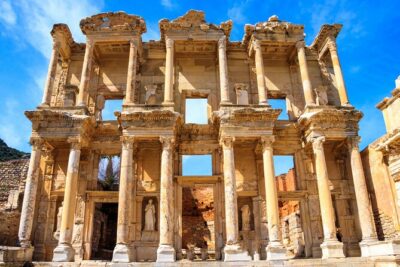
Celsus Library is one of the most beautiful structures in Ephesus, built in 117 A.D as a monumental tomb. The grave is beneath the entrance area, and a statue of Athena sits over it, tied to the goddess of wisdom.
The tour also explains the library logic: scrolls stored in niches, double walls behind bookcases to moderate temperature and humidity, and a capacity said to exceed 12,000 scrolls. It’s noted as the third richest library in ancient times after Alexandra and Pergamum.
If you’re the kind of person who likes symbolism, the architecture here does more than look pretty. It shows how knowledge and power were staged.
Ephesus Ancient Greek Theatre (about 25 minutes, admission included)
This theatre is huge: about 25,000 seats, and the largest in Anatolia. It was first constructed in the Hellenistic period in the 3rd century B.C., then enlarged in Roman times.
You’ll see the cavea’s structure: 66 rows of seats divided by diazoma walkways into three horizontal sections. The lower section includes notes about Marble pieces used for restoration and an emperor’s box.
The tour also frames its purpose beyond theatre. It hosted concerts and plays, but also religious, political, and philosophical discussions, plus gladiator and animal fights.
Admission here is included, which is a nice bonus because this is often one of the most expensive-ticket feelings in Ephesus.
Temple of Artemis and the St. John Basilica: wonder and faith side by side
Temple of Artemis (about 40 minutes, admission not included)
The Temple of Artemis is one of the Seven Wonders of the ancient world. Today, you mostly see foundations because the area turned swamp over the centuries.
What remains is described as marble foundations and sculptured column capitals and shafts. Some of the most beautiful remains are housed in the British Museum. Even if you’ve seen pictures before, being there gives context for how enormous the original structure must have been.
Admission is not included, so budget the additional ticket cost if this stop matters to you.
Basilica of St. John (about 40 minutes, admission not included)
This stop takes an early Christian turn. Tradition says St. John spent his last years in the Ephesus region and was buried on the southern slope of Ayosolug Hill.
A small chapel was built over the grave in the 4th century, then the church became the basilica during the reign of Justinian (527–565 A.D). The tour’s framing includes persecution during the early Christian period, linking events around Jerusalem and Paul’s execution, plus the tradition that John wrote his Gospel in Ephesus and Revelation on Patmos in 96 A.D.
Admission is €6, not included. If you want Ephesus to feel like more than Rome, this is a strong place to add meaning to the day.
Lunch included: Turkish food, but save room for the extra drinks
Lunch is included at a local restaurant. The exact menu isn’t listed, but based on past experiences, it can be plentiful and filling enough that you won’t feel rushed or hungry during the afternoon walking.
You might see details like pomegranate juice, fig tastings, and olive oil-based dressings mentioned in feedback. Still, drinks are not included, so if you want soda, water, or something more, plan on paying separately.
My simple advice: eat at a normal pace, hydrate early, and don’t rely on later stops to revive you. The day is long and the ruins don’t slow down for your energy level.
Shops and carpet-weaving stops: enjoy the craft, control the shopping pressure
Ephesus has shops and there’s often some form of shopping stop during similar excursions in the region. In past experiences, a carpet weaving or rug-making demonstration appeared for some people. It included time to watch the work and then a sales display afterward.
The balance can be polite but pushy. So if you’re not shopping, set a mindset before you enter: enjoy the craft, ask questions if you want, then politely decline buying if you’re not interested. You can still come away with a better sense of how rugs are made without buying one.
Who this tour is best for (and who might want a different plan)
This tour is a great fit if you:
- Want a private experience with an English guide and the ability to ask questions
- Like structured stops at major Ephesus monuments plus “supporting cast” places like the Odeion and State Agora
- Plan to pay separate site fees anyway (so the all-in cost doesn’t surprise you)
- Prefer a comfortable ride in an AC Mercedes van
You might choose another option if you:
- Don’t want stairs. Terrace Houses can involve climbing, and the schedule assumes moderate physical fitness
- Hate the idea of additional entrance fees and prefer a fully bundled price
- Are extremely tight on cruise reboarding time and want the lowest possible risk of schedule drift
Should you book this private Ephesus shore excursion with lunch?
Yes, if you’re aiming for value through time saved and through better interpretation, not just more photos. The private guide, the line-skipping promise, and the included lunch make the $79 base feel reasonable once you compare it to paying for a frantic DIY day where you’d still need transport and guidance.
Book it especially if you care about the city’s civic and daily-life texture. Stops like the State Agora and the Odeion make Ephesus feel like a functioning place, not a scenic backdrop.
My final check before you go: read your ticket expectations. Since most entries are extra, decide what you want most (Terrace Houses, Mary’s House, St. John Basilica, Temple of Artemis). If those are on your must-do list, this tour is worth it.
FAQ
How long is the Ephesus shore excursion?
The duration is about 5 to 7 hours.
Is pickup and drop-off included?
Yes. Pickup and drop-off are included, with cruise passengers met at the exit gate of the immigration terminal with an OTTI Travel sign. Hotel guests are met at the hotel reception.
Is this tour private?
Yes. It’s a private tour/activity, and only your group participates.
Is lunch included?
Yes. Lunch is included. Drinks at lunch are not included.
Are admission tickets included in the price?
No. Ephesus Ancient City, Virgin Mary’s House, Terrace Houses, and the St. John Basilica have separate admission fees. Admission for the Ancient Greek Theatre is included.
What language is the guide?
The tour includes an English speaking professional licensed tour guide.
What kind of vehicle is used?
You’ll travel in an air-conditioned Mercedes van, with parking fees included.
Is free cancellation available?
Yes. You can cancel up to 24 hours in advance for a full refund.
The Rest of the Shortlist
Off the Ship and Into Ephesus
Ephesus, Just Your Party
Just Added Around Kusadasi
- Ephesus and House of Mary from Kusadasi Cruise Port★ 4.0 · 3 reviews
- Ephesus: 4-Hour Guided Tour with Transfer from Kusadasi★ 5.0 · 3 reviews
- Sirince Village & Selcuk Bazaar Tour From Kusadasi★ 4.5 · 3 reviews
- FOR CRUISERS: Best of Ephesus Tour with GUARANTEED ON-TIME RETURN★ 5.0 · 3 reviews
- Shore Excursion: Private Pamukkale Tour From Kusadasi Port★ 5.0 · 3 reviews
- For Cruisers: Ancient Ephesus Private Tour From Kusadasi Port★ 5.0 · 3 reviews
Ephesus Private Guided Tours, compared.
 ★ 5.0FOR CRUISERS: Skip The Lines PRIVATE EPHESUS TOUR &On Time ReturnFrom $398,527 reviews
 ★ 5.0PRIVATE EPHESUS TOUR FOR CRUISERS: On-time Return and Skip-LineFrom $295,807 reviews
 ★ 5.0PRIVATE NO HIDDEN FEES Ephesus, Mary’s House Guided Tour /GRP OPTFrom $992,455 reviews
 ★ 5.0For Ship Guests:BEST SELLER EPHESUS PRIVATE TOUR & On Time ReturnFrom $392,029 reviews
 ★ 5.0Ephesus Temple of Artemis and House of Mary Private Half Day TourFrom $151,573 reviews
 ★ 5.0PRIVATE TOUR FOR CRUISERS: Mary’s House (Meryemana) and EphesusFrom $291,349 reviews
 ★ 5.0SKIP-THE-LINE: Group & Private Ephesus Tour ENTRY FEE & LUNCHFrom $7935 reviews
 ★ 5.0All Inclusive Private Access Ephesus Tour (SKIP-THE-LINE)From $67843 reviews
Browse the lists this tour appears in