
Review · PAMUKKALE & HIERAPOLIS DAY TRIPS
Kusadasi: Pamukkale & Hierapolis Tour with Lunch
White terraces meet Roman ruins in one day. I love the Pamukkale travertine terraces—that surreal white step-surface—and I also love the Hierapolis Roman ruins, from theatres to bath remains, laid out like an open-air textbook. This tour turns those two UNESCO stops into one smooth 9-hour day with guided stops and lunch.
I like that the morning doesn’t just throw you at ruins. You get a professional English-speaking guide, and names like Adam, Cemal, and GamGam show up in feedback for being friendly and organized while keeping the day moving. Lunch is included and it’s described as solid and well served, which matters when you’re facing a long drive.
One thing to think about: the day is long and road-heavy (about 200 km each way), plus there’s a shopping/break stop. If you hate “quick trips inside shops,” plan to treat that segment like a break, not the main event.
In This Review
- Key highlights worth planning around
- Leaving Kusadasi or Selçuk: the long 200 km day plan
- Pamukkale travertines: walking barefoot on the white terraces
- Cleopatra’s Pool closure: how to enjoy Pamukkale without one highlight
- Hierapolis Roman ruins: Odeon, Baths, Theatre, and Apostle Philip context
- Pamukkale Amphitheatre and Roman Baths: the Roman add-on you’ll appreciate
- Lunch during a long day: what’s included and what to plan
- Archaeological museum stop: turning ruins into meaning
- Price and what you still pay: the $58 value test
- Small catches: shopping stop, timing, and crowd reality
- Who this tour suits best (and who should skip it)
- Should you book this Kusadasi Pamukkale & Hierapolis tour?
- FAQ
- Where does pickup happen for this tour?
- How long is the tour from start to finish?
- Is lunch included, and are drinks included?
- Do I have to pay admission fees?
- Can I wear shoes at Pamukkale?
- Is Cleopatra’s Pool open?
- Is the guide available in English?
- What should I bring for the day?
Key highlights worth planning around
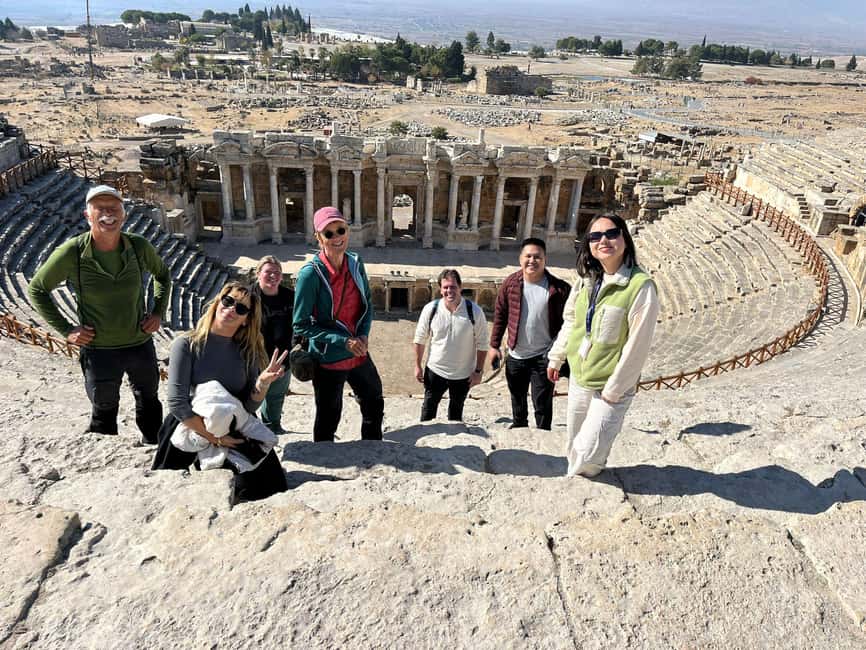
- Barefoot time on Pamukkale’s calcium terraces (shoes aren’t allowed on the travertines)
- Hierapolis sights in one pass: Odeon, Roman Baths, and Theatre
- Roman stops inside Pamukkale: Amphitheatre and Roman Baths
- Lunch included so you’re not scrambling mid-day
- Croatia-sized Instagram claims vs reality check: the pools can look different than photos, but they’re still special
- Long drive from Kusadasi/Selçuk with scheduled breaks to keep you sane
Leaving Kusadasi or Selçuk: the long 200 km day plan
This tour is built around the simple fact that Pamukkale is far from the Aegean coast. You’re looking at roughly a 200 km ride from Kusadasi, and the driving time is a big chunk of the 9 hours. It’s not a quick hop; it’s more like a full-day outing with scenery and a couple short pauses to reset.
Practically, that means you should pack for sitting in a car: sun protection, water, and something to keep you comfortable. You’ll also get a break on the way (with a shopping/break window listed at around 30 minutes), so you’re not stuck thinking only about bathrooms and snacks.
The good news: the pace is designed around guided time. A couple departures have been praised for arriving early enough to avoid the worst crowd crush, which can make a big difference in how much you actually enjoy the ruins and the travertines.
The white terraces are a long day out, more Pamukkale trips
- Pamukkale Small Group Tour from Kusadasi Port/Hotels
★ 5.0 · 434 reviews - Pamukkale Small Group Tour From Kusadasi or Selcuk Hotels
★ 5.0 · 393 reviews - Kusadasi: Pamukkale Hot Spring & Hierapolis Small-Group Tour
★ 4.7 · 256 reviews - Pamukkale Small Group Tour From Kusadasi or Selcuk
★ 5.0 · 220 reviews
Pamukkale travertines: walking barefoot on the white terraces
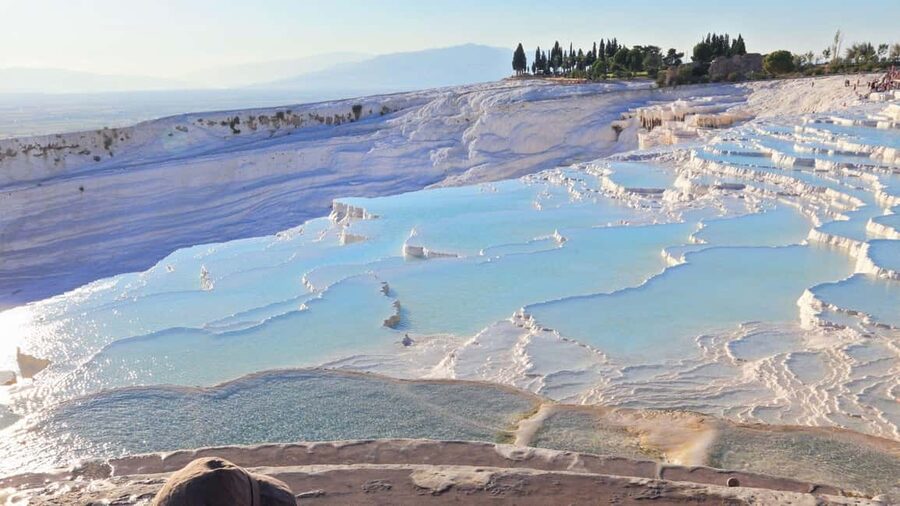
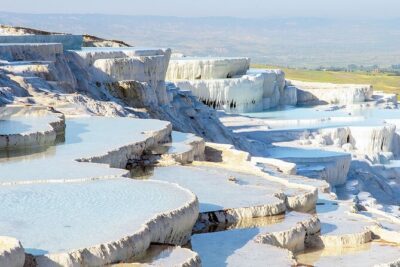
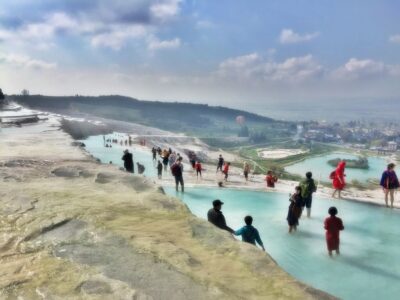
Pamukkale’s most famous trick is that you walk on the calcium terraces—barefoot. This tour makes that explicit: shoes aren’t allowed, so don’t wear footwear you’re attached to. Instead, bring comfortable shoes for everywhere else, and expect that your feet will do the “main event” when you’re at the travertine pools.
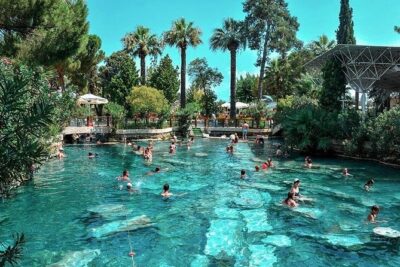
What you’ll see is the iconic white, step-like pattern where warm spring water meets mineral deposits. I like to think of it as nature doing a light-show using geology instead of electricity. Photos can make it look unreal and perfectly glossy, but real life has texture, angles, and people. That’s why a guide matters: you’ll know where to look and how to move so you don’t waste your limited walking time.
Also note the expectation reality check: at least one guide-runner style trip has been described as less impressive than Instagram images suggest. Still, the same feedback calls it worth the stop. That’s a useful mindset for you. Go for the sensation of standing on mineral terraces and seeing the scale of the place, not for a one-to-one photo match.
Pro tip for comfort: bring what the tour asks for—sunglasses, a hat, and water—and use sunscreen before you step onto the terraces. The day can feel bright and exposed, especially during the morning light.
Cleopatra’s Pool closure: how to enjoy Pamukkale without one highlight
There’s a catch you should plan for: access to Cleopatra’s Pool is temporarily closed for renovations. That means you should not build your entire mental checklist around that specific pool viewing area.
The upside is that Pamukkale is more than one named spot. You still get the travertine terrace experience and the Roman-era structures connected to the spa tradition—so your visit doesn’t become a “wrong expectations” letdown. If Cleopatra’s Pool is your must-see, this is the moment to decide whether the rest still feels worth it to you.
In practice, you’ll shift your focus to the terraces themselves, plus the Roman remains inside the Pamukkale area. Many people leave remembering the white mineral steps more clearly than they remember one individual pool.
Hierapolis Roman ruins: Odeon, Baths, Theatre, and Apostle Philip context
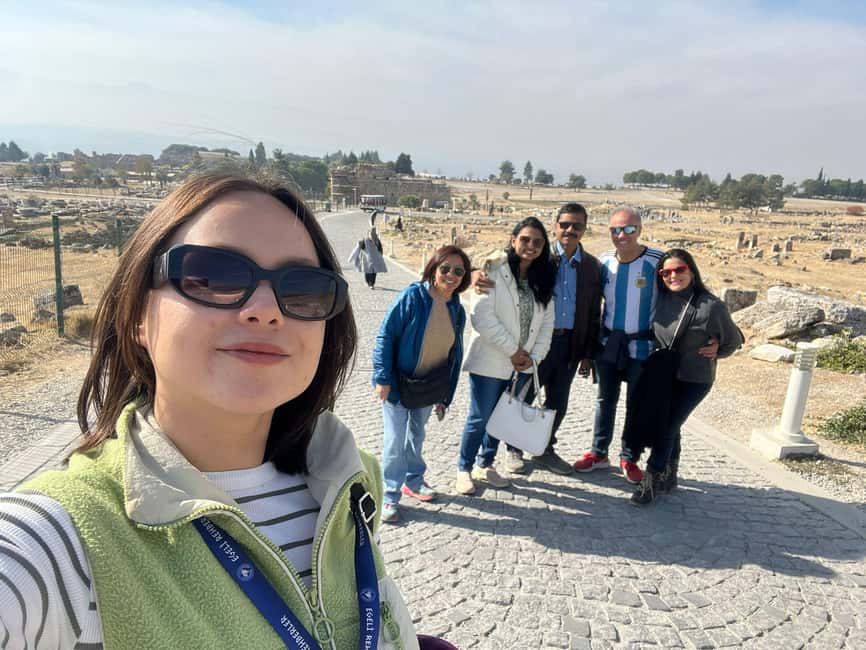
After Pamukkale, the tour moves to Hierapolis, often described as the Holy City. This is where you trade mineral-white wonder for stone-and-columns wonder, and it’s a satisfying change of pace.
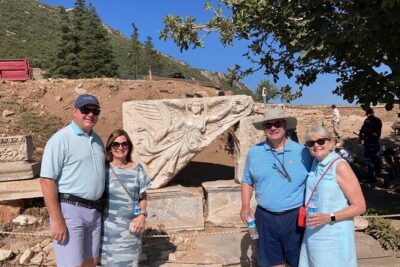
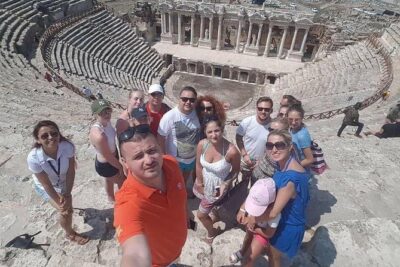
On the Hierapolis side, you’ll visit major Roman-era pieces like the Odeon, the Roman Baths, and the Theatre. Even if your Roman history is rusty, this is the kind of site where the shapes tell the story. The theatre setting helps you imagine how public life worked, and the bath remains explain why this region was such a magnet long before modern visitors arrived.
One thing that’s part of the guided framing is the city’s connection to the Apostle Philip. That adds a layer beyond architecture. You’re not just looking at scattered blocks; you’re hearing how the place lived through religious and civic chapters.
Some tours also come with better timing. Cemal, for example, is praised for getting a group to sights before the biggest crowds. If you’re sensitive to crowds, that kind of scheduling can be as important as the monument itself.
Pamukkale Amphitheatre and Roman Baths: the Roman add-on you’ll appreciate
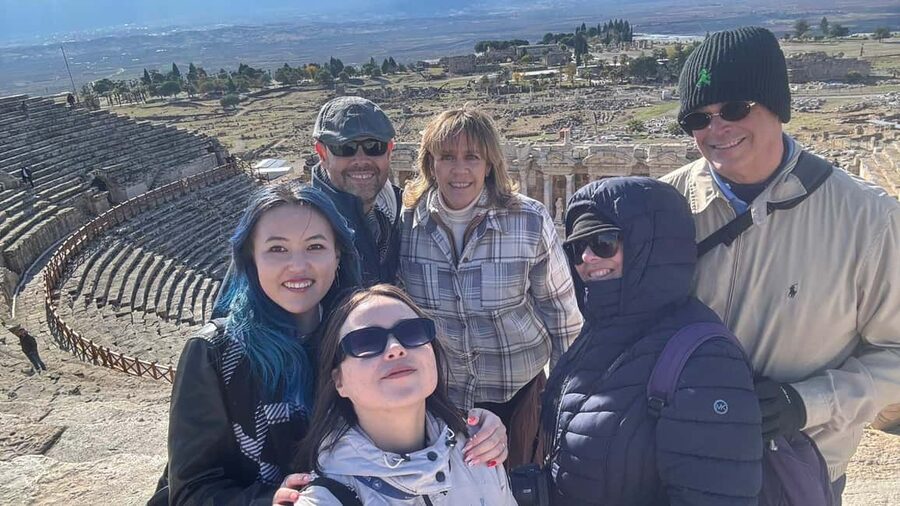
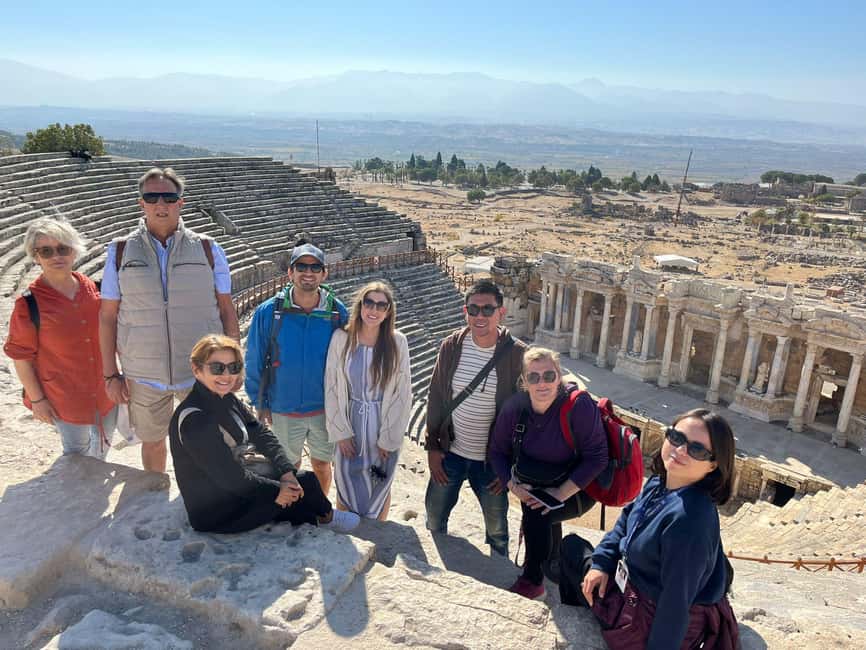
Pamukkale isn’t only about the terraces. You’ll also see Roman-era structures tied to the spa culture of the area, including the Amphitheatre and the Roman Baths.
This part is easy to underestimate. If you go in thinking only about white water, you might rush. But I like that it anchors the day in a wider story: mineral springs were useful to Romans too, and the architecture proves it.
If you enjoy ruins, this segment helps the day feel less like a single photo moment and more like a coherent route. It’s also a nice “slow down” after the barefoot terraces, because you can sit for a moment, watch your guide explain what you’re looking at, and then continue at your own pace.
More tables set for the midday stop


Lunch during a long day: what’s included and what to plan
Lunch is included, and feedback describes it as delicious and served well. That matters because this is a 9-hour block, and you’re mixing travel time with walking time. Good food is not a luxury here—it’s the thing that keeps the afternoon from turning into a cranky blur.
Beverages during lunch aren’t included, so if you like a drink with your meal, plan for extra cost. If you tend to get thirsty fast, also keep using water during the drive and between stops.
One practical tip: eat like a traveler, not like a sprint. You want energy for Hierapolis and the museum stop later, not a food coma.
Archaeological museum stop: turning ruins into meaning
At the end of the Pamukkale and Hierapolis run, you’ll stop at the archaeological museum to see artifacts from the area. This is one of those add-ons that can feel optional—until you actually walk through and start recognizing the theme behind what you saw outside.
A museum stop can do two helpful jobs for you:
- It makes the stone buildings feel less random.
- It gives you a way to remember the day after you’re back in your hotel.
If you’re the type who likes context, you’ll probably wish you had more time here. At least one guide-led experience calls the park stunning and says they could have stayed longer—often that same “I want more time” feeling shows up around museums too.
Price and what you still pay: the $58 value test
The price is $58 per person, and it includes a licensed English-speaking guide, lunch, and roundtrip transportation from many Kusadasi hotels (with drop-off options also in Kusadasi or Selçuk). You’re also getting air-conditioned, non-smoking vehicle transport.
The one major extra cost is admission to Pamukkale: 30 € per person is not included. So when you do the value math, you’re really deciding if the tour is worth it even after that add-on.
In my view, it often is—because you’re bundling:
- Guide interpretation (more useful than wandering alone)
- Transport across a long distance
- A structured day that covers both Pamukkale and Hierapolis
If you’re trying to save cash, you could theoretically piece together transport and tickets yourself. But if you want less hassle, this price structure can be a reasonable trade. The biggest variable is whether the included lunch and the guide time match what you personally care about.
Small catches: shopping stop, timing, and crowd reality
Here’s where you’ll want to set expectations honestly. The itinerary includes a break with shopping and sightseeing for about 30 minutes. Some feedback has noted there can be too much shopping, so if you prefer pure ruins-and-terraces time, treat that stop as a flexible gap. Even better, go into it knowing it’s part of the schedule and not the tour’s “real” reason for existing.
Timing matters too. One guide has been praised for getting to Hierapolis and Pamukkale early, which can reduce how much you fight for space. If you’re sensitive to crowds, the exact departure time and guide timing can be the difference between enjoying the site and feeling packed.
Finally, remember the Instagram factor. Travertines are beautiful, but they can look flatter or less glossy in real life. The magic is still there—it just comes from scale, mineral texture, and the odd experience of walking barefoot over mineral steps, not from perfect photo lighting.
Who this tour suits best (and who should skip it)
This tour is a good fit if you want a guided day that combines natural wonder and Roman ruins without coordinating transport yourself. It’s especially appealing for first-timers who want both Pamukkale and Hierapolis in one go, with lunch handled.
It’s not suitable for people with mobility impairments, and that’s worth taking seriously. Also keep in mind the barefoot rule on the terraces—if foot discomfort would stop you from enjoying Pamukkale, you may want to consider a different format.
If you’re travelling with kids, you might like the straightforward structure: drive, key sights, lunch, more sights, museum. Even in feedback, families are mentioned as having a good day when the guide keeps the pace organized.
Should you book this Kusadasi Pamukkale & Hierapolis tour?
I’d book it if you want a guided, low-hassle day with hotel pickup, lunch included, and a real plan that connects Pamukkale’s terraces to Hierapolis’s Roman sites. The guide names that come up—Adam, Cemal, and GamGam—are a decent signal that the operator puts care into how the day is run.
I’d think twice if you strongly dislike shopping stops or if you’re only excited about Cleopatra’s Pool. Since that pool area is closed, your excitement should be bigger than one named spot.
One last practical note: if you like flexibility, this activity offers free cancellation up to 24 hours in advance and reserve now pay later options. That’s useful when you’re juggling beach days in the Aegean.
If you want a single day that makes Pamukkale real and Hierapolis understandable, this is a good, solid way to do it.
FAQ
Where does pickup happen for this tour?
You can be picked up from many hotels in Kusadasi or from Selçuk, depending on the option you choose.
How long is the tour from start to finish?
The total duration is 9 hours.
Is lunch included, and are drinks included?
Lunch is included. Beverages during lunch are not included.
Do I have to pay admission fees?
Yes. Admission fees to Pamukkale are not included and are listed as 30 € per person.
Can I wear shoes at Pamukkale?
No. Shoes are not allowed for the Pamukkale terraces experience, so plan for barefoot walking where required.
Is Cleopatra’s Pool open?
No. Cleopatra’s Pool is temporarily closed for renovations, and access to that pool area is not available.
Is the guide available in English?
Yes. The tour includes an English live tour guide.
What should I bring for the day?
Bring comfortable shoes for outside the terraces, plus sunglasses, a hat, a camera, and water.
The Midday Table
The Rest of the Shortlist
Out to Pamukkale and Hierapolis
Just Added Around Kusadasi
- Ephesus and House of Mary from Kusadasi Cruise Port★ 4.0 · 3 reviews
- Ephesus: 4-Hour Guided Tour with Transfer from Kusadasi★ 5.0 · 3 reviews
- Sirince Village & Selcuk Bazaar Tour From Kusadasi★ 4.5 · 3 reviews
- FOR CRUISERS: Best of Ephesus Tour with GUARANTEED ON-TIME RETURN★ 5.0 · 3 reviews
- Shore Excursion: Private Pamukkale Tour From Kusadasi Port★ 5.0 · 3 reviews
- For Cruisers: Ancient Ephesus Private Tour From Kusadasi Port★ 5.0 · 3 reviews
Pamukkale & Hierapolis Day Trips, compared.
 ★ 5.0Pamukkale Small Group Tour from Kusadasi Port/HotelsFrom $100434 reviews
 ★ 5.0Pamukkale Small Group Tour From Kusadasi or Selcuk HotelsFrom $72393 reviews
 ★ 4.7Pamukkale Hot Spring & Hierapolis Small-Group TourFrom $70256 reviews
 ★ 5.0Pamukkale Small Group Tour From Kusadasi or SelcukFrom $83220 reviews
 ★ 5.0Full-day Pamukkale and Hierapolis Tour from Selcuk or KusadasiFrom $119209 reviews
★ 5.0Pamukkale Small Group Tour from Kusadasi Port/HotelsFrom $83125 reviews
★ 5.0Full-day Pamukkale and Hierapolis Tour from Selcuk or KusadasiFrom $119209 reviews
★ 5.0Pamukkale Small Group Tour from Kusadasi Port/HotelsFrom $83125 reviews
 ★ 4.5Pamukkale Small Group Tour with Lunch from KusadasiFrom $6997 reviews
 ★ 4.4From Kusadasi and Selcuk: Pamukkale and Hiearapolis TourFrom $11881 reviews
Browse the lists this tour appears in