
Review · EPHESUS SMALL GROUP TOURS
Deluxe Ephesus: Full Day Semi-Private Tour
Ephesus is one of those places where ancient life feels close up. This full-day small-group tour from Kusadasi keeps things practical, with round-trip transport, a licensed guide, and entrance fees plus a full Turkish lunch built in. You’ll cover the big names, but you also get the in-between stops that make the ruins feel like a city, not a checklist.
I especially like the pacing: you ride comfortably in an air-conditioned minibus, then spend focused time on foot across the UNESCO-listed archaeological zone. I also like that lunch is included, so you’re not hunting down food while your day evaporates in the heat.
One thing to keep in mind: if you’re sensitive to shopping pressure, you may want to set firm boundaries if the day includes a carpet-making stop or similar sales talk.
In This Review
- Key highlights worth planning for
- A Day in Ephesus with semi-private comfort from Kusadasi
- Logistics that keep you on track: pickup, transport, and timing
- Temple of Artemis and the first look at Ephesus’ main story
- The Ancient City walk: port power, Roman planning, and daily life
- Terrace Houses across from Hadrian Temple: the mosaics and the people
- Two Christian landmarks: St. John’s Basilica and Meryemana
- Ephesus Museum stop: what you’ll see after the ruins
- Lunch that actually fuels the rest of the day
- Price and value: what you’re really paying for
- Who this tour suits best (and who should consider another option)
- Should you book the Deluxe Ephesus full-day tour?
- FAQ
- Where do I meet for the Deluxe Ephesus tour?
- Is pickup from Kusadasi port included?
- How long is the tour?
- What’s included in the tour price?
- Are drinks included with lunch?
- How big is the group?
- Do I need a printed ticket?
- Is the tour suitable for most travelers?
- What is the cancellation policy?
Key highlights worth planning for
- Max 14 travelers for a more personal feel and easier Q&A
- Round-trip port pickup from Kusadasi in an air-conditioned minibus
- Stops that connect eras: Greek temples, Roman monuments, and early Christian sites
- Entrance fees included, so you don’t waste time at ticket counters
- Turkish lunch included with grilled kebabs, salads, and seasonal fruit
- Guides named Chet or Ozlem can turn the ruins into real stories
A Day in Ephesus with semi-private comfort from Kusadasi
If you’re docking at Kusadasi and want one strong, guided hit of the Ephesus site, this format makes sense. The tour is designed for a full day, around 5 to 7 hours, and it keeps the group size small enough that you’re not shouting across a bus. A max group of 14 means you can ask questions without waiting for a lull in the noise.
The “deluxe” part isn’t about fancy theatre. It’s about the basics working well: pickup at the port, air-conditioned transport in newer vehicles, and a licensed local guide leading you through the main areas. You’ll be moving by foot inside the archaeological zone, but you’re not walking the entire time from the port on your own.
It also matters that entrance fees are included. Ephesus is big, and the day can get stressful if you’re constantly checking what’s open, what’s timed, and what ticket is needed where. Here, you can focus on seeing instead of coordinating.
Finally, the tour includes a proper lunch. That sounds mundane until you realize how often “ruins tours” end up with a rushed snack. When lunch is built into the schedule, your brain stays clearer for the later Christian landmarks, the museum, and the ride back.
Small vans, fewer strangers, more group runs to Ephesus
- Ephesus: Small Group Tour for Cruise Passengers
★ 4.8 · 1,100 reviews - Ephesus Cruiser Private or Small Group Tour, TICKET and LUNCH Opt
★ 5.0 · 490 reviews - Pamukkale Small Group Tour from Kusadasi Port/Hotels
★ 5.0 · 434 reviews - Ephesus Small Group – Semi Private Shore Excursion
★ 5.0 · 406 reviews
Logistics that keep you on track: pickup, transport, and timing
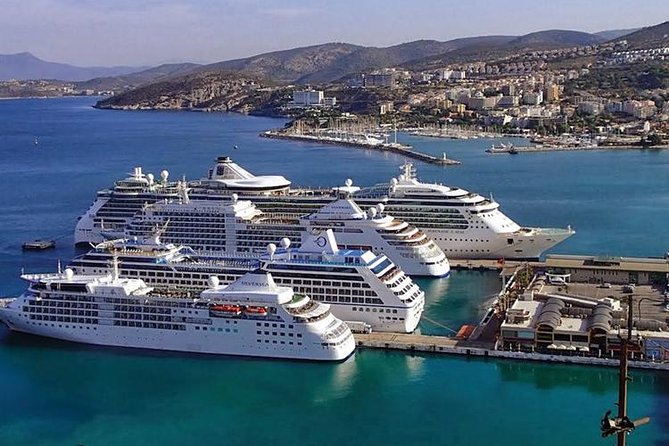
The day starts with pickup from the Kusadasi port. From there, you travel to Ephesus by air-conditioned minibus. The tour runs within the provider’s operating window (7:00 AM to 3:00 PM), and it’s built for cruise-day timing with near port convenience.
Two practical details help a lot:
- You’ll get a mobile ticket, so you’re not juggling printouts.
- The tour includes driver service and parking fees, which reduces the small delays that can pile up on island-style group tours.
Bring the usual “ruins day” gear: comfortable walking shoes, sunscreen, and a hat. Drinks aren’t included, so plan on buying water during breaks or bringing a small amount if allowed. And yes, you’ll want a little patience for traffic and lines at popular entrances, even with included fees.
The tour ends back at the Kusadasi port, so you’re not trying to make your own transport arrangements after a long day. That matters if your ship departure is firm.
Temple of Artemis and the first look at Ephesus’ main story
You kick off with the Temple of Artemis, also known as the Temple of Diana. This isn’t just a quick stop for photos. It’s a way to set the theme of Ephesus: sacred space tied to local identity, religion, and power.
Artemis was a Greek goddess, but in Ephesus you’ll see how the worship was rooted in the region’s own traditions. The scale and placement of the temple helps you understand why Ephesus became such a magnet for trade and visitors. When a site is both religious and famous, people travel. Merchants follow. Money flows. Cities grow.
Even if the ruins look like scattered stones, try to take a second to picture the temple as a focal point. From there, the rest of the day makes more sense. You’re not just watching random buildings—you’re walking a route where major public structures reflect what mattered most at different times.
This first stop is also a good “warm start.” You’re fresh, your guide can set expectations for what you’ll see next, and your legs aren’t fully tired yet.
The Ancient City walk: port power, Roman planning, and daily life
Once you step into the Ancient City of Ephesus, you’re walking through the remains of an ancient port that became one of the most important Greek cities and a major Mediterranean trading center. That trading role is the hidden thread behind a lot of what survives—big monuments, impressive public buildings, and structures built for crowds.
One highlight you should look for is the Fountain of Trajan area. Statues once stood guard there—Dionysus, Aphrodite, and the Roman Emperor. Even if those sculptures are gone, the setting helps you understand how rulers used art and mythology together: political messaging with religious flavor.
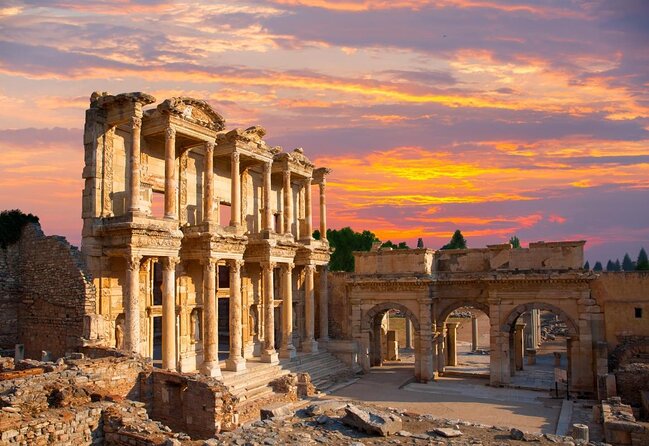
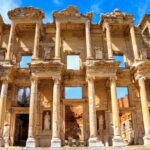
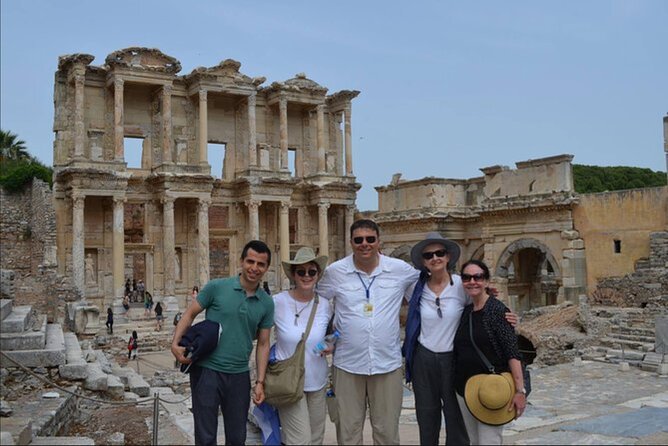
Then there’s the Library of Celsus. You’ll hear how it held around 12,000 scrolls and was considered the third-largest library in the ancient world. In other words, it wasn’t a small academic room. It was a statement of wealth, learning, and status. When you see the facade details, it’s easier to understand why libraries in the ancient world were propaganda as much as education.
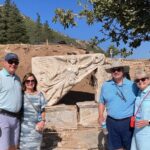
Another key stop is Emperor Hadrian’s temple. It features Corinthian columns framing a relief of Tyche, the Greek goddess of fortune and fate. That relief idea matters: Ephesus was a place obsessed with luck, destiny, and civic identity—exactly what you’d expect from a trading city.
And don’t skip the social layer. The Baths of Scholastica show daily life in ancient Ephesus: citizens bathed and socialized together. Baths were a public stage. People caught up, discussed news, and built relationships. Seeing that on your route turns Ephesus from a museum into a living routine.
Tip for your comfort: when you’re in the main site, keep an eye out for shaded stops and plan your pace. This is a long walking day, even when the group stays small.
Terrace Houses across from Hadrian Temple: the mosaics and the people
One of my favorite parts of Ephesus is where you can switch from temples and public monuments to private life. The terrace houses (often called houses of the rich) sit on a hill across from the Hadrian Temple. You’ll see mosaics and frescoes, and you’ll get context about family life during the Roman period.
This stop helps you visualize how wealth actually looked day-to-day. Instead of just imagining emperors and emperors’ statues, you’re seeing the décor and art used by wealthy households. The mosaic details show craftsmanship and taste, and the terrace layout suggests how these homes handled views, light, and social status.
The time here is shorter than the main city, so don’t expect it to feel like a full museum. But it’s a sharp change of pace. When you’re tired of “big stone,” this is where the human side of the story gets louder.
If you’re traveling with older kids, this is also a smart stop to explain how people lived—food, guests, art on walls—not just what they worshipped.
Your own guide and car, more private Ephesus days

Two Christian landmarks: St. John’s Basilica and Meryemana
Ephesus isn’t only Greek and Roman. It became important for Christian tradition too, and this tour gives you two major landmarks that anchor that story.
First is the Basilica of St. John, constructed by Justinian I in the 6th century, said to stand over the believed burial site of John the Apostle. Even with the ruins and reconstructions, the site gives you a sense of how later Christian communities honored earlier stories and sacred spaces. It’s not just archaeology; it’s tradition meeting stone.
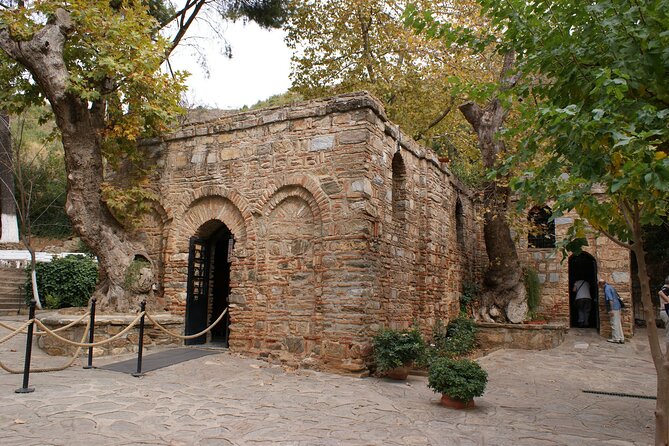
Then you visit Meryemana, the House of the Virgin Mary. This simple stone hut on the side of Bulbul Mountain is visited today. According to the beliefs of many, Mary spent her last years here. At the same time, there are many questions and uncertainties about the exact location.
That mix—devotion for visitors alongside historical uncertainty—adds depth. You’re not asked to treat it as one thing only. You can respect why people come while still understanding that history can be complicated.
Plan for a quieter moment here. It’s a good place to slow down, look around, and absorb the contrast between the massive ancient civic spaces you’ve just seen and this more humble structure.
Ephesus Museum stop: what you’ll see after the ruins
After the outdoor walking, the Ephesus Archaeological Museum gives your day a needed reset. You get a closer look at artifacts and finds from the excavation site. One standout is an ancient statue of the Greek goddess Artemis retrieved from the temple of the goddess in Ephesus.
A museum stop is often the part people skip when they’re short on time. Don’t skip it here. When you’ve been looking at stone remnants all day, seeing actual sculpture and recovered objects helps your brain rebuild the full picture. You also pick up details you can’t spot from the ruins alone.
The museum time is about an hour, which is enough for the main exhibits without eating the entire day. It also helps balance the earlier walking-heavy sections.
If you’re a photo person, this is where you’ll usually get the best controlled lighting. Outside is great, but museum interiors tend to be calmer and easier to shoot without rushing.
Lunch that actually fuels the rest of the day
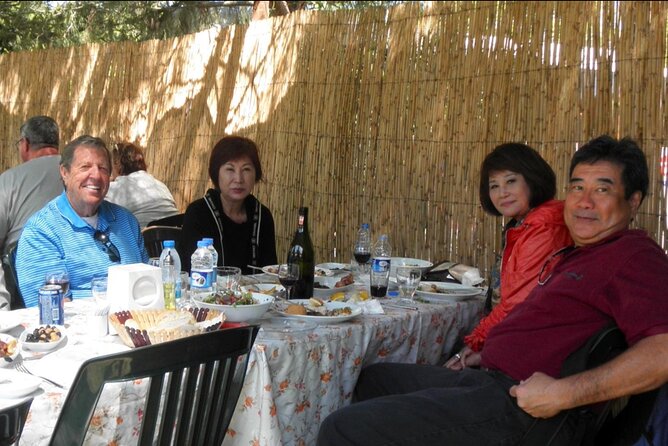
The tour includes lunch with grilled kebabs, Turkish salads, and seasonal fruits. Since drinks aren’t included, it’s smart to plan on purchasing water or other beverages separately.
This lunch is one of the reasons the day feels manageable. Ephesus sites include both long stretches of walking and stops where you’ll want to linger. Eating a real meal keeps you from getting cranky later at St. John’s Basilica, Meryemana, and the museum.
If you’re picky about food, you’ll still likely find a safe plate: kebabs plus salads plus fruit usually covers a lot of tastes. You can also use lunch as your time to pace yourself—shade, hydrate, and regroup.
Price and value: what you’re really paying for
At $75 per person, the value comes from the package. You’re not just paying for a guide. You’re also paying for:
- Round-trip transport from Kusadasi port
- Entrance fees included for the listed stops
- Lunch included
- Licensed local guidance
- Parking, driver, and taxes handled
When entrance fees and a proper lunch are included, you’re less likely to get hit with add-ons that can quietly turn a “good price” into a mediocre deal. This is especially true on cruise days, when time and coordination matter.
Also, booking tends to happen ahead (on average, about 85 days). If your travel window is fixed, don’t wait until the last moment just to save a few dollars. Ephesus tours are popular, and smaller groups like this fill.
Who this tour suits best (and who should consider another option)
This experience is a strong fit if you want:
- An Ephesus full-day overview with a guide
- A small group (up to 14) instead of a giant bus crush
- Included entrance fees and lunch so your day stays simple
- A route that covers Greek, Roman, and Christian landmarks
Consider caution if:
- You don’t like sales pressure. One part of the day may include a carpet-making-related stop where it can feel like buying is expected. You can still handle it with a polite no, but go in with a firm mindset.
It’s also a good match for many ages because the tour is guided and structured. Service animals are allowed, and it says most travelers can participate. It’s near public transportation too.
Should you book the Deluxe Ephesus full-day tour?
Yes—if you want a well-paced, guided Ephesus day that starts and ends at Kusadasi port with entrance fees and lunch taken care of. The small group size is a real advantage in a place this big. And if you end up with a guide like Chet or Ozlem, you’re likely to get the kind of explanations that make the ruins click instead of just blur.
If you hate any sales detours, go in ready to decline. Otherwise, this is the kind of “one-day best-of” tour that gives you a strong understanding without making you juggle tickets, transport, and meals.
FAQ
Where do I meet for the Deluxe Ephesus tour?
You start at Ege PortsCamikebir, Liman Cd. No:10, 09400 Kuşadası/Aydın, Türkiye.
Is pickup from Kusadasi port included?
Yes. The tour includes pickup and return from Kusadasi Port.
How long is the tour?
It runs for about 5 to 7 hours.
What’s included in the tour price?
Entrance fees, a professional licensed local guide, air-conditioned transportation in new vehicles, pickup and return from the port, a driver, lunch, parking fees, and all fees and taxes.
Are drinks included with lunch?
No. Drinks are not included. Gratuities are appreciated.
How big is the group?
The maximum group size is 14 travelers.
Do I need a printed ticket?
No. A mobile ticket is provided.
Is the tour suitable for most travelers?
Most travelers can participate, and service animals are allowed.
What is the cancellation policy?
Free cancellation is available up to 24 hours before the experience start time for a full refund.
The Rest of the Shortlist
Ephesus, Just Your Party
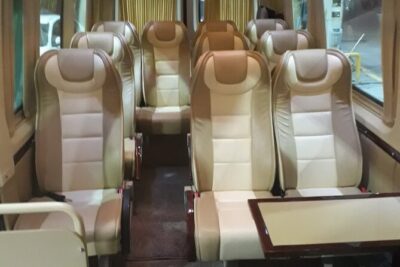
Ephesus by Small Group
Just Added Around Kusadasi
- Ephesus and House of Mary from Kusadasi Cruise Port★ 4.0 · 3 reviews
- Ephesus: 4-Hour Guided Tour with Transfer from Kusadasi★ 5.0 · 3 reviews
- Sirince Village & Selcuk Bazaar Tour From Kusadasi★ 4.5 · 3 reviews
- FOR CRUISERS: Best of Ephesus Tour with GUARANTEED ON-TIME RETURN★ 5.0 · 3 reviews
- Shore Excursion: Private Pamukkale Tour From Kusadasi Port★ 5.0 · 3 reviews
- For Cruisers: Ancient Ephesus Private Tour From Kusadasi Port★ 5.0 · 3 reviews
Ephesus Small Group Tours, compared.
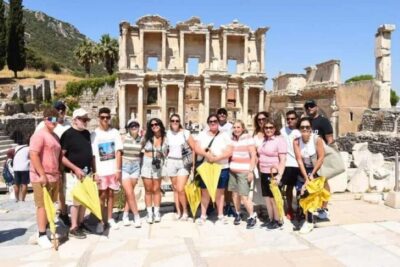 ★ 4.8Ephesus: Small Group Tour for Cruise PassengersFrom $291,100 reviews
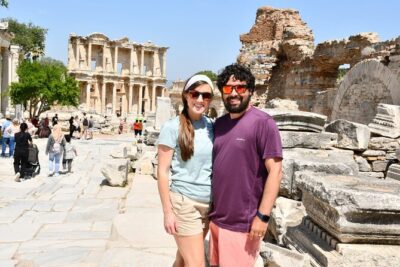 ★ 5.0Ephesus Cruiser Private or Small Group Tour, TICKET and LUNCH OptFrom $14490 reviews
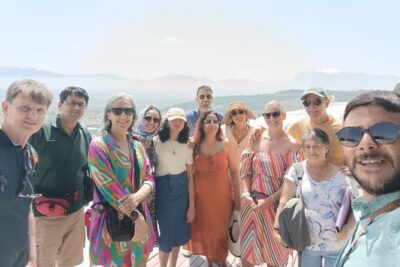 ★ 5.0Pamukkale Small Group Tour from Kusadasi Port/HotelsFrom $100434 reviews
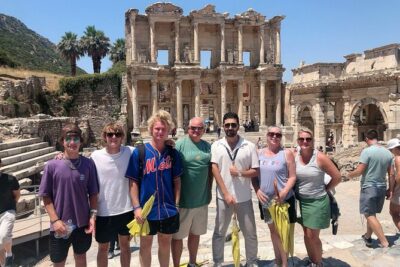 ★ 5.0Ephesus Small Group – Semi Private Shore ExcursionFrom $27406 reviews
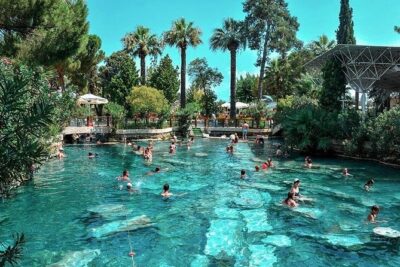 ★ 5.0Pamukkale Small Group Tour From Kusadasi or Selcuk HotelsFrom $72393 reviews
 ★ 4.7Pamukkale Hot Spring & Hierapolis Small-Group TourFrom $70256 reviews
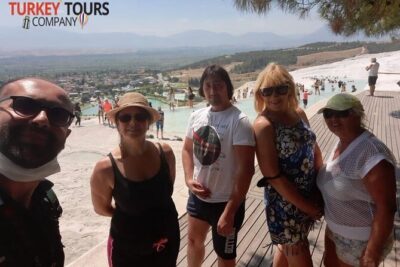 ★ 5.0Pamukkale Small Group Tour From Kusadasi or SelcukFrom $83220 reviews
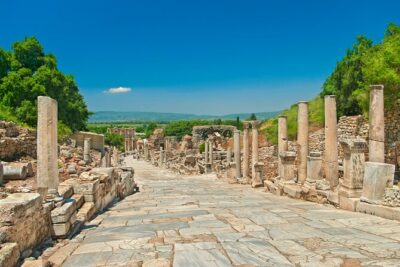 ★ 5.0Ephesus Small Group Tour From Kusadasi Port / HotelsFrom $249177 reviews
Browse the lists this tour appears in